
Last updated November 15, 2026
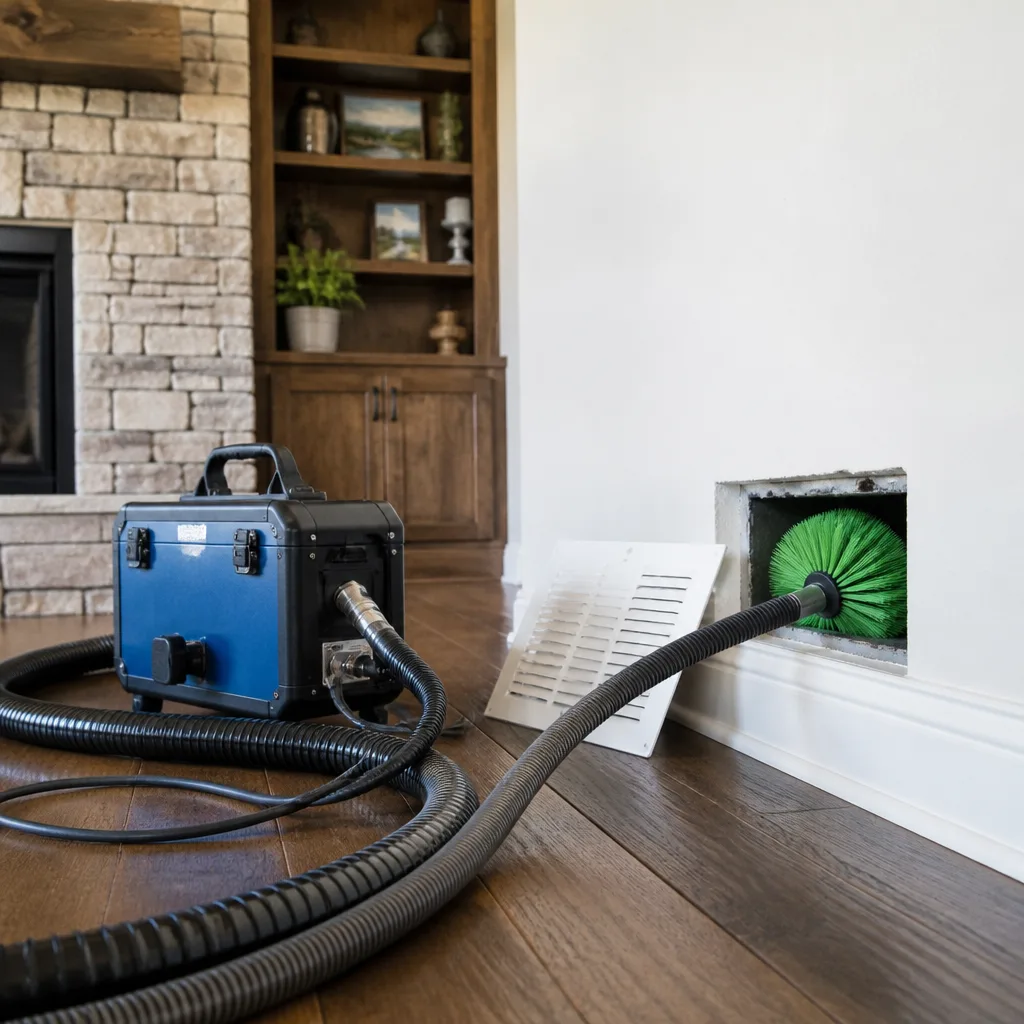 Whole-home duct cleaning
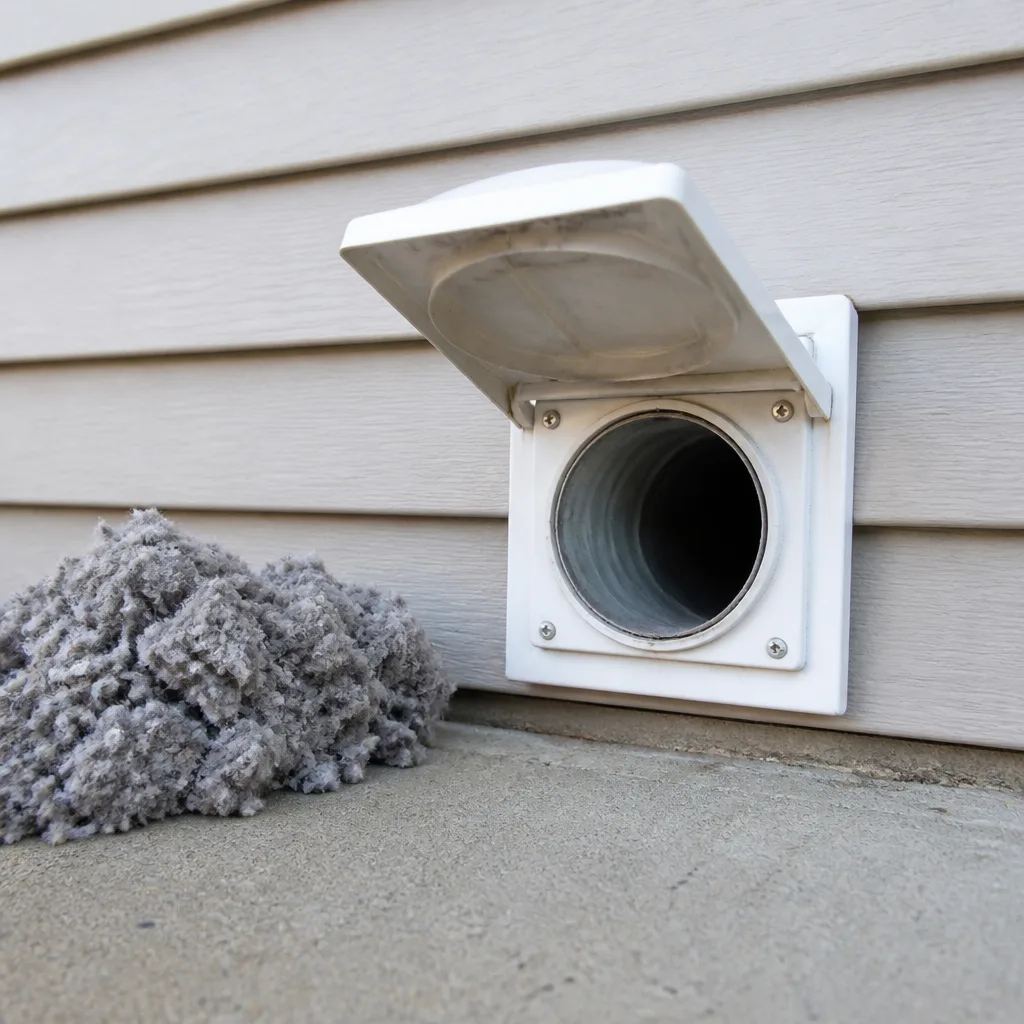 Dryer vent cleaning
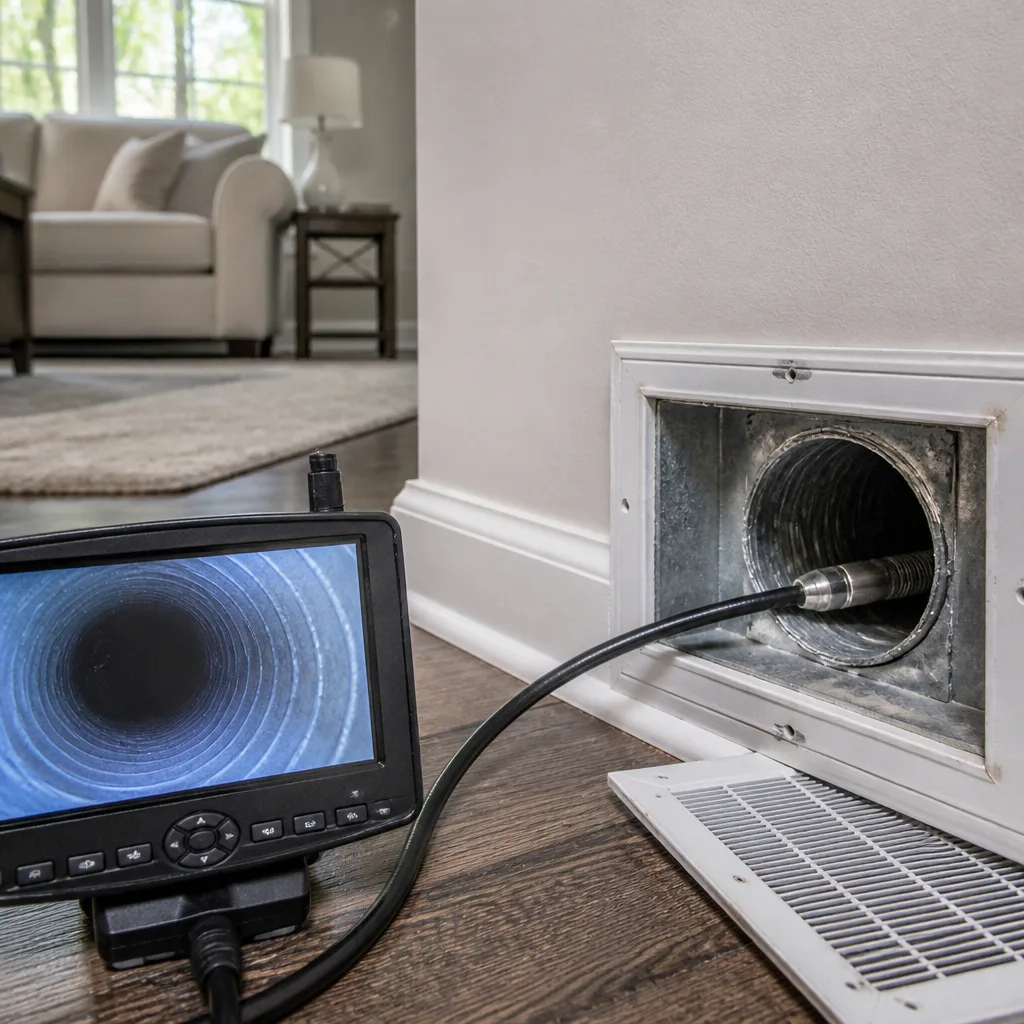 Camera inspection
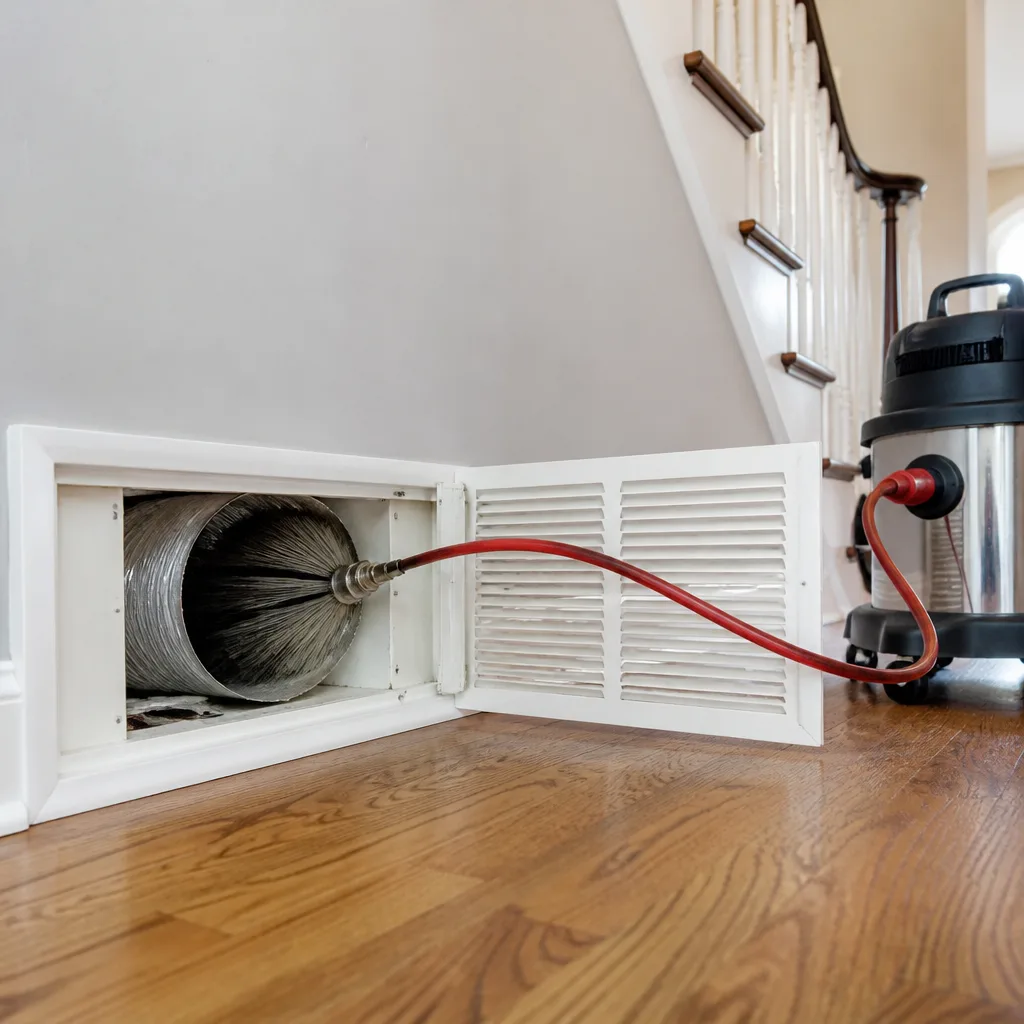 Sanitizing & deodorizing
Whole-system duct and dryer vent check with before-and-after photos - you see exactly what came out of your vents
That "$99 whole-house special" is a bait ad - the real number appears once they are in your hallway, or the "clean" is a shop-vac at the register. We photograph the inside of your ducts before and after instead.
Air Duct Cleaning Warning Signs: A Hampton Homeowner’s Reference Guide
Visible dust on a supply register can mean your ducts need cleaning, or it can mean your filter is performing exactly as designed. Confusing normal system behavior with contamination symptoms is how Hampton homeowners end up paying for unnecessary services, or missing real ones. This guide separates the two. We’ll walk through the signs that actually point to duct system problems in Hampton homes, how to read them, and when a call makes sense. You’ll learn what filter bypass looks like versus duct wall contamination, how to diagnose a musty odor without guessing, and which warning signs are specific to the older housing stock around here.
Quick Answer
The warning signs that most reliably point to a real duct problem in a Hampton home are: a persistent musty or stale odor that returns after cleaning registers, visible dust streaks on the duct walls themselves (not just the grille), uneven airflow that follows no seasonal pattern, and sagging or disconnected flex duct visible in the attic or crawlspace. Dust on a register face alone is not a reliable sign. It usually means your filter is bypassing or your return is undersized.
Styles & brands we work with
- Whole-home duct cleaning
- Dryer vent cleaning
- Camera inspection
- Sanitizing & deodorizing
Table of Contents
- Filter Bypass vs. Duct Contamination
- Musty Odor Diagnostics: Three Sources, Three Responses
- What Uneven Airflow Actually Tells You
- Visible Signs in Hampton’s Older Housing Stock
- Post-Renovation Warning Signs
- Signs That Aren’t What They Seem
- When to Call a Professional
- Frequently Asked Questions
Filter Bypass vs. Duct Contamination: How to Tell Them Apart
These two conditions look almost identical at the register, but they need completely different responses. Filter bypass is a maintenance issue. Duct wall contamination is a cleaning issue. Mistaking one for the other is the most common reason Hampton homeowners get work done that doesn’t actually solve the dust they’re seeing.
Filter bypass means air is sneaking around the edges of your filter instead of passing through it. The filter itself might be fine. But if the filter frame is warped, the slot is oversized, or the filter was never properly seated, unfiltered air slips past and deposits dust straight into the supply side of the system. What you see is dust on registers and horizontal surfaces, but the ducts themselves may be relatively clean. Fixing it is about sealing the filter frame and using a correctly sized filter, not cleaning the ducts.
Duct wall contamination is different. Air is being filtered, but the interior surfaces of the duct have accumulated a layer of dust, debris, or biological growth over time. You might not see it at the register. Instead you notice it as:
- Dust that returns within days of cleaning your register faces
- A visible coating on the inside of the duct when you shine a light past the grille
- Stale or musty odor that gets stronger when the system runs
- Allergy symptoms that worsen when the HVAC is on
Distinguishing the two starts with one question: is the dust coming from the filter forward, or is it already inside the duct? A flashlight and a screwdriver will tell you more than an hour of internet research. Look past the register into the duct run itself. If the inside of the duct is clean and shiny but the register face is dusty, you’re looking at a bypass problem. If the interior is coated, you’re looking at contamination. This distinction matters because it’s the difference between a small maintenance fix and a proper system cleaning. Our technicians have up to 8 years of experience making this call, and we walk homeowners through the distinction before recommending anything.
Musty Odor Diagnostics: Three Sources, Three Responses
A musty smell in a Hampton home is a diagnostic puzzle, not a single problem. The three most common sources are a cooling coil issue, an internal duct biofilm issue, and a building envelope moisture intrusion. Each needs a different response. Misdiagnosing any of them leads to repeat service calls where the smell comes back a few weeks later.
Source 1: The Cooling Coil
The evaporator coil sits at the air handler and stays wet through the cooling season. If it doesn’t drain properly or the drain pan is holding standing water, biological growth forms right there on the coil. The smell travels through the supply ducts and out every register. Signs: the musty odor is strongest when the AC is running and fades when it’s off, and it’s more noticeable from registers near the air handler. A coil cleaning addresses it. Cleaning the ducts without addressing the coil will not.
Source 2: Internal Duct Biofilm
This is moisture that has settled onto duct surfaces and supported growth inside the duct itself. It’s common in duct board systems where the interior facing has absorbed moisture, or in runs that pass through unconditioned space. Signs: the odor is consistent whenever air moves, not just during cooling, and it’s stronger in specific rooms than others. This requires professional duct cleaning with contamination control. Abatement Technologies air filtration equipment is what we use on-site because it captures dislodged debris rather than redistributing it into the living space.
Source 3: Building Envelope Moisture
Sometimes the smell isn’t in the ducts at all. It’s a moisture problem in the walls, attic, or crawlspace that the return duct is pulling air from. Signs: the odor is worse in humid weather and worse near exterior walls, and it doesn’t change much with system cycle. In Hampton’s older homes, this is often a crawlspace ventilation or vapor barrier issue. Cleaning the ducts won’t fix it. Identifying the moisture source will.
Getting this right the first time saves you from a cycle of clean, wait, return, repeat. If a homeowner calls us with a musty odor problem, we walk through these three sources before we commit to a scope of work. That’s what it means to work on the system, not just the surface.
What Uneven Airflow Actually Tells You
Uneven airflow is one of the most misunderstood warning signs. A cold room upstairs and a warm room downstairs might mean the ducts need cleaning, but it more often means the system needs balancing, or a duct has become disconnected or crushed somewhere in the run. Reaching for a duct cleaning job when the real issue is a balancing problem is a waste of money, and understanding the difference is what separates a real diagnostic from a sales call.
When uneven airflow points to contamination
Contamination causes uneven airflow when an accumulation is heavy enough to narrow the effective cross-section of a duct run. Signs that point this way:
- The weak airflow is in specific rooms, not specific floors
- The affected registers have visible dust or debris buildup on the back side of the grille
- The weak airflow area also shows more dust accumulation on horizontal surfaces than other rooms
- The problem appeared gradually over months or years rather than after a renovation or move
When uneven airflow points to something else
Signs that point away from contamination and toward a different fix:
- Rooms on the same duct run have widely different results with no visible difference in duct condition – this is a balancing issue
- The problem showed up suddenly after a repair, renovation, or equipment change
- Airflow is weak at every register on the system – this usually means blower, filter, or return-size problem
- Airflow improves or worsens based on which other rooms have their doors open – this is a pressure balance issue
In Hampton homes, we most often see uneven airflow that isn’t duct contamination at all. It’s a sealed-house pressure imbalance, a crushed flex run in the attic, or a return duct that’s undersized for the number of supplies. Get a proper inspection before committing to a cleaning. A technician who diagnoses in person will tell you which it is.
Visible Signs Specific to Hampton’s Older Housing Stock
Hampton has a substantial inventory of mid-century and older homes, and the duct systems in those homes have their own failure modes. If your home is more than a few decades old, these are the specific things to look for. They’re often visible with a flashlight and a crawlspace access.
Flex duct sagging
Flex duct in Hampton attics takes a heavy load from summer heat and humidity cycles. Over time, the inner liner sags between supports, creating low spots where condensation collects and dust accumulates. A sagging flex run is both a contamination site and an airflow restriction. If you see flex duct sagging more than a few inches between hangers, that run is a suspect.
Deteriorated duct board facing
Duct board used in older Hampton homes has a factory-applied facing that can delaminate over time. When it fails, the fiberglass core is exposed to airflow, and the system starts shedding material into the supply stream. Signs: visible flaking or powdery deposits on top of the duct board, dust on register faces in the rooms served by the affected run, and occasional fiberglass specks on furniture. A deteriorated facing isn’t a cleaning problem. It’s a repair or replacement problem, which is why we treat air duct cleaning and duct repair as related services rather than separate jobs.
Disconnected trunk sections
In attics and crawlspaces of older Hampton homes, mechanical connections between trunk and branch runs can work loose. A disconnected trunk section pulls unfiltered attic air straight into the supply stream. Signs: an unexplained increase in dust after attic work, air blowing at a joint that shouldn’t be blowing, or a visible gap at a takeoff. This is the highest-priority failure mode on this list because it actively introduces contamination every time the system runs.
Rusted collar joints and tape failure
Old cloth-backed tape and failing mastic at joints allow air to leak even when the duct is nominally connected. In humid conditions, this is where contamination ingress most often starts. If you see dark staining or separation at joints, you’re looking at a leak that should be addressed.
For homeowners with these conditions, a call to our team at Hampton is a reasonable next step. We inspect first, clean or repair second, and we’re honest about which is needed.
Post-Renovation Warning Signs
Hampton has an active renovation market, especially for mid-century homes, and renovation dust is one of the most reliable predictors of a duct contamination problem. Construction dust is fine enough to move through filters and settle into duct surfaces, and it doesn’t disappear on its own. The signs that follow a renovation are specific.
Where construction dust gets in
Renovation dust infiltrates the duct system through several pathways:
- Open returns during the project. If the HVAC was running during demolition or drywall work, the return pulled airborne dust directly into the duct system.
- Disconnected or open duct ends. During rough-in work, duct ends are often left open to the work area.
- Filter bay exposure. The filter slot is an open hole in the return side. If it was left unsealed at any point, dust entered there.
- Ductwork relocations and new takeoffs. Any new or moved duct creates openings that can admit debris if not properly sealed at the end of the job.
- Attic and crawlspace work. Insulation, spray foam, or framing dust in the attic makes its way into any unsealed joint.
What to watch for after the project
Within a few weeks of finishing a renovation, look for:
- Dust accumulation on horizontal surfaces that keeps returning after cleaning
- A change in the smell of the air when the system runs – drywall dust has a characteristic chalky smell
- Visible fine dust on the supply register faces in the renovated rooms
- Filter loading much faster than before the renovation
- Ongoing allergy or irritation symptoms in family members after the project
If you’re seeing these signs, a proper post-construction duct cleaning is the right response. We recommend waiting until the project is fully finished and dust-generating work is done, so the cleaning captures everything at once. For homes that also have dryer vent cleaning on the punch list after a renovation, we can handle both during the same visit.
Signs That Aren’t What They Seem
Not every symptom points to a duct problem, and knowing which is which saves money. These are the ones we most often see confused with contamination.
Dust on register faces alone
A dusty register face means air is passing through it. That’s what it’s for. The dust is coming from the room, from the filter bypass, or from an undersized return pulling harder than it should. A clean register face doesn’t prove ducts are clean, and a dusty one doesn’t prove they’re dirty. Look at the duct interior, not the grille.
Seasonal smell at the start of cooling season
A faint musty smell the first time the AC turns on in spring is normal. It’s the dust that settled on the coil over winter burning off. If it fades within a day or two, there’s no action to take. If it persists, that’s when the diagnostic work begins.
Visible dust in the attic near duct runs
Attic dust is normal. What matters is whether the duct system is sealed. Dust on the outside of a duct is a maintenance observation, not a cleaning indicator. Dust inside is the concern.
Airflow that changes with the seasons
Airflow naturally drops when the filter loads up and rises when it’s replaced. If airflow improves dramatically after a filter change, the filter was the issue. Duct contamination doesn’t fluctuate that way.
See the difference
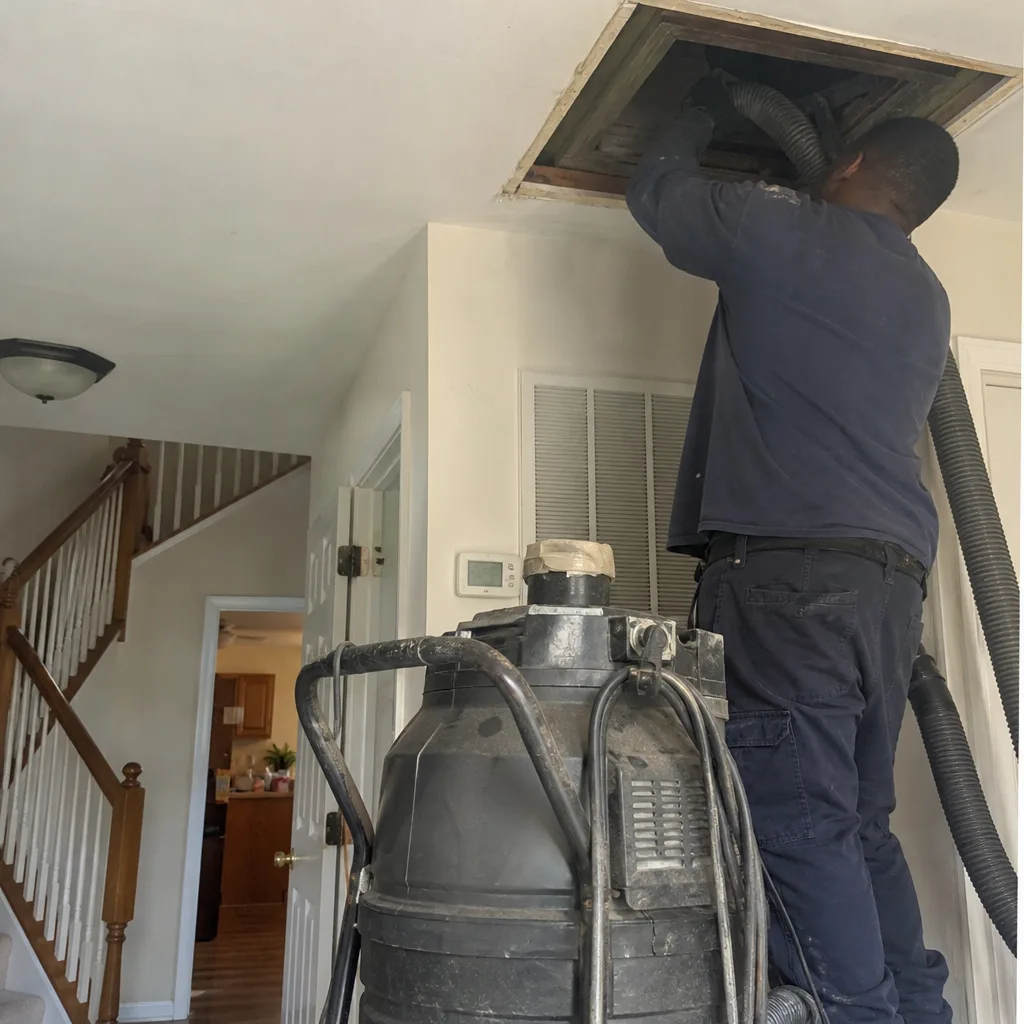 Before
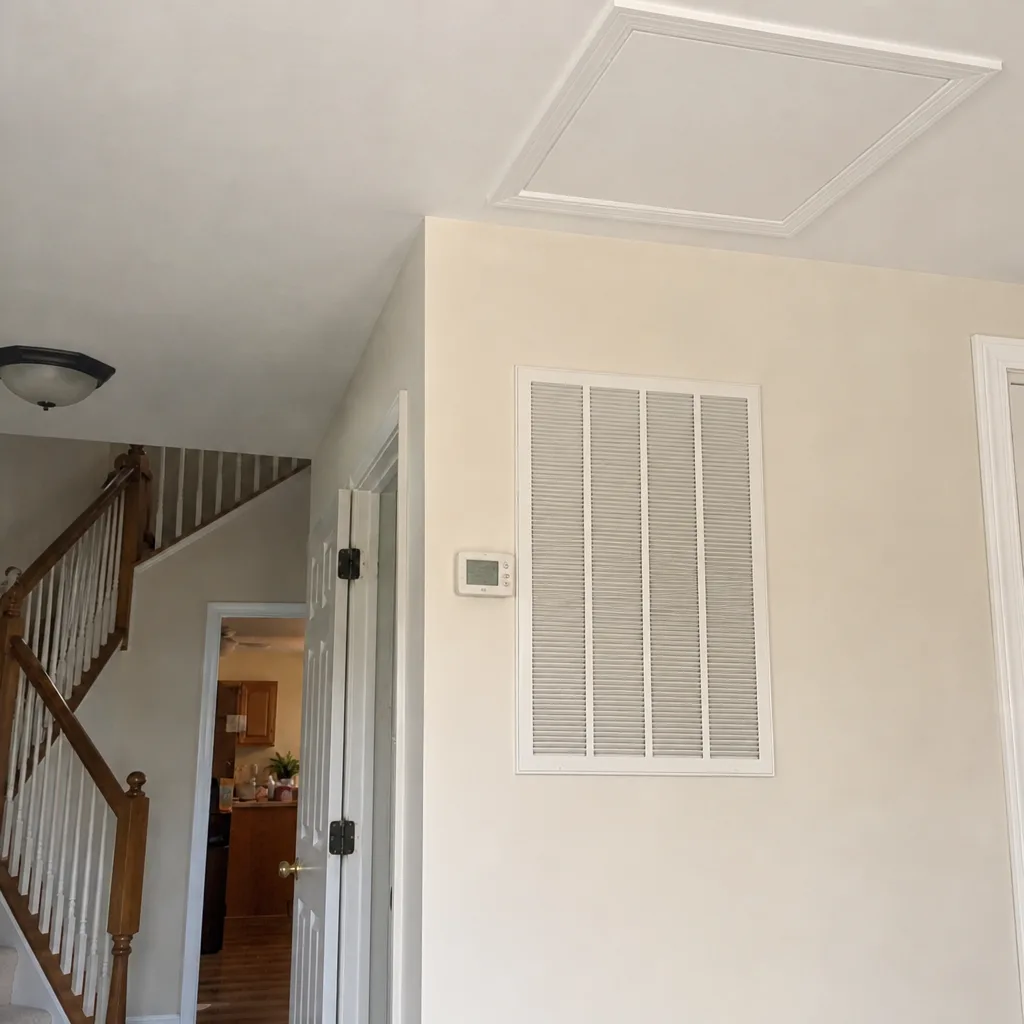 After
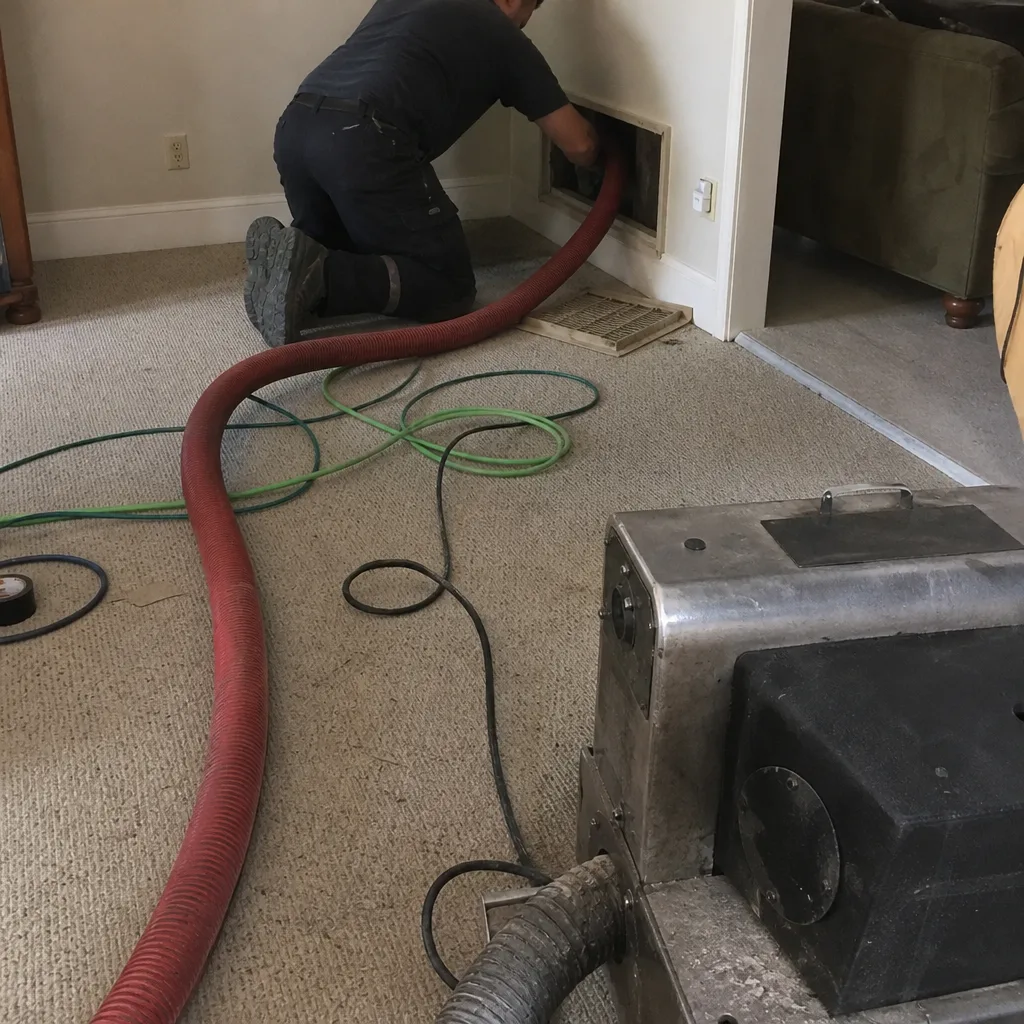 Before
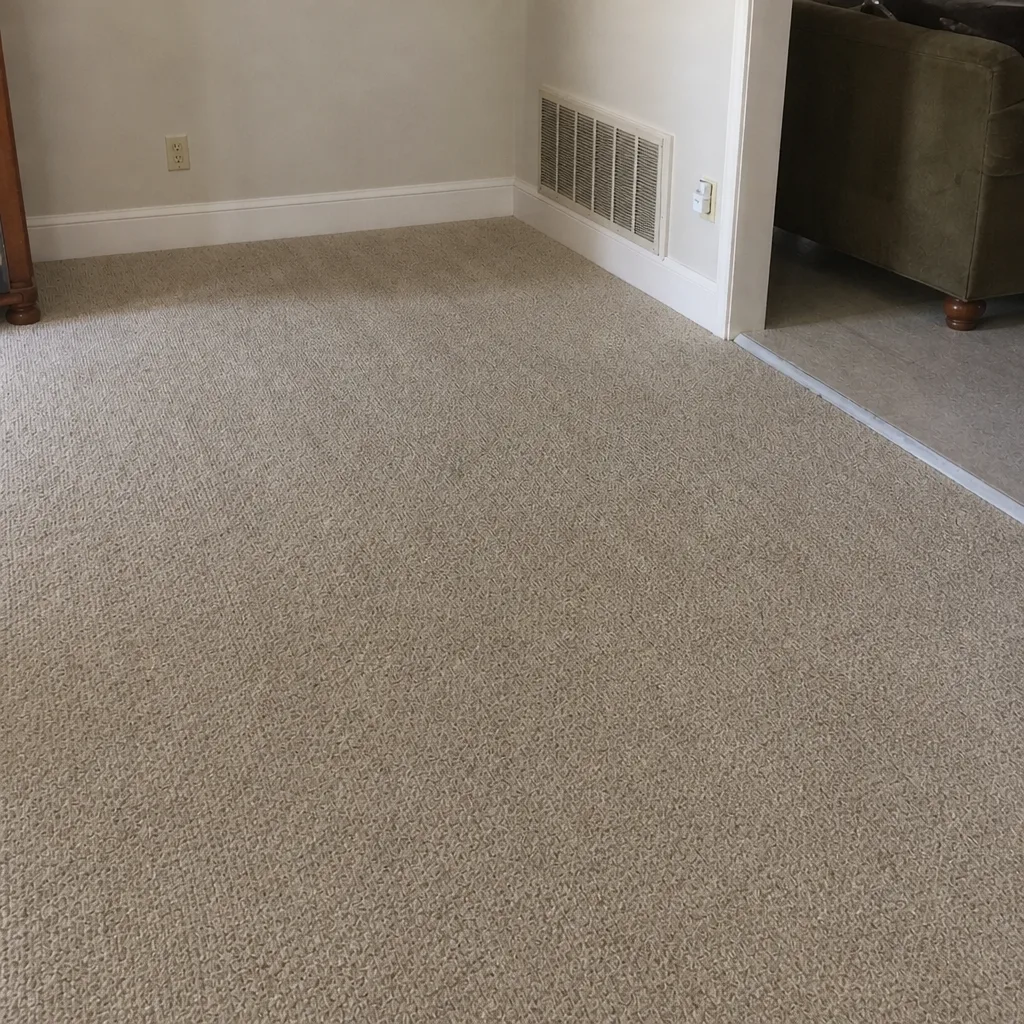 After
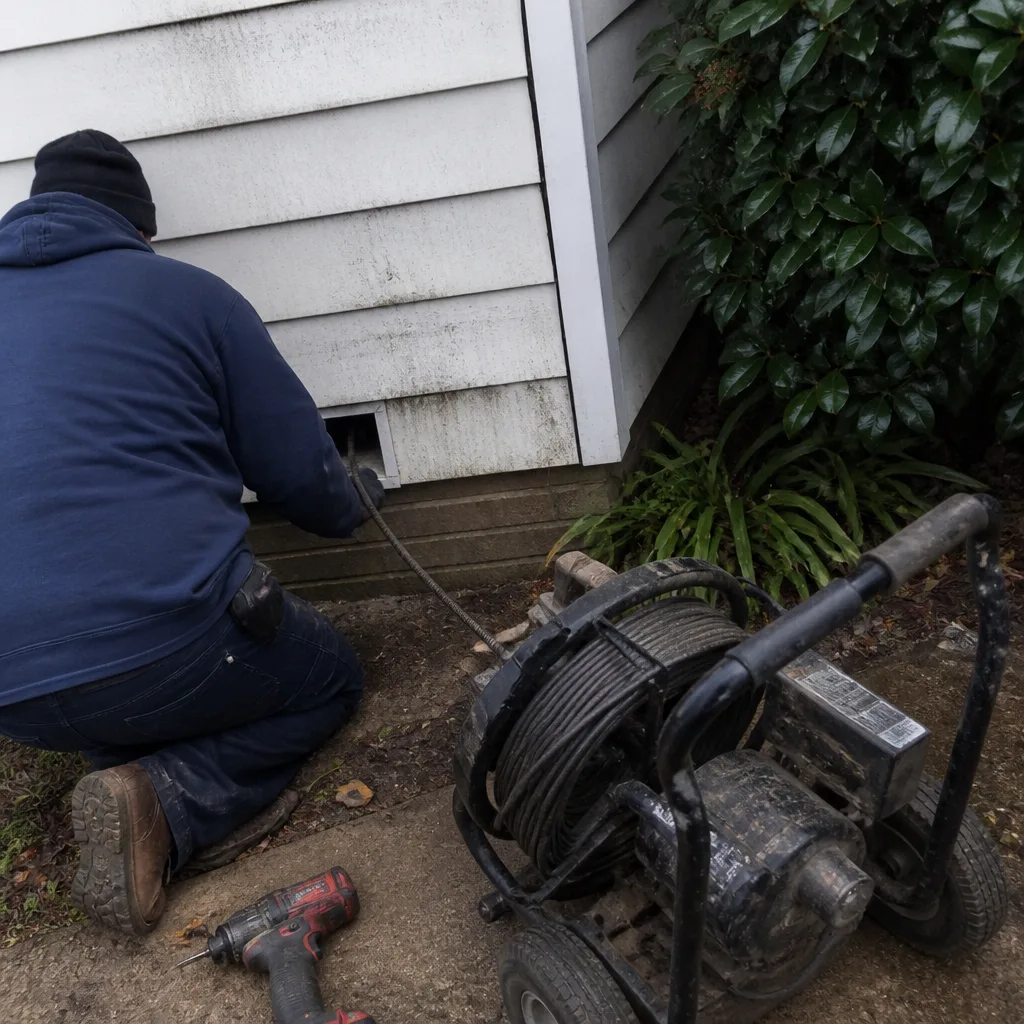 Before
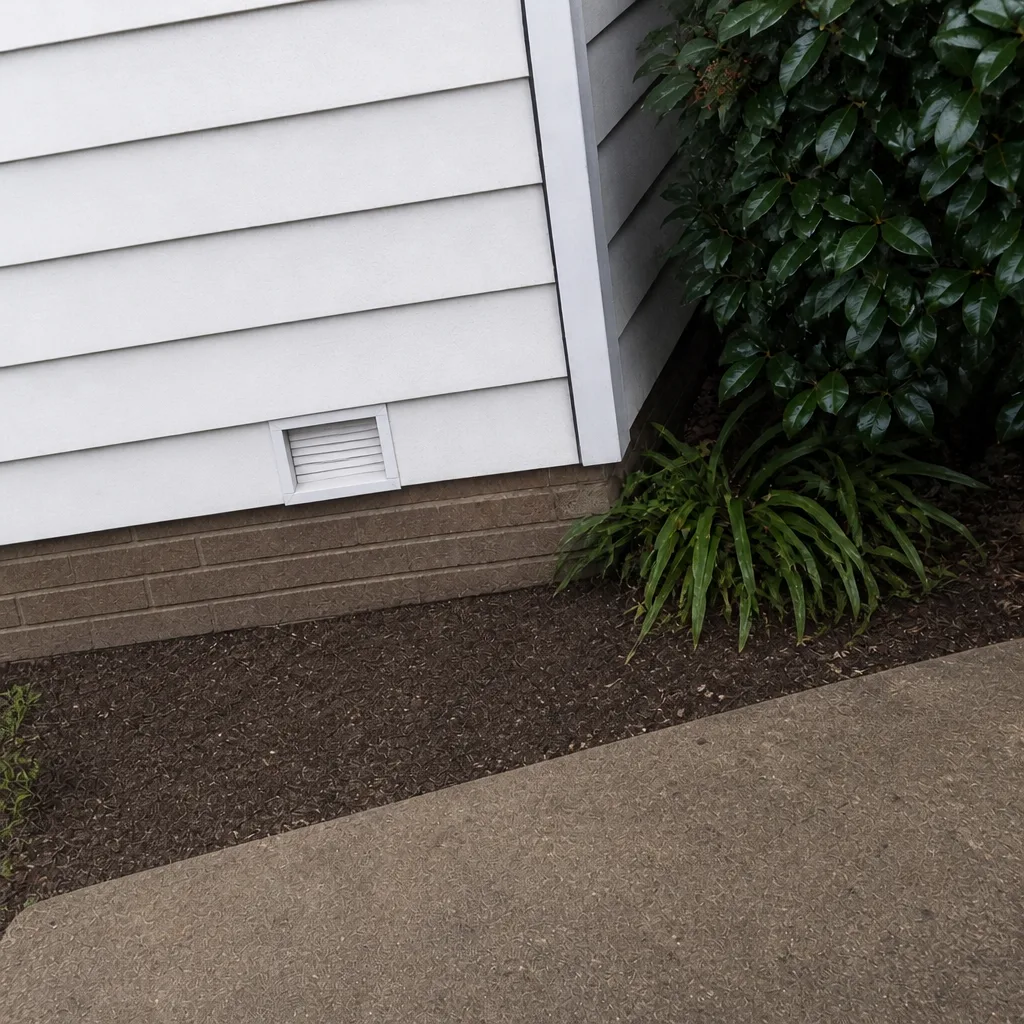 After
Common Mistakes to Avoid
- Cleaning ducts before fixing filter bypass. If air is slipping past the filter, the ducts will re-contaminate within weeks. Seal the filter bay first, then clean.
- Treating a musty odor as a single problem. Coil, biofilm, and envelope moisture each need a different response. Cleaning ducts to fix an envelope moisture problem won’t work.
- Assuming uneven airflow is a cleaning issue. In Hampton’s sealed, humid homes, most uneven airflow is a balancing or return-size issue. Get it diagnosed before scoping work.
- Ignoring attic flex duct after a hot summer. Sagging flex runs in Hampton attics accumulate condensation and dust. They don’t fix themselves.
- Cleaning immediately after a renovation without waiting for dust-generating work to finish. You’ll pay for a cleaning that misses the last half of the project’s dust.
- Choosing a quote based on the lowest number alone. A cheap quote often means a shop vac and a register wipe. Professional-grade equipment is the difference.
- Skipping the repair step when duct board or connections are failing. Cleaning a deteriorating duct board system leaves the source of contamination in place.
When to Call a Professional
Call for an inspection when you’re seeing any of the four high-confidence signs: persistent musty odor that returns after cleaning, visible interior duct contamination, sagging or disconnected flex duct in the attic or crawlspace, or a sharp increase in dust following a renovation. Also call when allergy symptoms in the household have worsened with no other explanation, or when the HVAC system is pulling air that clearly isn’t filtered. For homeowners in Hampton who want a real diagnostic before committing to work, we offer free estimates and honest scoping. We don’t recommend cleaning when a repair or a balancing fix is the correct answer. Call (855) 356-4265 to schedule an inspection.
Frequently Asked Questions
The most reliable signs are interior duct wall contamination visible with a flashlight, a persistent musty odor that returns after register cleaning, sagging or disconnected flex duct in the attic or crawlspace, and a sharp dust increase after renovation work. Register dust alone is not a reliable sign because it usually points to filter bypass or return sizing rather than duct contamination.
Not on its own. Dust on the register face means air is passing through, which is normal. The real question is whether the interior of the duct is clean. Shine a light past the grille and look at the duct wall. If the interior is coated with dust, you have contamination. If the interior is clean but the register is dusty, the issue is filter bypass or return pull, not duct contamination.
The three most common causes are a wet cooling coil with biological growth, biofilm inside the duct system itself, or moisture from a building envelope problem that the return duct is pulling air from. Each one requires a different fix. A coil cleaning addresses the first. Professional duct cleaning with contamination control addresses the second. Identifying and fixing a moisture source addresses the third. Cleaning ducts without diagnosing which one you have usually leads to the smell returning.
If the weak airflow is room-specific and the affected registers show heavy dust buildup on the back of the grille, contamination is a reasonable suspect. If the problem shows up across an entire floor with no visible duct difference, or appeared suddenly after a repair or renovation, it’s more likely a balancing, sealing, or equipment issue. A proper inspection distinguishes between the two.
Yes, in most cases. Renovation dust is fine enough to move through filters and settle onto duct surfaces, and it doesn’t clear on its own. Wait until the project is fully complete and dust-generating work is done, then schedule a cleaning. Post-construction cleaning captures the settled dust in one pass rather than spreading it out over repeat visits.
It matters a great deal. Repurposed shop vacs and entry-level units don’t generate the airflow or agitation needed to dislodge surface contamination, and they don’t have the filtration to contain what’s loosened. We use Rotobrush rotary brush systems and Nikro industrial equipment, and we run Abatement Technologies air filtration on-site to capture dislodged debris rather than redistributing it. That’s what professional-grade means in practice. It’s also why we treat this as a dedicated craft rather than an add-on to general HVAC work.
The Bottom Line
Not every warning sign means the same thing, and the ones that matter most in Hampton homes are interior duct contamination, musty odor with a specific source, sagging or disconnected flex duct, and post-renovation dust. Register dust, seasonal smells, and attic dust on the duct exterior are usually not indicators of a cleaning problem. Filter bypass and duct contamination look similar but need different fixes. Diagnose first, then decide. And when the diagnosis is duct contamination, use professional equipment and a scope of work that includes the repair and sealing steps rather than a register wipe and a shop vac. That’s the honest version. That’s the version that saves you money.
For homeowners who want a real diagnostic and a straight answer before committing to any work, we offer free estimates. Call (855) 356-4265 to book an inspection. We answer 24/7. Fast dispatch from 7am to 7pm, Sunday through Friday.
Written by the team at Duct Cleaning Hampton.