
Last updated November 15, 2026
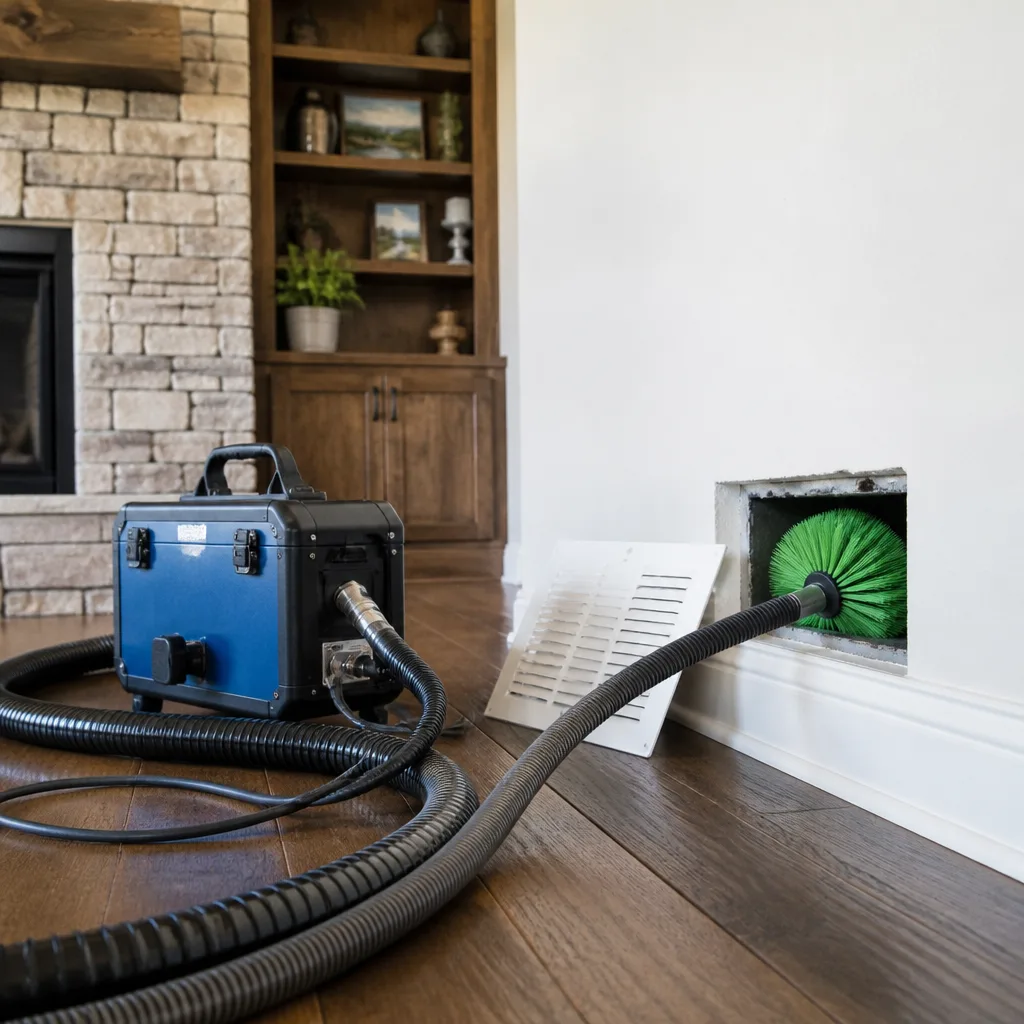 Whole-home duct cleaning
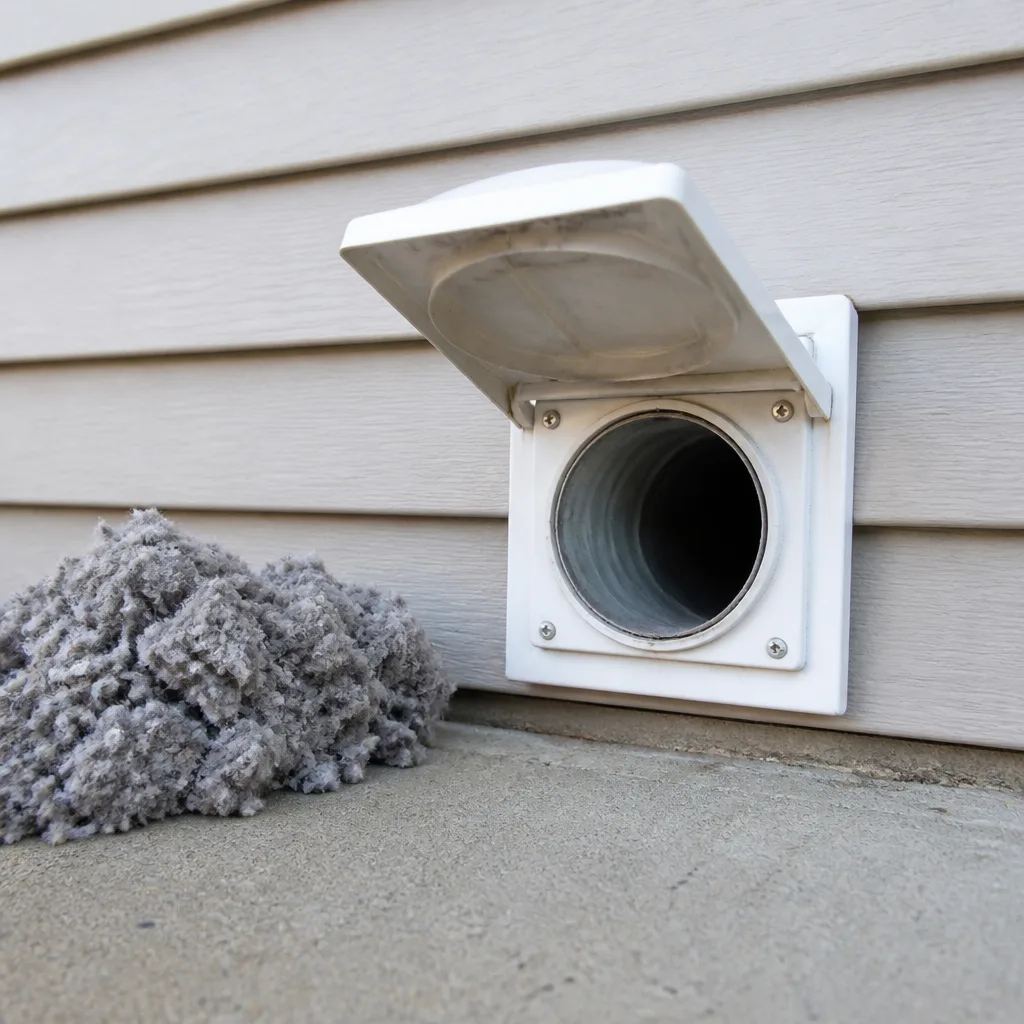 Dryer vent cleaning
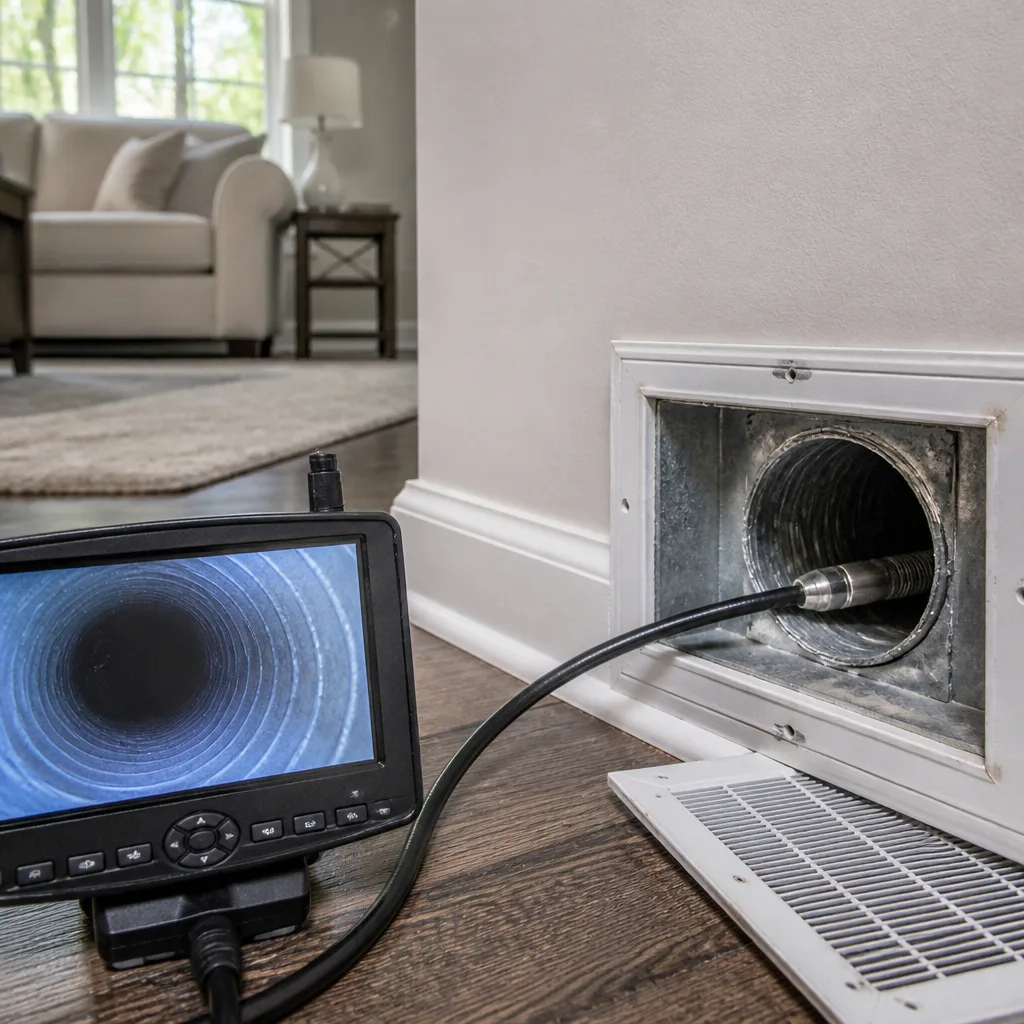 Camera inspection
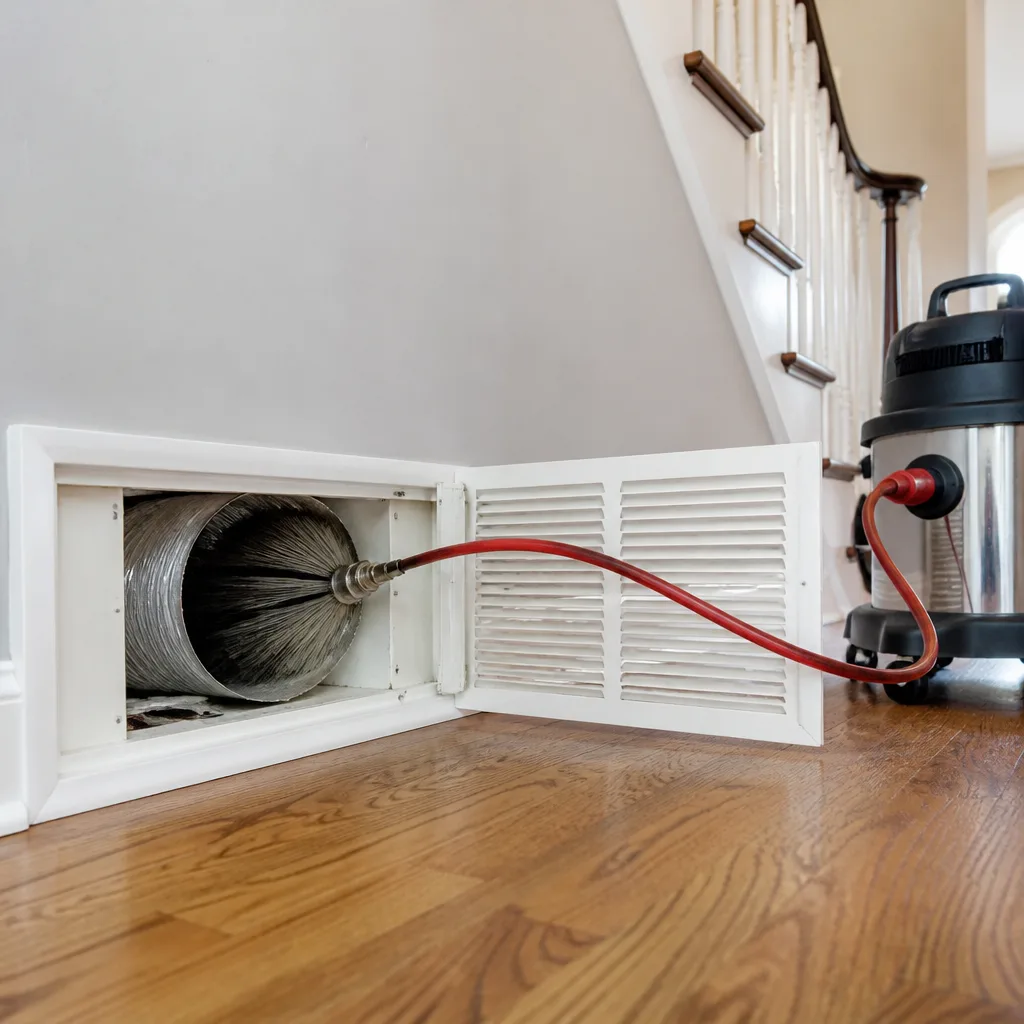 Sanitizing & deodorizing
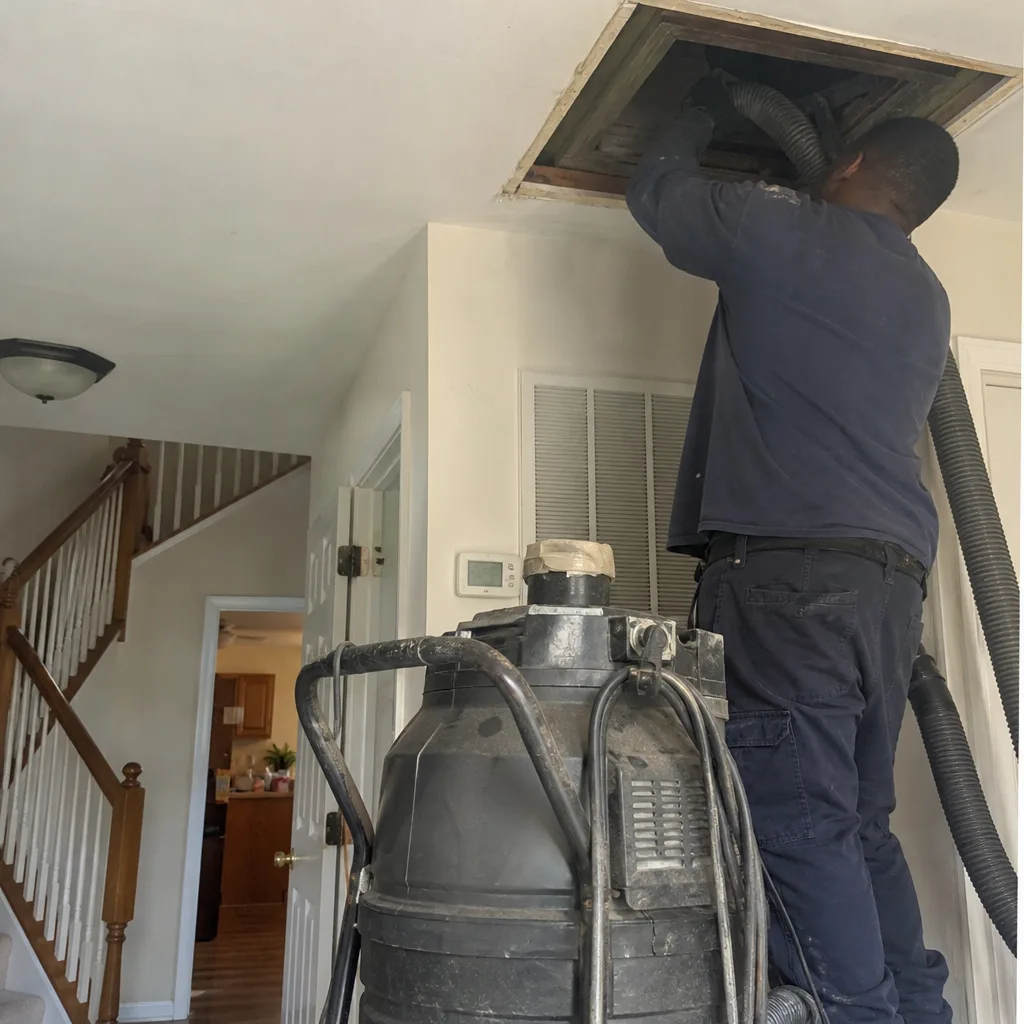
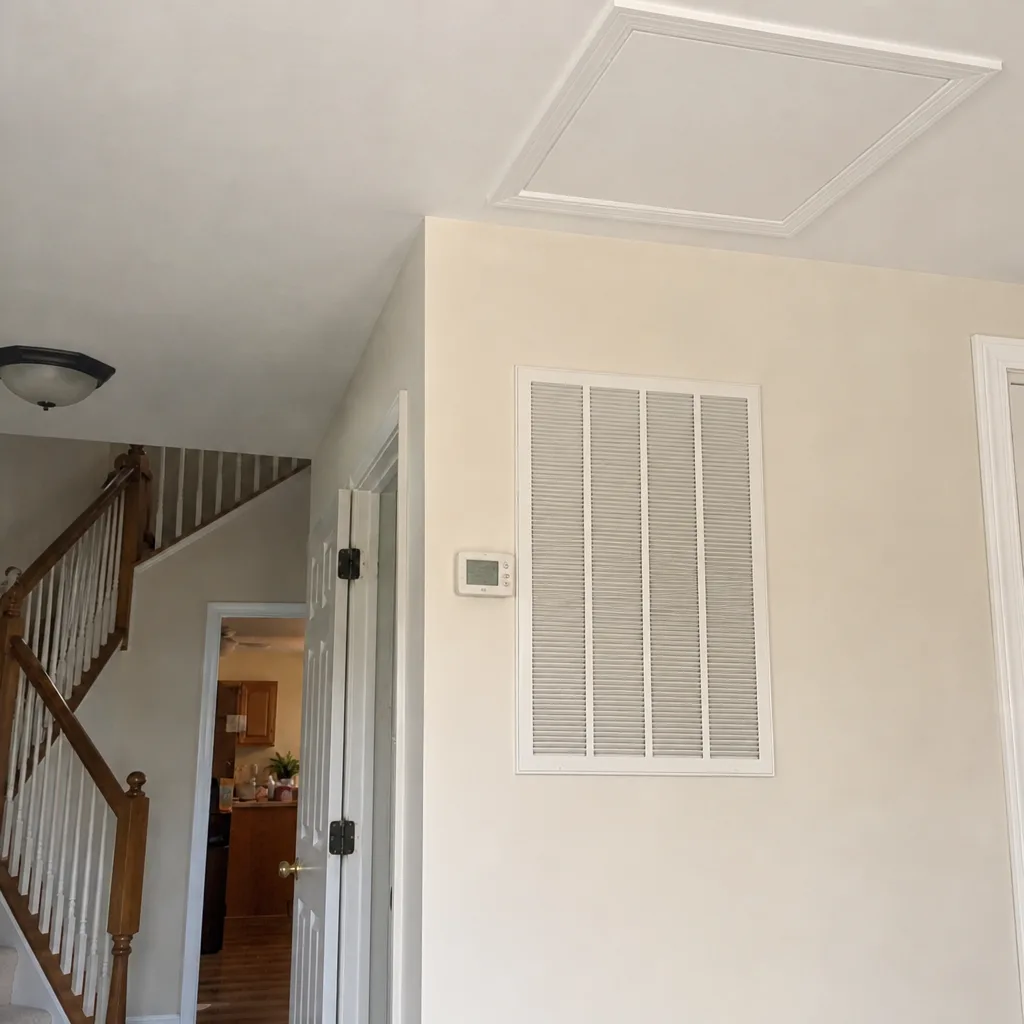
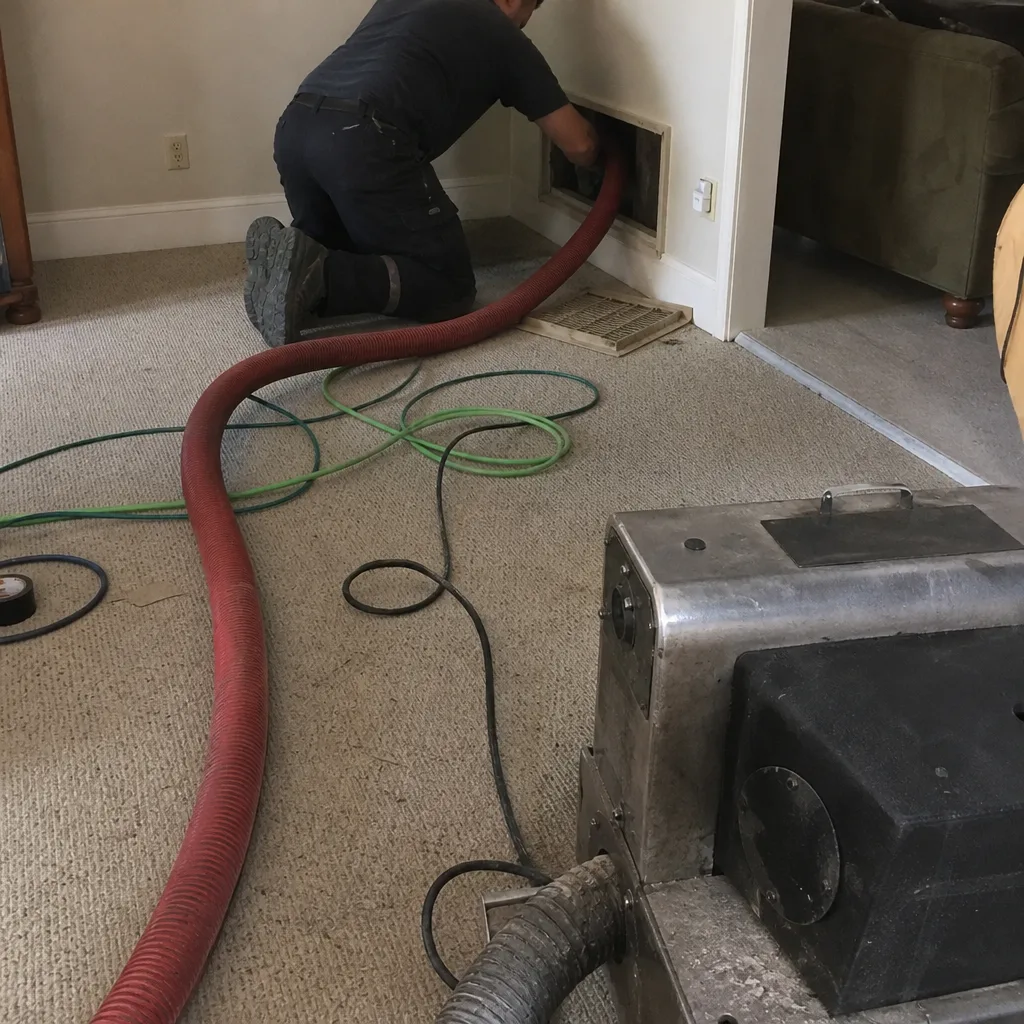
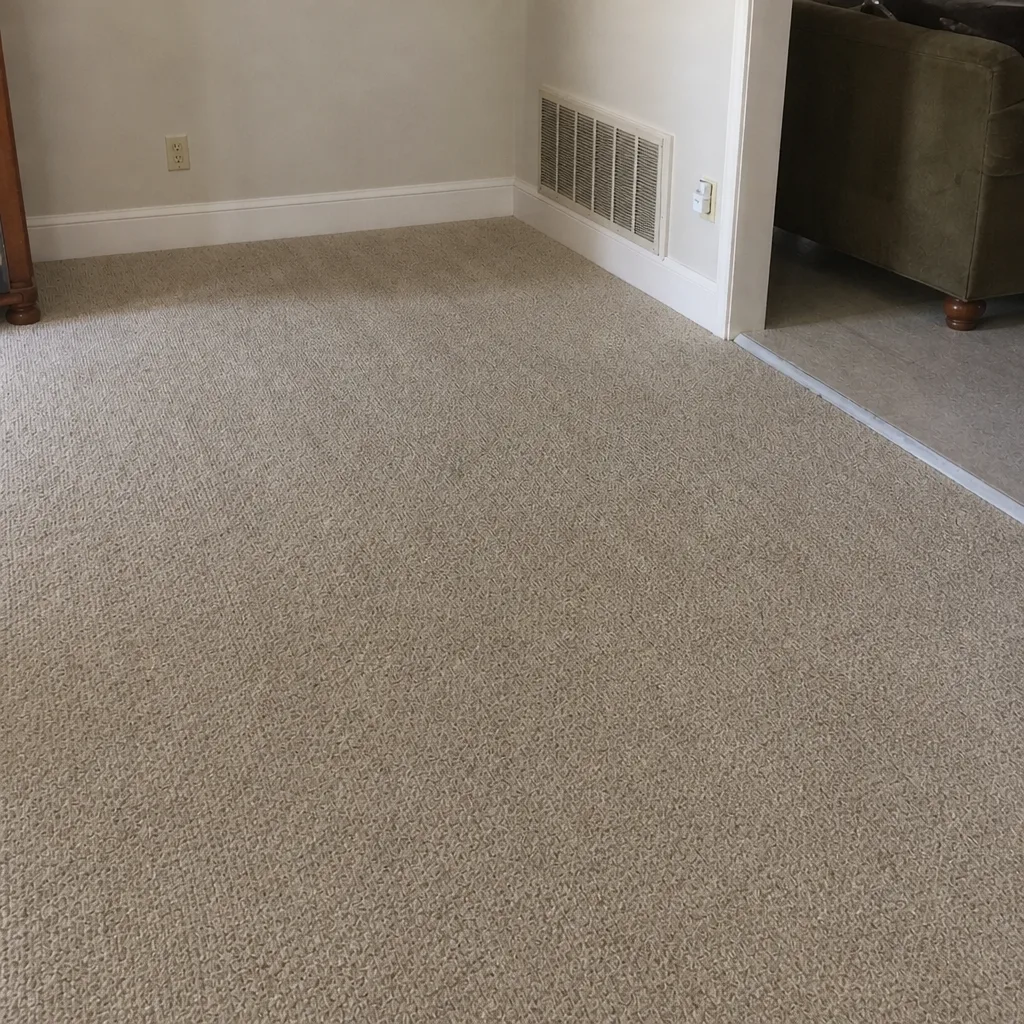
Whole-system duct and dryer vent check with before-and-after photos - you see exactly what came out of your vents
That "$99 whole-house special" is a bait ad - the real number appears once they are in your hallway, or the "clean" is a shop-vac at the register. We photograph the inside of your ducts before and after instead.
Air Duct Cleaning Maintenance Checklist for Hampton Homeowners
Changing your filter every 90 days is the most repeated HVAC advice on the internet, and in Hampton it’s often the wrong advice. Hampton summers push indoor humidity high for months, and a filter that looks clean at day 60 can be loaded and bypassing air at day 85. Ducts don’t follow a calendar; they follow run hours, moisture, and what’s happening in the rooms around them. This guide gives you a working checklist you can adjust month by month: what to log, what to inspect after a flood or a renovation, what a homeowner can safely check alone, and what needs a technician with a borescope. By the end you’ll have a living document for the system in your Hampton home, not a one-size schedule copied from a box.
Quick Answer
An air duct maintenance checklist for a Hampton home should be built around three variables: how many hours your HVAC actually runs, how your filter performs under local humidity, and what events (flooding, renovation, extended vacancy) have disturbed the system. Check filters monthly, log static pressure and humidity every few months, and schedule professional duct cleaning every three to five years, sooner if you see visible debris at the registers or notice musty smells. Cleaning dates alone don’t tell you whether your ducts are healthy; the readings in between do.
Styles & brands we work with
- Whole-home duct cleaning
- Dryer vent cleaning
- Camera inspection
- Sanitizing & deodorizing
Table of Contents
- Why a Calendar Alone Fails in Hampton
- Building a Maintenance Log That Actually Works
- What You Can Check vs. What Needs a Borescope
- Filter Upgrade Thresholds: When MERV-8 Is Enough
- Post-Event Checkpoints: Flooding, Shutdown, Renovation
- Deployment and Seasonal Vacancy Adjustments
- What a Professional Duct Cleaning Actually Involves
- A Sample Twelve-Month Hampton Schedule
Why a Calendar Alone Fails in Hampton
An HVAC system in Hampton runs long. Our cooling season stretches well into the year, and the shoulder months where the system rests barely exist compared to inland Virginia. That matters because duct contamination builds from accumulated air volume, not from time. A home that moves 1,200 cubic feet per minute through its ducts for nine months has sent far more air over its coils and down its trunk lines than a home that runs six months. If your neighbor in Richmond gets their ducts cleaned every four years on a calendar reminder, the same schedule may leave you a year behind.
Humidity is the second variable. When outdoor dew points climb past 60°F, your indoor coil stays wet between cycles, and wet coils are microbial habitat. Any dust that settles on a damp evaporator or in a downstream duct run gets a growth medium it wouldn’t have in a drier climate. That’s why musty odors appear in Hampton homes that look spotless, and why “no visible dust” is not the same as “clean.”
Here’s how those variables translate into a scheduling rule of thumb:
- High run hours + high humidity: inspect more often, clean sooner. Think every three years rather than five.
- High run hours + dry season: standard interval, but watch filter loading more closely because particulates concentrate as humidity falls.
- Low run hours (vacant, deployed, seasonal): fewer hours, but check for stagnant moisture and rodent intrusion before every re-occupancy.
Hampton’s housing stock adds a wrinkle. Many older homes have duct systems installed decades ago with less sealed flex and more accessible attic and crawlspace runs. Crawlspace ducts in this climate take on condensation on the exterior insulation, which is fine when it drains, but a sagging run holding water is not. The calendar won’t catch that. A look at the system will.
Building a Maintenance Log That Actually Works
Most homeowners keep a duct cleaning date and nothing else. A useful log records the readings between cleanings, so you can see a trend before a technician confirms it. Three columns do most of the work: filter loading, humidity, and airflow observations. Add a fourth for anything unusual you noticed and when you noticed it.
Start a paper notebook or a spreadsheet. Then build these entries:
- Filter date and MERV rating. Record the day you installed it and the exact MERV number. Note the brand if you use a Honeywell or Aprilaire filter, because pressure drop differs by model at the same MERV rating.
- Filter loading score at day 30. Use a simple 1-5 scale: 1 is bright and clean, 5 is visibly grey and dense. Consistency in your own scoring matters more than precision.
- Return-air temperature and supply-air temperature. A cheap infrared thermometer at the grille gives you a delta. A shrinking split over months points to a developing airflow restriction.
- Indoor relative humidity reading. A hygrometer in a central room, read on the same day each month, tells you whether your coil is keeping up or your system is short-cycling.
- Register airflow observations. Note which registers feel weak and which feel strong. Any register that regresses over a few months is worth flagging.
- Odor and dust notes. Record musty smells and where you smell them. Note dust accumulation on the same shelf or the same TV stand week over week.
- Events. Renovation starts and stops, HVAC shutdowns, storm flooding, extended absences, and filter changes all go in the log. Those are the checkpoints that matter most.
Twice a year, take the log to your HVAC technician. Reading the whole system alongside your notes is one reason we treat air duct cleaning as an inspection-driven process rather than a fixed interval. Your log tells a story your ducts can’t tell us alone.
What You Can Check vs. What Needs a Borescope
A homeowner can safely see a lot from the outside of the system and should not go inside it. Knowing the line between the two keeps you out of trouble and gives a technician a better starting point. The split looks roughly like this:
Safe for you to observe
- Register condition. Look at the grille, the visible frame, and any dust pattern that builds immediately outside the register. A ring of dust at the edge of the supply register is telling you something about the run behind it.
- Filter loading. Pull the filter, hold it up to light. If you can’t read newsprint through the middle, it’s loaded.
- Airflow balance across rooms. Stand under each supply register with a tissue or your hand. Uneven airflow is a symptom worth logging.
- Visible debris at the return. Anything more than fine dust collected at the return grille is a signal.
- Condensation on accessible duct runs. In a crawlspace you can see beads of water on the insulation or drips on the vapor barrier.
Requires a technician with a borescope
- Interior of the trunk line. A camera shows whether the lining is intact, whether debris is settling on the bottom of the run, and whether there’s biological growth on the interior surface.
- Evaporator coil condition. Wet coils in Hampton are a common contamination site, and you can’t reach them without opening the air handler.
- Hidden flex runs in walls and chases. Disconnected, torn, or crushed runs show up on camera and explain a weak register.
- Seal integrity at joints. Gaps wider than a filter frame leak enough air to bypass the entire cleaning.
- Any odor source. If your log records a musty smell and the outside looks fine, the source is inside.
If you’re unsure whether to schedule a full cleaning or an inspection, the Duct Cleaning Hampton team answers that question in a call before anyone opens a truck door. That’s how we prefer to work: the inspection decides, the cleaning follows.
Filter Upgrade Thresholds: When MERV-8 Is Enough
Filter ratings get oversold. Too many homeowners jump to the highest MERV they can buy, then lose so much airflow that the system runs hot, and the ducts get dirtier than they were. The right threshold depends on what your duct contamination pattern shows, not on the number on the box.
MERV-8 is generally adequate when:
- Your system has run with a MERV-8 filter for at least a year, and the ducts stayed clean at the next inspection.
- No household member has respiratory sensitivity that would justify more filtration.
- Return grilles show only light, uniform dust.
- Static pressure is within the manufacturer’s spec for your air handler with that filter installed.
Duct contamination patterns that justify a move to MERV-11 or higher:
- Visible dust accumulating on supply registers within weeks of cleaning.
- Musty smell that returns after a professional cleaning.
- Renovation dust still in the system after the project ends.
- A household member with asthma or significant allergies, where a higher MERV filter pair with an Aprilaire or Honeywell media cabinet makes sense.
- An air handler that short-cycles while registers stay cool.
Before you move up in MERV, measure static pressure. Higher-MERV media filters drop more pressure, and if your blower can’t push against it, the fix is a deeper media cabinet, not a thicker filter in a 1-inch slot. High-MERV pleated filters in tight compartments are where airflow dies quietly. If you notice any of the contamination patterns above, call (855) 356-4265 and ask for an inspection. We can measure where the restriction actually is before you spend money on filters.
Post-Event Checkpoints: Flooding, Shutdown, Renovation
The scheduled cleaning is only half the job. The other half is the unscheduled checkpoint: the day after a flood event, the week after an extended HVAC shutdown, the end of a renovation. Those are the moments when a duct system takes on the kinds of contamination a regular schedule can’t predict.
After a Hampton flooding event
- Shut the system off before you start looking, so you don’t pull humidity or debris through the ducts while you inspect.
- Check for water inside the air handler and any accessible duct runs. If you see standing water or soaked insulation, the system needs a technician, not a shop vac.
- Look for water staining at the base of flex runs in the crawlspace. Wicking insulation is a microbial site even if it’s since dried.
- Smell the registers. A musty smell after flooding is a cue for professional cleaning and, in some cases, replacement of damaged duct sections.
- Log the event. Write down the date, what you observed, and what the technician found. That log becomes your baseline for the next few years.
After an extended HVAC shutdown
A system that sat off for weeks accumulates stagnant moisture on the coil and allows pests to move into open runs. Before you restart it in the cool season, look at the filter, check the return grille, and if you can see flex runs in the crawlspace or attic, look for rodent activity or nesting material. Turning the system back on without a look can push contaminated air straight into the living space.
After a renovation
Drywall dust is a fine, aggressive particulate; it settles on shelf after shelf inside returns and trunk lines. Cover registers during the project if you can, run a MERV-13 filter in a temporary frame, and schedule a professional cleaning after the final coat of paint. If the renovation was extensive, add a borescope inspection to the cleaning so any drywall debris missed by the vacuum gets caught.
Deployment and Seasonal Vacancy Adjustments
Hampton has a large active-duty population, and that changes maintenance rhythm in ways a standard checklist ignores. When a service member deploys and the house is occupied only by a spouse commuting between two states, or by nobody for six months, the duct system sits in a condition no cleaning schedule accounts for.
Adjustments for vacant periods:
- Before leaving: change to a fresh MERV-8 filter, set the thermostat to a moderate setting in cooling mode rather than off, and check that the condensate drain runs clear. Running the fan on low, not the compressor, keeps air moving and reduces stagnant moisture.
- Before return: inspect the filter and the return grille, look for pest activity, and check for musty smells at the registers before you occupy the house.
- If the house was shut off entirely: schedule an inspection even if the duct cleaning interval hasn’t come due. Moisture stagnation is the risk, not accumulated hours.
Property managers overseeing multiple rental units in Hampton benefit from running this checklist per unit and keeping the logs attached to each property. The pattern across units tells you which systems are chronically underperforming. When we clean a rental property with a log history, the technician reads a system that has been tracked. When we clean one without, we’re establishing the baseline from scratch, which is why the first cleaning on an unlogged property is usually more thorough than the ones that follow.
What a Professional Duct Cleaning Actually Involves
Not all duct cleaning is the same work. A technician with a shop vac and a brush at each register is doing a fraction of the job, and the difference shows in the before-and-after photos and the airflow readings that follow. A legitimate cleaning includes:
- A borescope inspection before the job starts. Camera in the trunk line first, so the technician knows what will be found and can plan the tool loadout.
- Source-capture negative pressure. A high-volume HEPA unit, such as the equipment spec’d by Abatement Technologies, pulls the whole system negative during cleaning so dislodged debris goes into a filter, not into the living space.
- Mechanical agitation of every accessible run. Rotary brush systems build to handle this; a Rotobrush tool rotates a brush head down each run and breaks up the settled layer without damaging flex or metal.
- Coil and air handler attention. The evaporator coil is a major contamination site in Hampton’s humidity. Cleaning ducts without addressing the coil is like vacuuming a room and ignoring the carpet.
- Nikro power vacuum and air-jet tools. Commercial-grade equipment designed for ducts, not repurposed for them, handles the trunk line and any difficult branches.
- Sanitizing with an appropriate product, if warranted. Not every job needs it; the borescope tells you when.
- Before-and-after photos of your own ducts. Not stock photos. Yours.
- Airflow readings at each register. Measured before and after, so you can see the change, not just hear about it.
- Optional duct sealing or protective finishing. Guardsman products close the loop on the cleaning, keeping gaps from bleeding back into the system.
On the duct-side, related maintenance includes dryer vent cleaning, which uses much of the same negative-pressure logic and matters for fire safety in a way that’s worth its own schedule. If your log flags a disconnected or damaged run, that’s a repair job, not a cleaning job. We handle repair as a separate service so that a small tear doesn’t get “cleaned over” and left in place. When the air handler, ducts, vents and dryer vent are on one coordinated schedule, the system behaves predictably and your log becomes useful data rather than an incomplete record.
A Sample Twelve-Month Hampton Schedule
Here’s a model to adapt. It’s built for a typical occupied Hampton single-family home with central air and a family with no specific respiratory concerns. Adjust the intervals if your log shows faster filter loading or your household includes allergy sufferers.
- Month 1 (late winter / early spring): fresh MERV-8 filter, clean the return grille, walk the accessible flex runs in attic or crawlspace, log everything. If the system sat through a cool-season shutdown, this is your re-occupancy check.
- Month 3: filter check at the 90-day mark, scored 1-5. Hygrometer reading. Register airflow check.
- Month 4 (start of cooling season): if the humidity reading drifted high last summer, note it and plan a coil inspection. Consider a MERV-11 step-up if the log warrants it.
- Month 6 (mid-summer): filter change. Read humidity again. Any musty smell or a weak register goes in the log with a date.
- Month 8: filter check, airflow check, and a look for condensation on crawlspace runs. This is the peak humidity month in most Hampton years.
- Month 10 (end of cooling season): final airflow reading before heat comes on. If the filter loading is trending faster than last year, that’s a cue to shorten the cleaning interval.
- Month 12: seasonal complete: full review of the log, cleaning decision (three-year, four-year, or five-year interval based on your trend), and a fresh planner entry for the next cycle. Dryer vent cleaning goes on its own shorter cadence alongside this.
Hampton homes with pets, renovation history, or heavy occupancy compress this schedule. Homes with vacant months stretch it, provided the vacant-period inspections happen. The point isn’t the calendar. It’s that you know your system’s actual condition at every checkpoint. Call (855) 356-4265 if you want us to read your log with you and set the interval. Estimates are free, and we’d rather talk you out of an unnecessary cleaning than schedule one.
Common Mistakes to Avoid
- Treating “90 days” as a rule. In Hampton, run hours and humidity matter more than the calendar. Two homes on the same street can need different intervals, and the filter tells you which one is which.
- Jumping to the highest MERV filter you can find. High-MERV filters in tight 1-inch slots choke airflow and make the ducts dirtier, not cleaner. Measure static pressure before you upgrade.
- Assuming “no visible dust” means clean ducts. The dust you can see is a fraction of what’s in the system. Musty smells and a shrinking supply-return delta are the better danger signals.
- Skipping the inspection after a flood or renovation. Those are the two events that put contamination into a duct system faster than 5,000 hours of normal run time. If you don’t run the checkpoint, your next scheduled cleaning is cleaning a worse problem.
- Letting a vacant home sit with an off-system for months. Static air plus humidity is the recipe for growth on the coil. A maintenance thermostat setting during vacancy is worth more than any filter upgrade.
- Choosing a cleaner on price alone. Cheap quotes usually cover registers and the accessible trunk, not the whole system. Ask what’s being cleaned before you accept the price, and ask for the borescope.
- Ignoring a torn or disconnected run because it “still works.” A disconnection leaks conditioned air into the attic or crawlspace, and no cleaning downstream of it will hold. Repair comes first.
See the difference
 Before
 After
 Before
 After
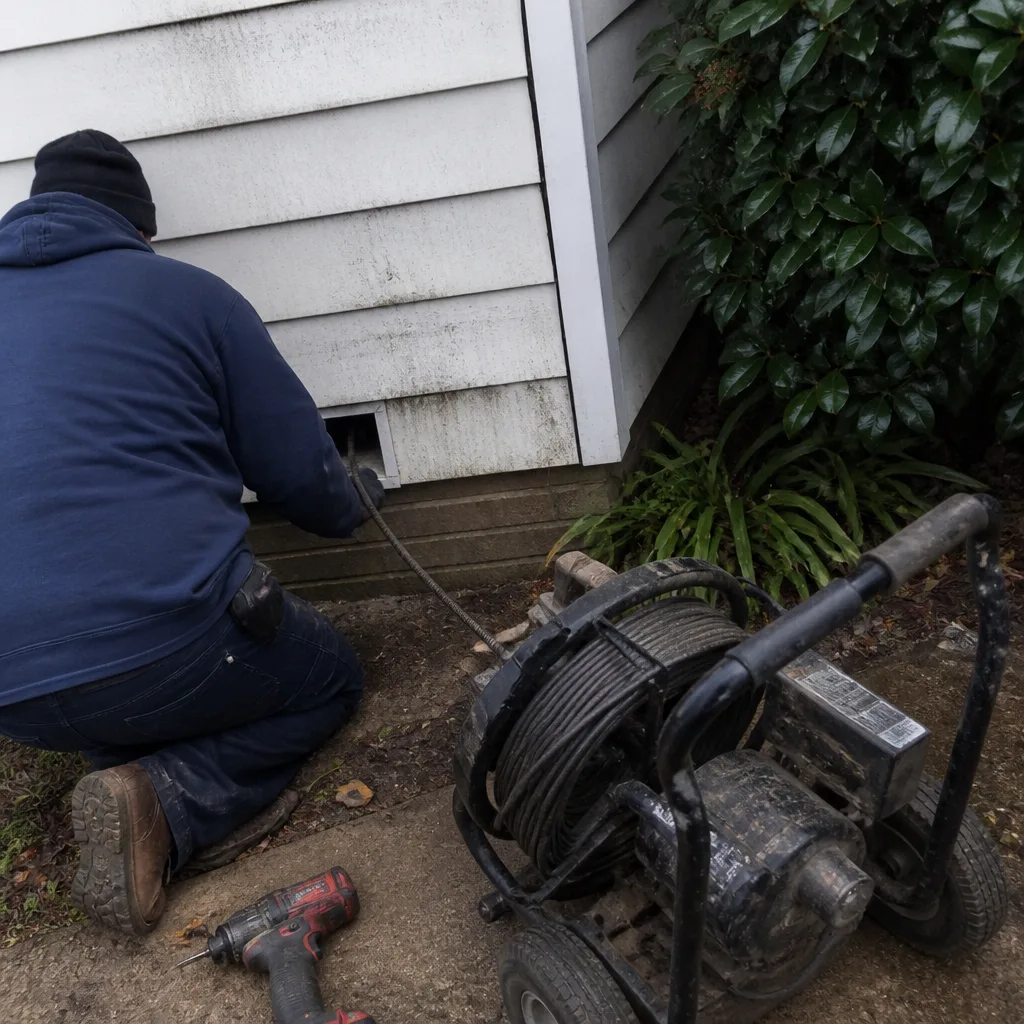 Before
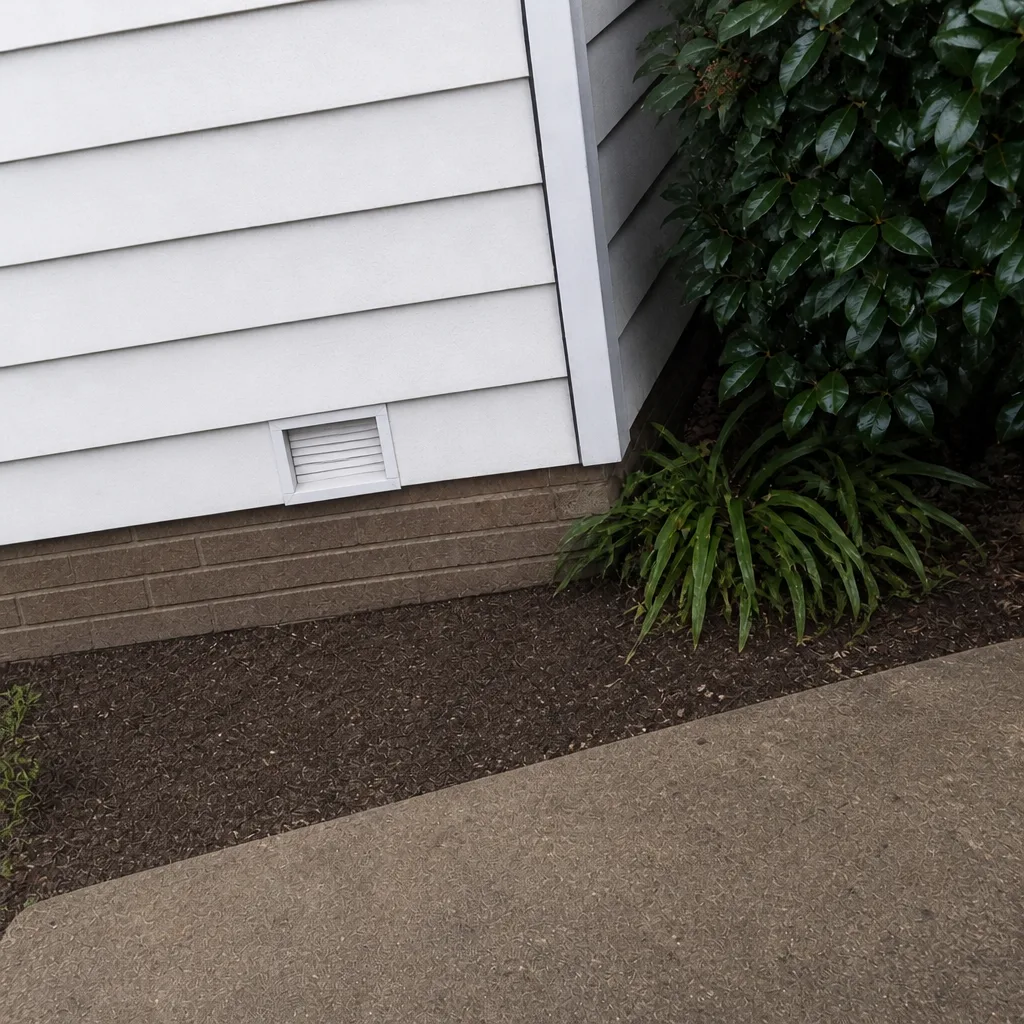 After
When to Call a Professional
Call us when a borescope is the only way to answer the question. That includes any musty smell that returns after a cleaning, visible debris at supply registers within weeks of a cleaning, a register that stops delivering air, a flood event at your property, a renovation with uncapped registers, or an extended vacancy that left the system off. Our technicians have up to 8 years of experience and they arrive with commercial-grade equipment. We don’t quote per vent and we don’t send a teaser price. One flat price per system, agreed before work starts, and before-and-after photos of your own ducts when we’re done. Estimates are free, and if the log shows your cleaning isn’t due yet, we’ll tell you. Duct Cleaning Hampton offers free estimates in Hampton, so call (855) 356-4265. We answer 24/7. Fast dispatch from 7am to 7pm, Sunday through Friday.
Frequently Asked Questions
Most Hampton homes need professional duct cleaning every three to five years, not every year. The interval depends on your system’s run hours, your humidity readings, your filter loading trend, and any flood or renovation events. A home that runs high cooling hours through humid months leans toward three years; a lighter-use home can stretch to five. Your maintenance log is what tells you which way to go. Call (855) 356-4265 for a free estimate on what your specific system actually needs.
Yes, especially when the system has never been logged or the ducts date to an earlier era of less sealed construction. Older homes often have more exposed flex runs in crawlspaces and attics, which collect more debris and can develop condensation. A borescope inspection is the way to tell whether the ducts need cleaning or a partial repair. Call (855) 356-4265 and ask for an inspection first if you’re unsure; that’s a free estimate either way.
A useful entry records the filter date, the MERV rating, the day-30 filter loading score on your own 1-5 scale, indoor relative humidity, a supply-return temperature split, airflow notes for each register, and any event (flood, renovation, shutdown, vacancy) that disturbed the system. Entries should be consistent, not perfect. The pattern across a year is what makes the log useful for setting your cleaning interval.
Not automatically. MERV-8 is often sufficient, especially if your system’s airflow supports it and your ducts stayed clean at the last inspection. Move to MERV-11 or higher when your log shows contamination returning fast, when someone in the home has asthma or significant allergies, or when a borescope inspection finds fine dust in the trunk line right after a cleaning. Measure static pressure before upgrading; a media cabinet with an Aprilaire or Honeywell filter is a better fit than a 1-inch high-MERV pleat.
A vacant home needs a before-departure check and a before-return check, not just a filter change. Before you leave, set the thermostat to a moderate cooling setting instead of off, install a fresh MERV-8 filter, and check the condensate drain. Before you return, look for pests, musty smells, and a wet air handler before you occupy the house. If the system sat off, schedule an inspection even if the cleaning interval hasn’t arrived. Call (855) 356-4265 for a free estimate if you want the property checked on either end.
Honest whole-system pricing in Hampton depends on the size of the system, the number of runs, whether the coil needs cleaning, and any repair work included. A quote that only covers registers and the accessible trunk is not the same job as a full-system cleaning with negative pressure and a borescope. Ask any provider what they clean, what equipment they use, and whether they photograph your own ducts before and after. Those three questions separate a professional cleaning from a surface pass. Call (855) 356-4265 for a written, per-system estimate with no per-vent pricing.
The Bottom Line
Ducts don’t need a calendar; they need a decision tree. In Hampton, that means tracking run hours, humidity, and filter loading rather than copying a 90-day reminder. Build a log, check what you can safely see, and let a technician with a borescope handle the parts you can’t. Plan checkpoints after floods, shutdowns, and renovations, and adjust the rhythm if the house sits vacant for a deployment. Move to higher MERV filtration only when contamination patterns justify it. And when the log says it’s time to clean, choose a cleaner who uses commercial equipment, shows you the before-and-after, and prices per system in writing. That’s the whole checklist. It works because it’s yours, not because it’s on a poster at the hardware store.
Written by the team at Duct Cleaning Hampton.