
Last updated November 15, 2026
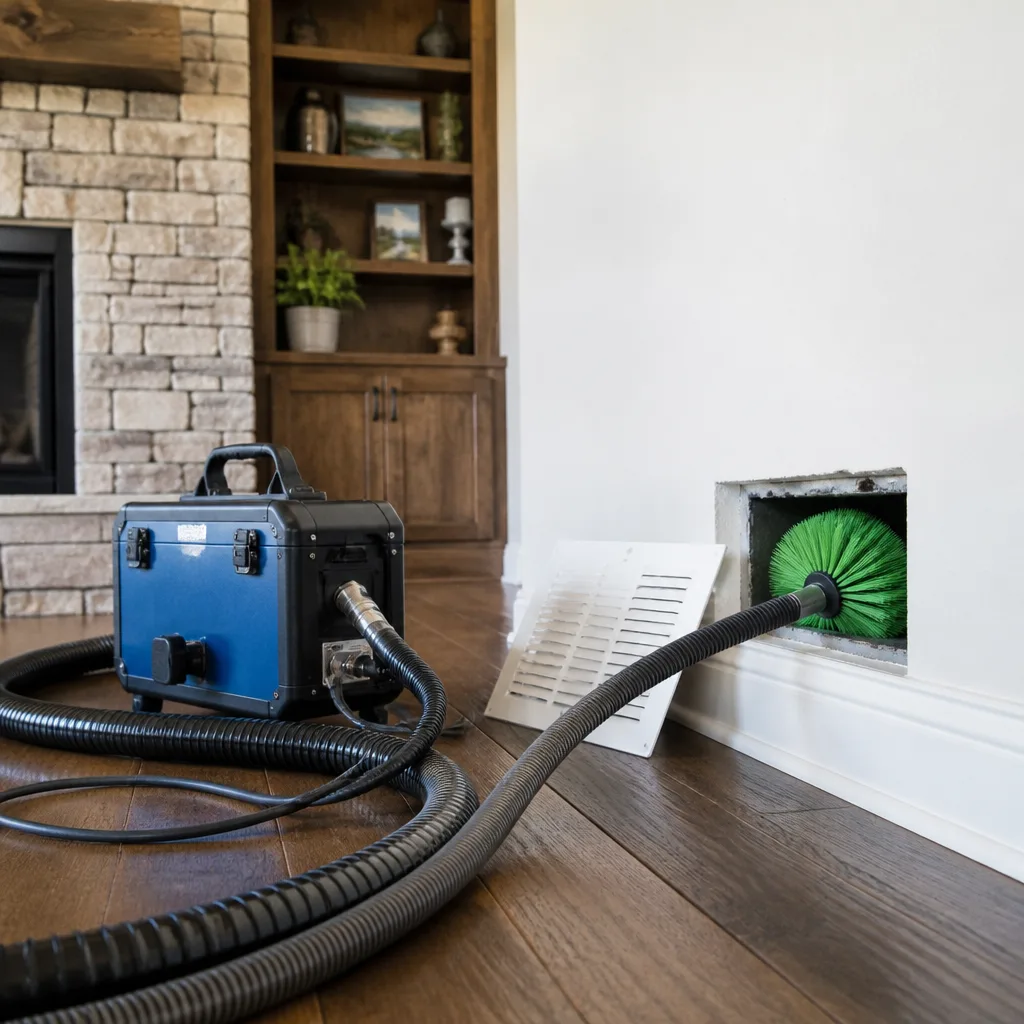 Whole-home duct cleaning
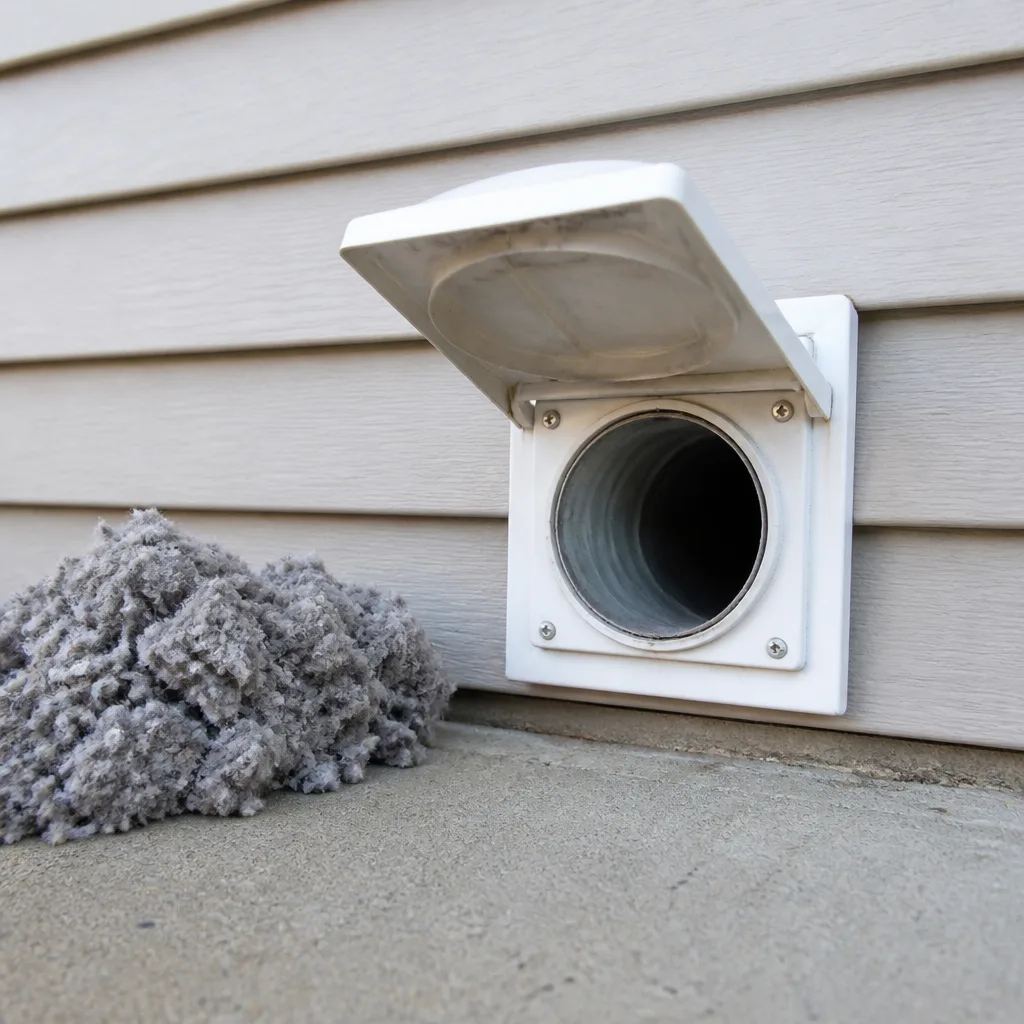 Dryer vent cleaning
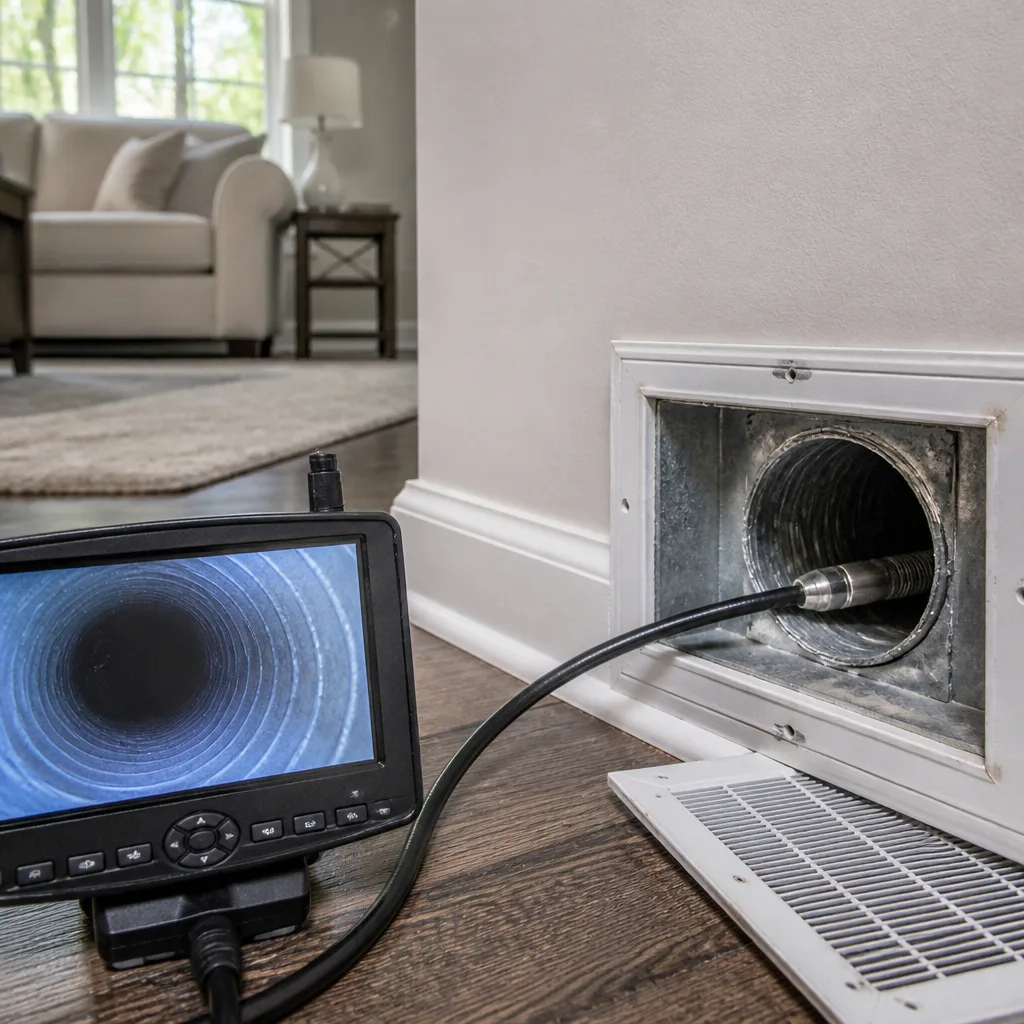 Camera inspection
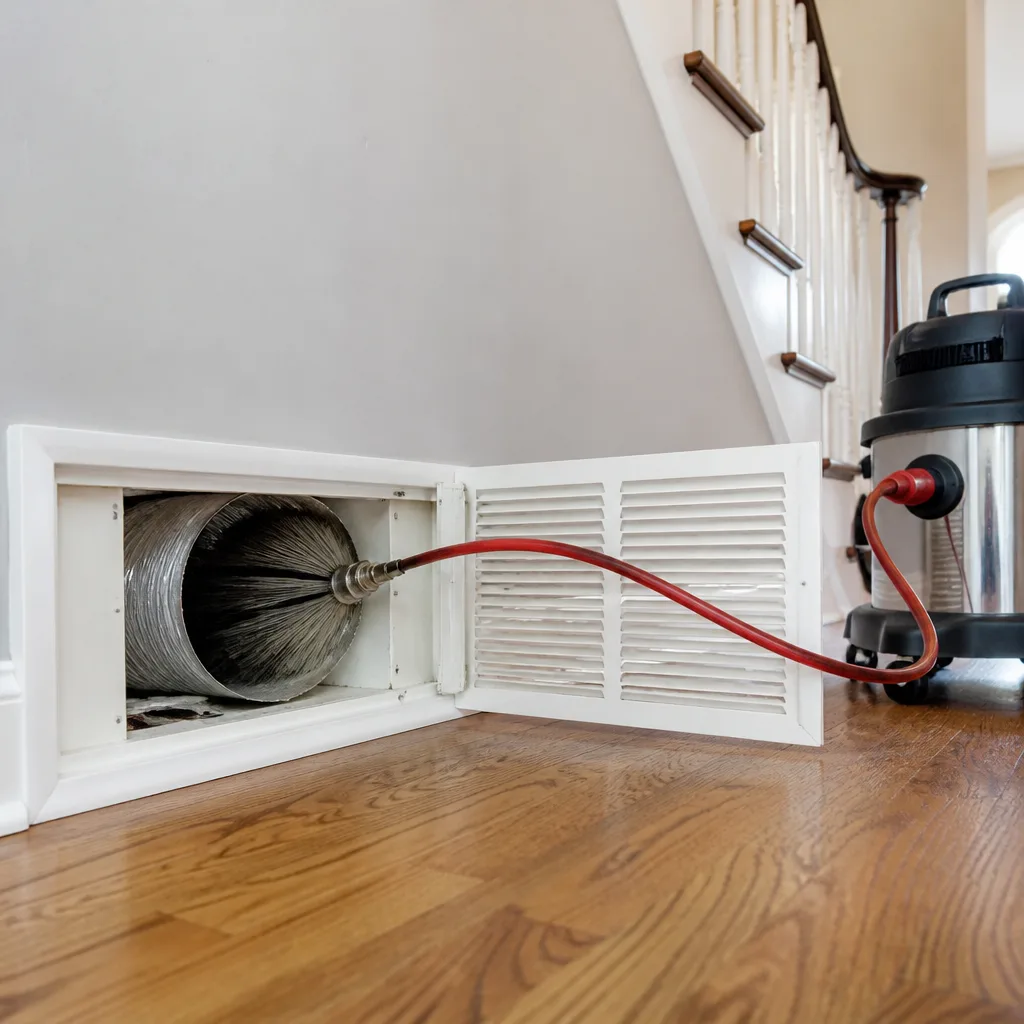 Sanitizing & deodorizing
Whole-system duct and dryer vent check with before-and-after photos - you see exactly what came out of your vents
That "$99 whole-house special" is a bait ad - the real number appears once they are in your hallway, or the "clean" is a shop-vac at the register. We photograph the inside of your ducts before and after instead.
Choosing the Right Air Duct Cleaning Brand: A Buyer’s Guide for Hampton
Here’s the part almost nobody tells you before they start searching for “best air duct cleaning company Hampton VA”: there is no consumer brand hierarchy in this trade. Paint has Sherwin-Williams. Water heaters have Rheem and Bradford White. Duct cleaning has no household name, no logo on the side of the truck that tells you what you’re getting. That vacuum of information is exactly why so many Hampton homeowners end up choosing on two signals that have almost nothing to do with cleaning quality – whichever company ranks highest, or whichever coupon lands in the mailbox. This guide hands you the screens that actually work.
Quick Answer
The right air duct cleaning brand in Hampton is the one that brings professional-grade equipment into your home, treats duct cleaning as its primary service rather than an HVAC add-on, and can show you before-and-after airflow evidence of what came out of your system. Brand name on the van matters far less than equipment lineage, technician training, and whether source removal is actually performed. Use the tests in this guide and you’ll pick well in Hampton every time.
Styles & brands we work with
- Whole-home duct cleaning
- Dryer vent cleaning
- Camera inspection
- Sanitizing & deodorizing
Table of Contents
- Why Duct Cleaning Has No Recognizable Consumer Brands
- What a Franchise Actually Standardizes (and What It Doesn’t)
- Equipment Brands as Your Best Quality Screen
- The Primary vs. Add-On Test: Is Duct Cleaning Their Real Business?
- NADCA Certification Is a Floor, Not a Ceiling
- How to Read Hampton Reviews for Real Signal
- The Questions That Separate Specialists from Generalists
- Common Mistakes to Avoid
Why Duct Cleaning Has No Recognizable Consumer Brands
Think about the last home service you hired. You probably knew the brand of the furnace, the water heater, maybe even the paint in your living room. Duct cleaning doesn’t work that way. The service is invisible, the process happens inside sealed metal and flex, and the result is a house that smells the same going out the door as it did coming in. There is no product nameplate to anchor your trust to.
That information gap has a predictable consequence in the Hampton market. When homeowners can’t evaluate the work itself, they default to the two visible signals they can evaluate: search ranking and price. Neither tells you whether the contractor will actually perform source removal – pulling the accumulated debris out of the system rather than blowing it around the inside of the ductwork – or just vacuum the grilles and run a shop vac over the registers.
What makes this particularly relevant in Hampton is the housing stock. A lot of the older homes here sit under live oaks and pines, run older duct layouts, and deal with the same high summer humidity that gets pulled into return ducts all season. When dust, pollen, and humidity combine, the residue that settles inside ductwork can be substantial. Whether a contractor has the equipment to actually remove that residue is the whole ballgame – and brand recognition tells you nothing about it.
So we reframe the question for you. Instead of “who’s the best brand,” ask “what equipment do they run, what’s their primary trade, and can they show me the inside of my ducts before and after?” Those are answerable questions, and they’re the ones this guide walks you through.
What a Franchise Actually Standardizes (and What It Doesn’t)
Franchise names create a sense of consistency, and in some trades they deliver it. In duct cleaning, the franchise model standardizes less than most homeowners assume. Here’s what it typically covers and what it usually leaves to the individual operator:
What a franchise name may standardize:
- Marketing and branding guidelines so the van, the website, and the phone script match across locations
- General operating procedures and a baseline of advertised services
- Some shared training materials, though enforcement varies by franchisee
What it typically doesn’t standardize:
- Which specific equipment a local operator brings into your home. Two franchisees under the same name can run dramatically different tooling, from a professional rotary brush system to a basic entry-level vacuum.
- The training and certification level of the technician who shows up. That is a local hiring decision.
- Whether the operator has a real quality control process. Some inspect and photograph the inside of the ductwork before and after; others don’t.
- How the business is staffed day to day. Whether the work is done by a core crew or farmed out to crews working for several companies.
If you’re looking for a specific Hampton provider, the franchise brand doesn’t insulate you from a bad job. What does is evidence: a technician who can answer equipment questions without hesitation, and a process that includes documented before-and-after photos. That’s not a knock on franchises – it’s a reminder that the brand name is a marketing layer, not a quality guarantee.
Ask for specifics. A quality-focused operator doesn’t mind the question and often launches into the answer unprompted. The one who pivots to the price sheet when you ask what equipment they run has told you plenty.
Equipment Brands as Your Best Quality Screen
Since the service brand doesn’t help, the equipment brand does. In our experience, asking about equipment is the single best proxy for quality, because it’s expensive, verifiable, and revealing. Purpose-built duct cleaning equipment carries real costs that repurposed shop vacuums and entry-level units don’t.
Professional-grade systems you’ll hear referenced in serious discussions of the trade include:
- Rotobrush – a rotary brush system widely regarded as the benchmark for thorough mechanical cleaning. It rotates a brush through the duct to loosen and pull out accumulated debris rather than just vacuum the surface. The same line of questions you ask here applies to air duct cleaning in any home.
- Nikro – industrial-grade equipment used on commercial and restoration-grade air quality projects, not just residential ducts. If a contractor runs it, that’s a meaningful capability signal.
- Abatement Technologies – air filtration equipment that signals a commitment to real contamination control, meaning the debris stays captured rather than being redistributed into the home while work happens.
Notice what these names have in common. They aren’t consumer products. They’re specified for professional projects and carry a real capital investment. A generalist with a shop vac and a brush kit can’t replicate that capability, and asking “what do you run?” surfaces the difference in one question.
The brand comparison also extends to the systems around your ducts. Honeywell and Aprilaire are the manufacturers most widely trusted in residential filtration and air quality systems. A provider who is familiar with those systems can talk to you about filters, purifiers, and the interaction between your filtration setup and the ductwork – without leaving that piece of the puzzle to someone else.
The Primary vs. Add-On Test: Is Duct Cleaning Their Real Business?
This is the test most Hampton homeowners never think to run, and it’s the one that separates the field fastest. Many companies that advertise duct cleaning are primarily plumbing, pest control, or HVAC businesses with duct cleaning offered as an extra line item. That structure has consequences for the work you receive.
Why add-on status matters:
- When a generalist has a tight HVAC repair day, duct cleaning jobs get bumped or rushed
- Technicians who split their time across trades accumulate less depth in any one of them
- Equipment investment tends to follow the business where the company’s reputation is built
- The offer often leads with a teaser price, and the real cost reveals itself on site
How to tell whether duct cleaning is the primary service:
- Check the service menu. If duct cleaning is one of three services offered – not one of twenty – the business was built around it. A tight service line is a good sign.
- Ask the equipment question directly. A contractor who owns multiple pieces of professional-grade duct equipment has made an investment that only makes sense if this is their main line of work.
- Ask for a process explanation. A specialist will talk through each step: containment, negative pressure, mechanical agitation, debris collection, and documented before-and-after photos. A generalist will give you a timeline and a price.
- Check whether the company also handles related air-system work. A business that does duct cleaning, dryer vent work, and duct repair is invested in the whole air system – not just the cleaning corner of it.
Here in Hampton, that matters because our summers run long and humid, and our older homes often have duct layouts that haven’t been touched in a long time. That’s specialist territory. The dryer vent you might also think about is a fire-risk issue, not a cleaning convenience, and it’s dryer vent cleaning that addresses it – a related but distinct job that belongs under the same specialist roof.
NADCA Certification Is a Floor, Not a Ceiling
The National Air Duct Cleaners Association (NADCA) is the recognized industry body for duct cleaning. Its Air Systems Cleaning Specialist credential is the benchmark most informed homeowners ask about, and it deserves that status. But it’s important to understand what it certifies and what it doesn’t.
What the ASC credential covers:
- Core knowledge of the duct cleaning process and system understanding
- Compliance principles and industry standards for source removal
- A baseline of professional training and accountability
What it doesn’t cover:
- The specific equipment on the truck. Two certified contractors can have dramatically different tooling.
- The quality control process – whether photos are taken before and after, whether a supervisor inspects the work.
- Whether the company treats duct cleaning as a primary business or an add-on.
- The attitude and communication of the person actually in your home.
So use NADCA certification as your starting screen, then add the equipment screen, the primary-service screen, and the evidence screen. Together, those layers tell you far more than any single credential. A certified contractor with the wrong equipment for your job still leaves debris behind. An uncertified one with the right equipment may do good work but lacks the framework that certification provides.
If you’re hiring in Hampton and the contractor can’t produce evidence of certification, ask why. Sometimes there’s a reasonable explanation, but it’s a question worth asking. If you want to find the certified ones, start with the NADCA directory and cross-reference with the local market – Hampton is small enough that you’ll recognize most of the names.
How to Read Hampton Reviews for Real Signal
Reviews are useful, but not all reviews are equal. A five-star review saying “great job, nice people” tells you the crew was pleasant. It tells you nothing about whether source removal happened. That’s the specific question you need reviews to answer, and the specific language to look for is more revealing than the star count.
Language that signals genuine source removal was performed:
- References to before-and-after photos or video of the inside of the ducts
- Descriptions of the technician explaining what was found – amounts of debris, which areas were worst
- Mentions of containment equipment or plastic barriers being set up before work began
- Details about specific tools or process steps the reviewer witnessed
- Reports that the reviewer saw the debris collected – how much came out of the system
- Comments about improved airflow or reduced dust a week or two after the visit
Language that often signals a surface-level cleaning:
- Reviews that mention only the dispatch experience, scheduling, or phone manner
- Praise that centers on the coupon price without describing the work
- Vague language like “cleaned everything up” or “vacuumed the vents”
- Complaints about added charges once on site that aren’t reflected in the original quote
Look for pattern across reviews, not isolated comments. And pay attention to whether the contractor responds to complaints in a way that acknowledges the specific process concern. Responsive, specific replies tell you the business thinks about its work, not just its rating.
For Hampton specifically, reviews referencing older homes and the long summer humidity season tend to be worth reading closely. If reviewers describe significant debris levels in a home with an original duct layout, that suggests the company performed real source removal and disclosed it honestly.
The Questions That Separate Specialists from Generalists
When you call or the estimator arrives, the questions you ask will tell you a lot. Not all questions are created equal – some are easy to answer without doing the work, some are revealing. Here are the ones that actually separate the specialists:
- “What equipment do you bring into the home?” A specialist names specific professional-grade systems and explains why. A generalist gives a generic answer or pivots.
- “Do you take before-and-after photos of the inside of the ductwork?” Specialists usually answer yes without hesitation, because it’s part of their standard process.
- “What’s your primary business?” If duct cleaning isn’t the first or second answer, that’s a signal.
- “Do you do containment and negative pressure before starting?” The right answer involves setting up physical barriers and pulling air away from the living space, so debris doesn’t redistribute while work happens.
- “Is the price flat per system or per vent?” A flat, written price agreed before work starts is one sign of a business that has real confidence in its service. Pricing per vent can hide upcharges.
- “Do you also handle related air system issues like dryer vents or duct repair?” A specialist scope that covers the full air system is another good signal.
The answers you get tell you more than any website you’ll find. A specialist will often launch into the explanation before you finish asking. A quick answer from someone who has been doing this for years reads differently from a script delivered by someone working from a call center list. On the call, keep an ear for whether the answer evolves as you ask follow-ups – that’s what tells you you’re talking to someone who actually runs the equipment, not someone reading from a sheet.
Common Mistakes to Avoid
Even well-prepared Hampton homeowners can slip into bad selection logic. Here are the specific traps to watch for:
- Choosing on coupon price. The lowest advertised number often becomes a large invoice once the technician is on site. A low figure with no system-level scope attached is a warning, not a deal.
- Assuming the van name means consistency. Under the same franchise banner, local operators can run very different equipment. Ask about the equipment, not the brand.
- Accepting a per-vent quote without a system scope. Per-vent pricing lets a contractor show you a small number and grow it by counting vents. A flat price per system agreed in writing is a cleaner structure.
- Skipping the before-and-after evidence request. If a company won’t photograph the inside of your ducts before and after, you’ll never know what was actually cleaned. Standard process for a specialist includes this step.
- Treating a certified name as a complete answer. Certification is a starting point, not the finish line. Pair it with equipment questions and process transparency.
- Overlooking the related air system jobs. If the same specialist could also clear your dryer vent cleaning job or address a duct repair, you’re looking at a business with real air-system depth – not just a cleaning service.
- Waiting until the interior shows visible dust problems. By the time you notice dust on the registers, the duct system may have been accumulating debris for a while. In a humid climate, proactive scheduling matters more than reactive cleanup.
See the difference
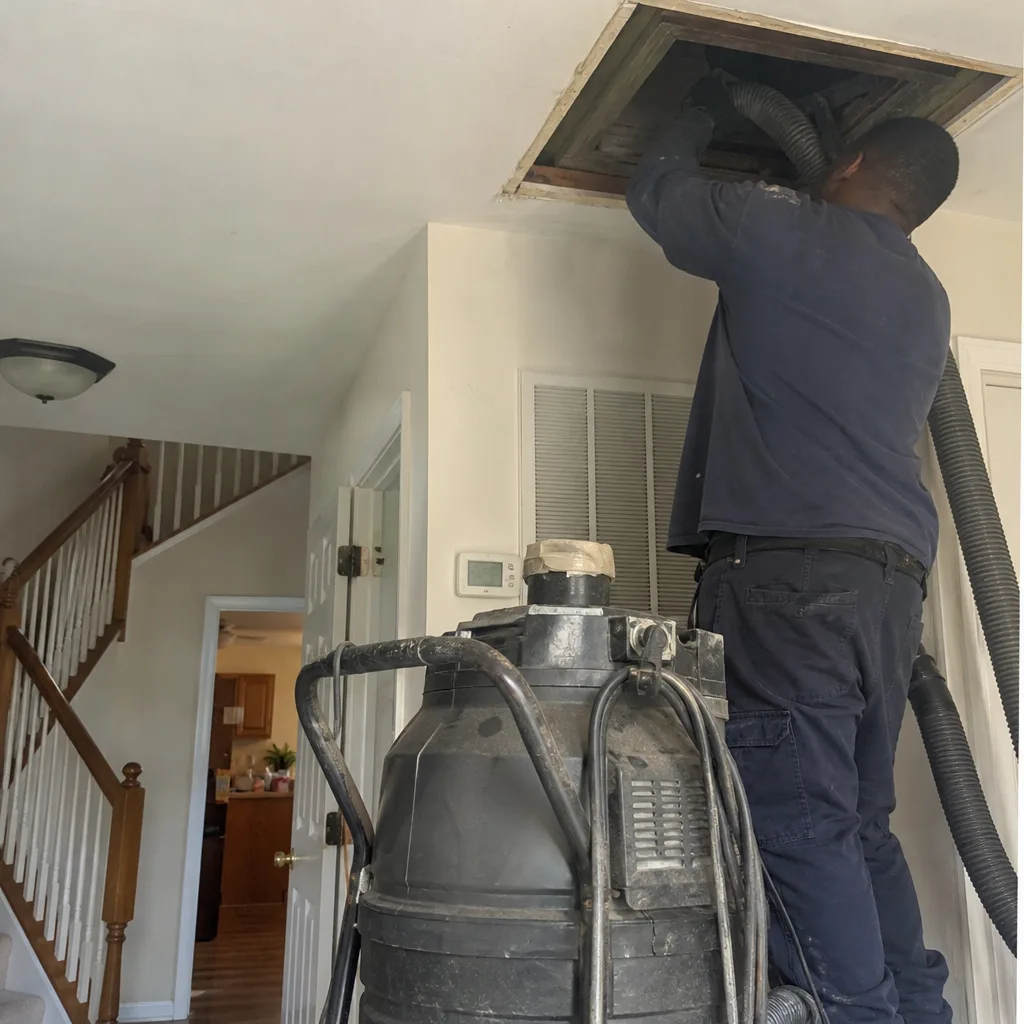 Before
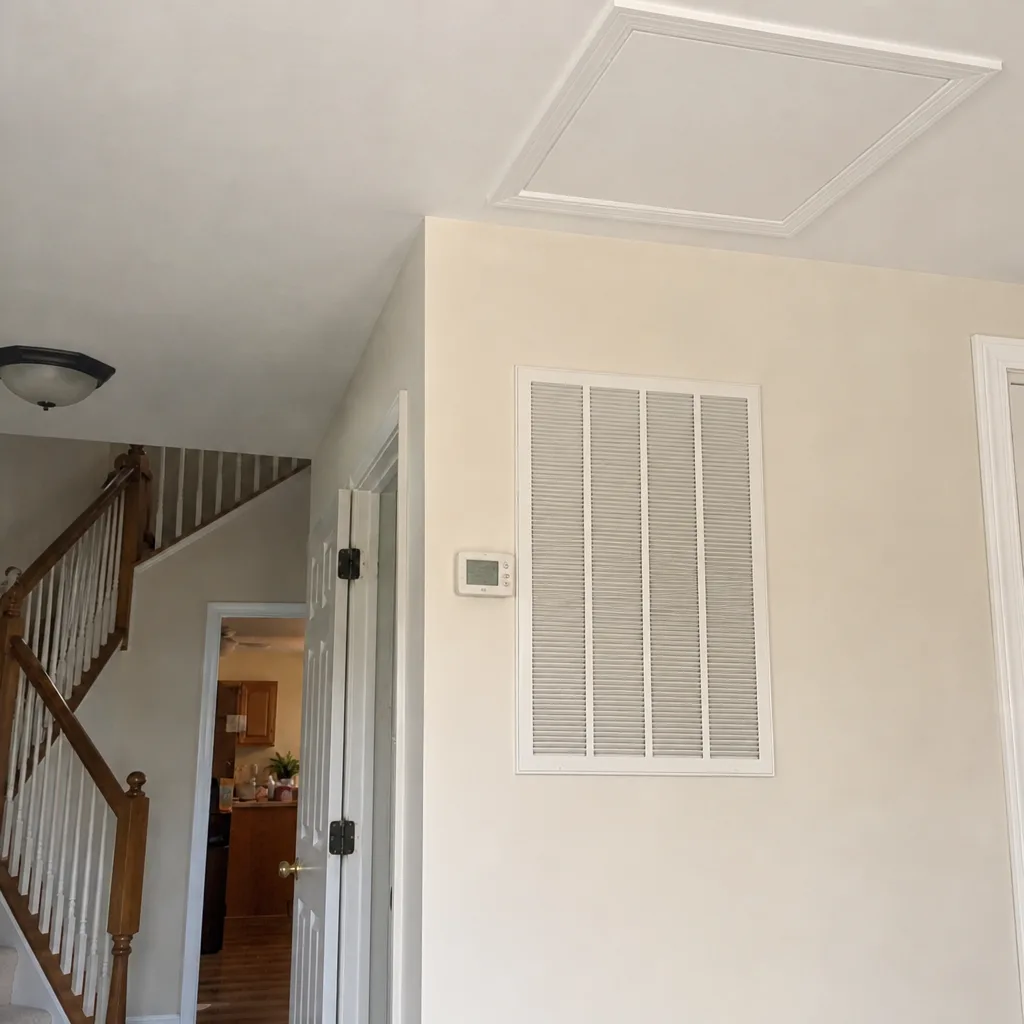 After
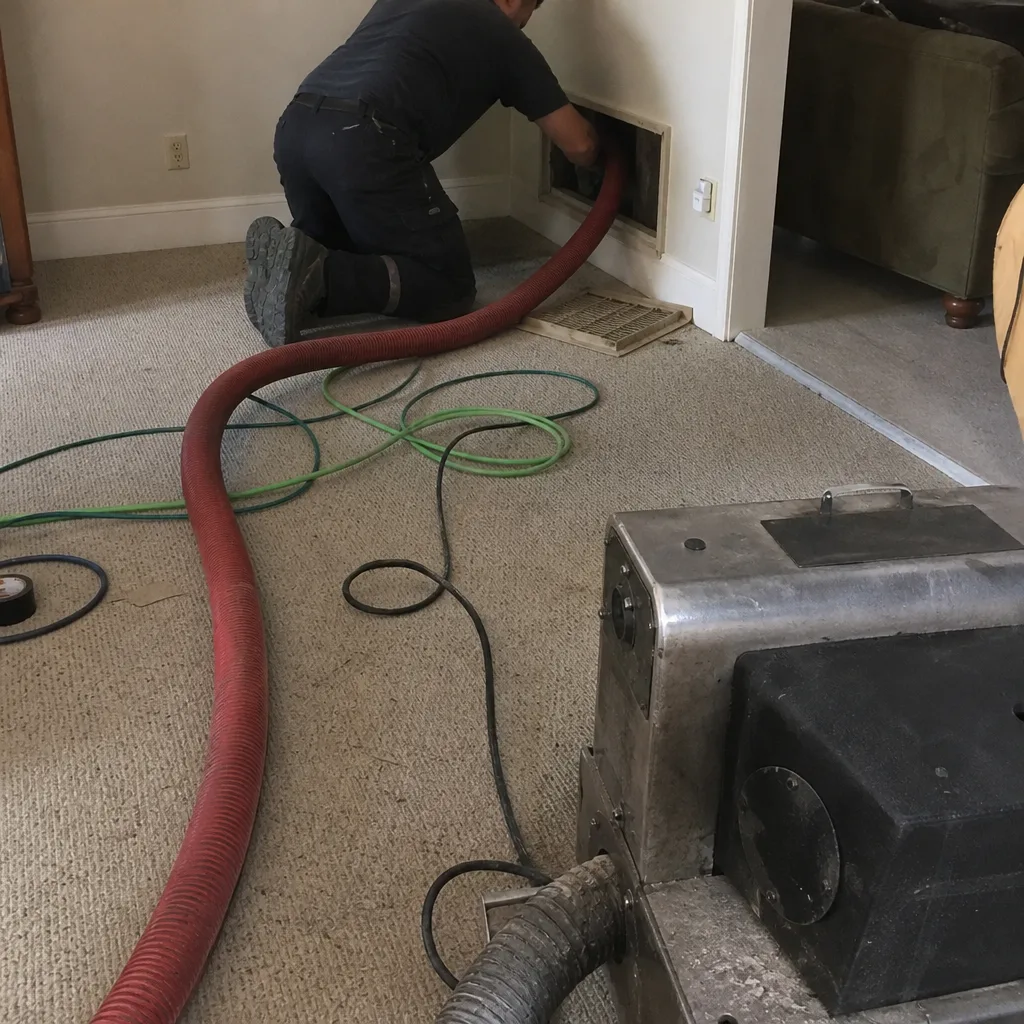 Before
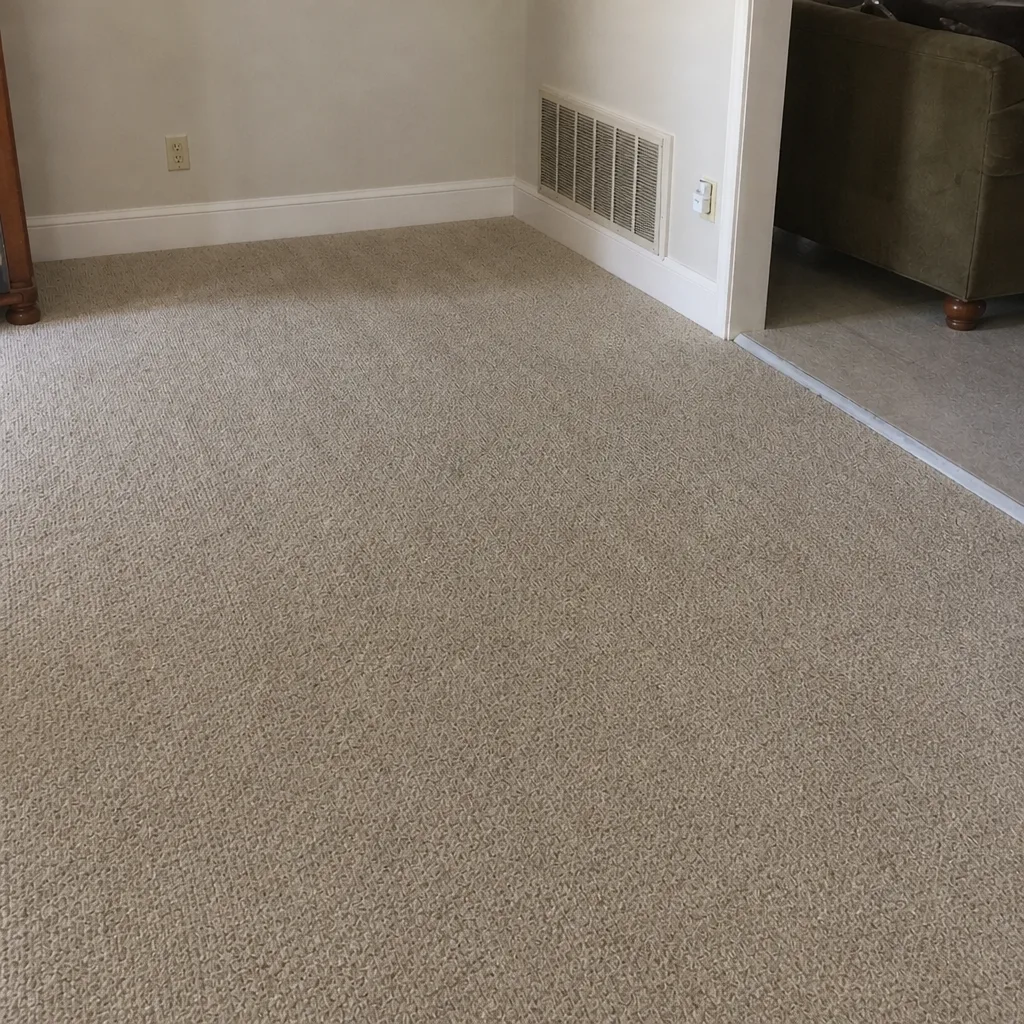 After
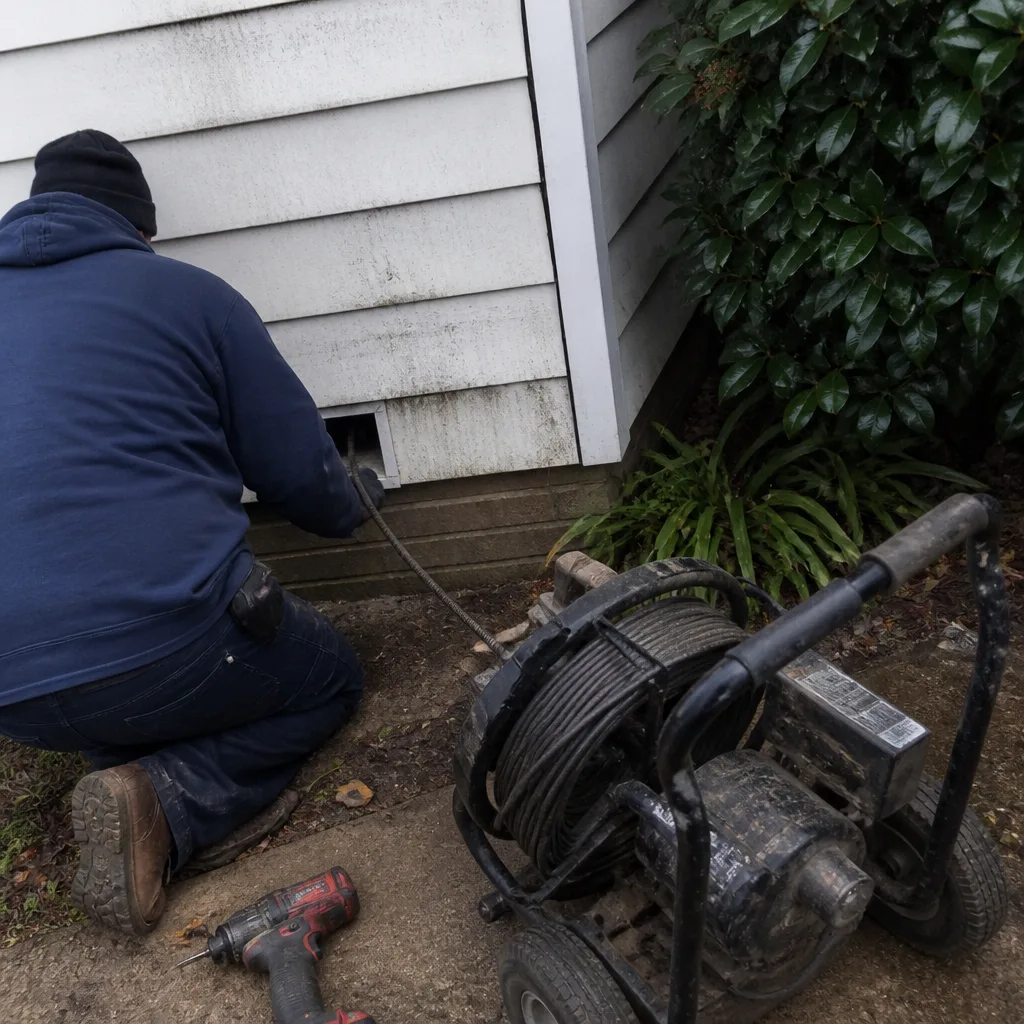 Before
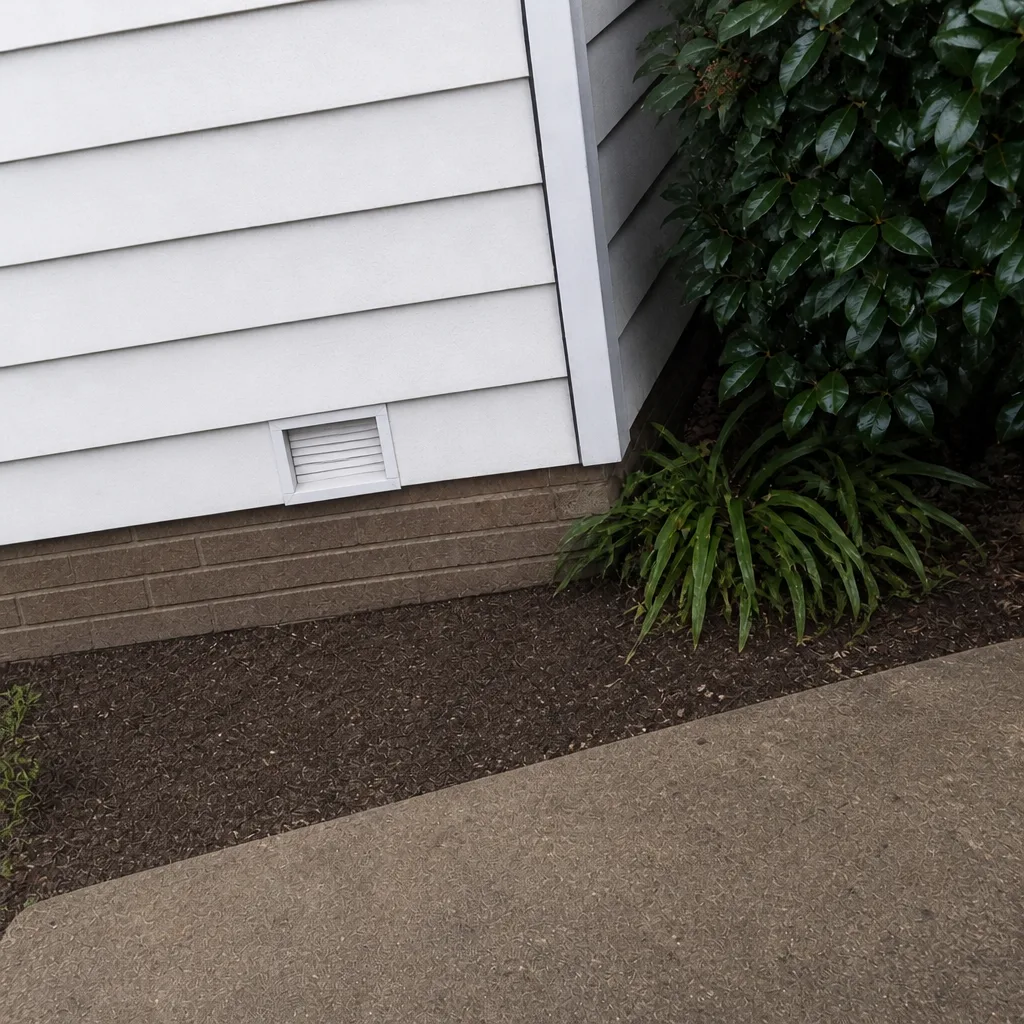 After
When to Call a Professional
Some warning signs are worth acting on quickly, and others can wait for a planned appointment. Clear signs it’s time to call a duct cleaning specialist include: visible dust streaming from supply registers when the system turns on, musty or stale smells that persist after the HVAC runs a full cycle, allergy symptoms that worsen inside the house, and a noticeable rise in energy bills without a corresponding change in usage. If a routine HVAC service visit reveals heavy debris inside the duct, or a home inspection turns up contaminated ductwork, that’s also a signal to call.
Duct Cleaning Hampton offers free estimates in Hampton – call (855) 356-4265. Our technicians have up to 8 years of experience, and every job ends with the written price we agreed before work began. We answer 24/7, with fast dispatch from 7am to 7pm, Sunday through Friday.
Frequently Asked Questions
The cost depends on the size and layout of your system, the number of returns and registers, and how much buildup is present. We don’t publish teaser coupon figures because we don’t want you comparing a small number that changes on-site. We price per system, agree the amount in writing before starting, and hold to it. Call (855) 356-4265 for an exact quote – estimates are free.
Usually because the lower quote isn’t for the same job. Some low prices cover only surface vacuuming of the registers, without mechanical cleaning inside the duct runs, without containment, and without documented before-and-after evidence. Others start with a low figure and grow the invoice once the technician sees the system. We give one flat price per system, agreed in advance. Call (855) 356-4265 for an exact quote.
Require before-and-after photos from inside the ducts. A specialist takes them as part of the process and shows them to you at the end. If a company can’t show you that evidence, or offers only a verbal summary, you have no way of knowing whether source removal happened. Call (855) 356-4265 to see how we document our work.
There’s no universal schedule – it depends on the home, the occupants, and the climate. Homes with pets, allergy sufferers, recent renovations, or visible buildup at the registers typically benefit from more frequent service. A home with a clean register and no allergy concerns may go much longer. A technician can give you a realistic interval after looking at the system, and the answer should account for Hampton’s long humid season. Call (855) 356-4265 for an assessment.
Most homeowners stay. We use proper containment and negative pressure to keep debris from redistributing into the living space, so the home stays usable while the work is going on. If anyone in the household has severe respiratory conditions, mention it when you book so the team can plan around it. Call (855) 356-4265 to discuss.
Yes. Duct cleaning, dryer vent cleaning, and air duct repair are the three services we offer, and running them under one roof means you don’t have to coordinate several contractors when a system issue spans more than one job. If you’re not sure what your system needs, describe what you’re seeing on the call. For duct cleaning and repair in Hampton, call (855) 356-4265. See the full range of work at Duct Cleaning Hampton.
The Bottom Line
There is no consumer brand hierarchy in duct cleaning, so the right screening question isn’t “which brand” – it’s “what equipment, what primary service, and what evidence?” Look for professional-grade tooling like Rotobrush and Nikro, containment equipment from a serious filtration name, a business that treats duct cleaning as its main line of work rather than a side job, and documented before-and-after photos of the inside of your system. NADCA certification is a floor, not a ceiling – useful as a starting screen, not as a complete answer. And when you read reviews, look for the language of process, not the language of price. Those four screens will serve you better in Hampton than any brand name, and they’re the way we choose to run our own work.
If you’ve got questions about your system, or you want to see what we found inside a duct and what we did about it, we’re happy to talk.
Call (855) 356-4265 for a free estimate. We answer 24/7. Fast dispatch from 7am to 7pm, Sunday through Friday.
Written by the team at Duct Cleaning Hampton.