
Last updated November 15, 2026
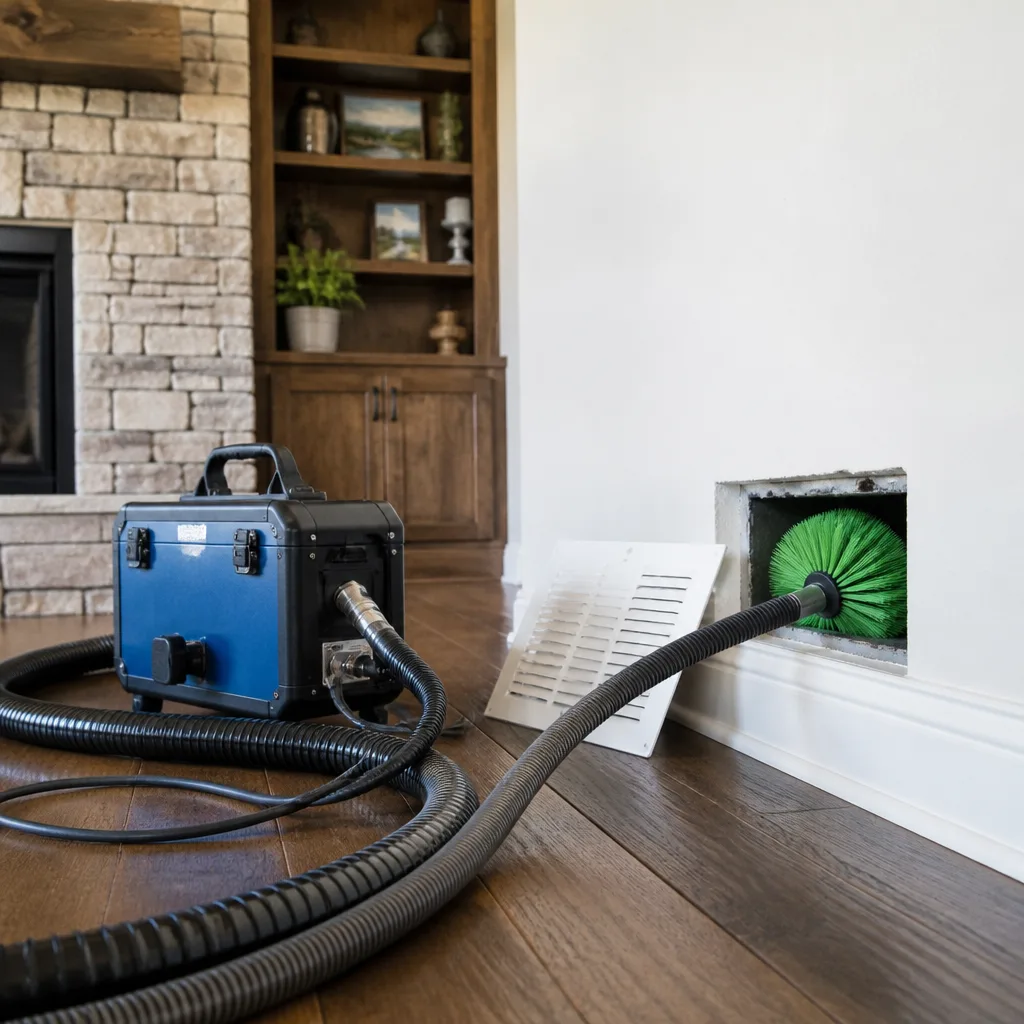 Whole-home duct cleaning
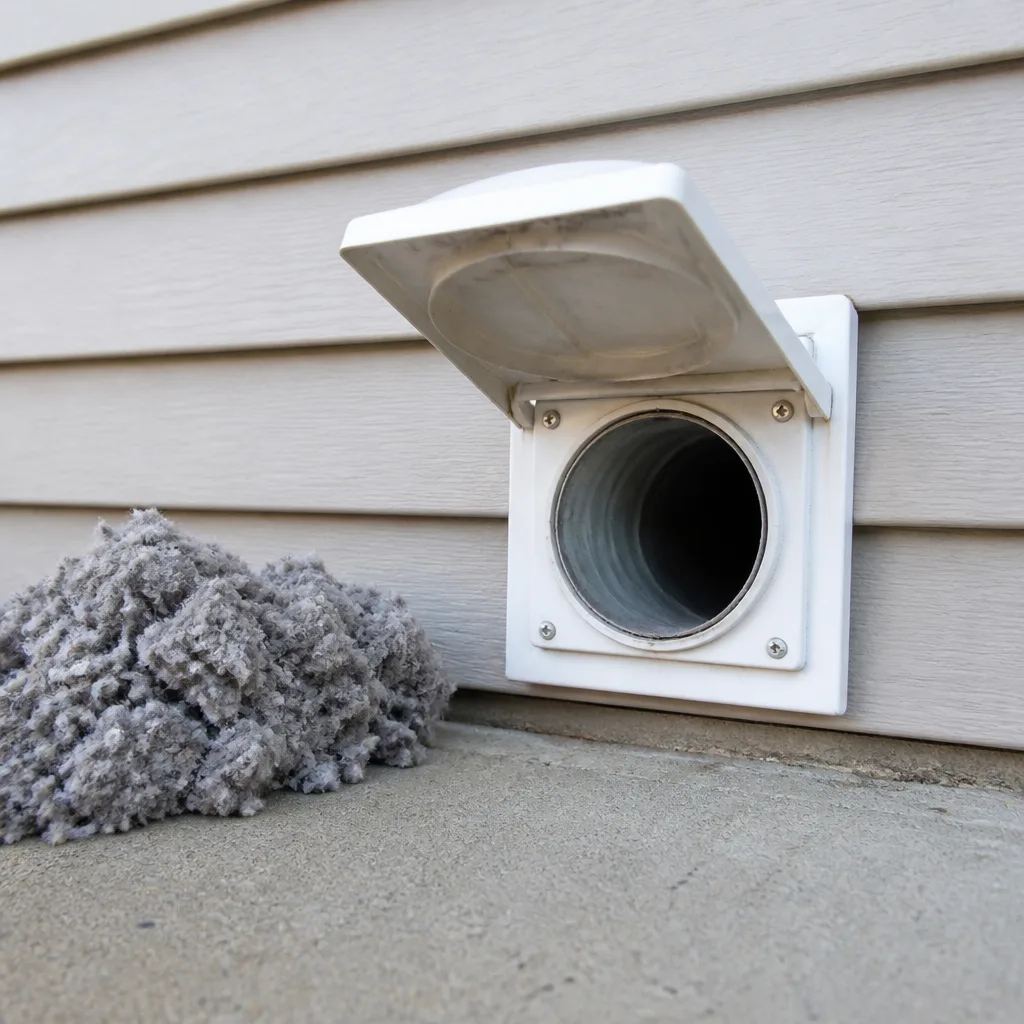 Dryer vent cleaning
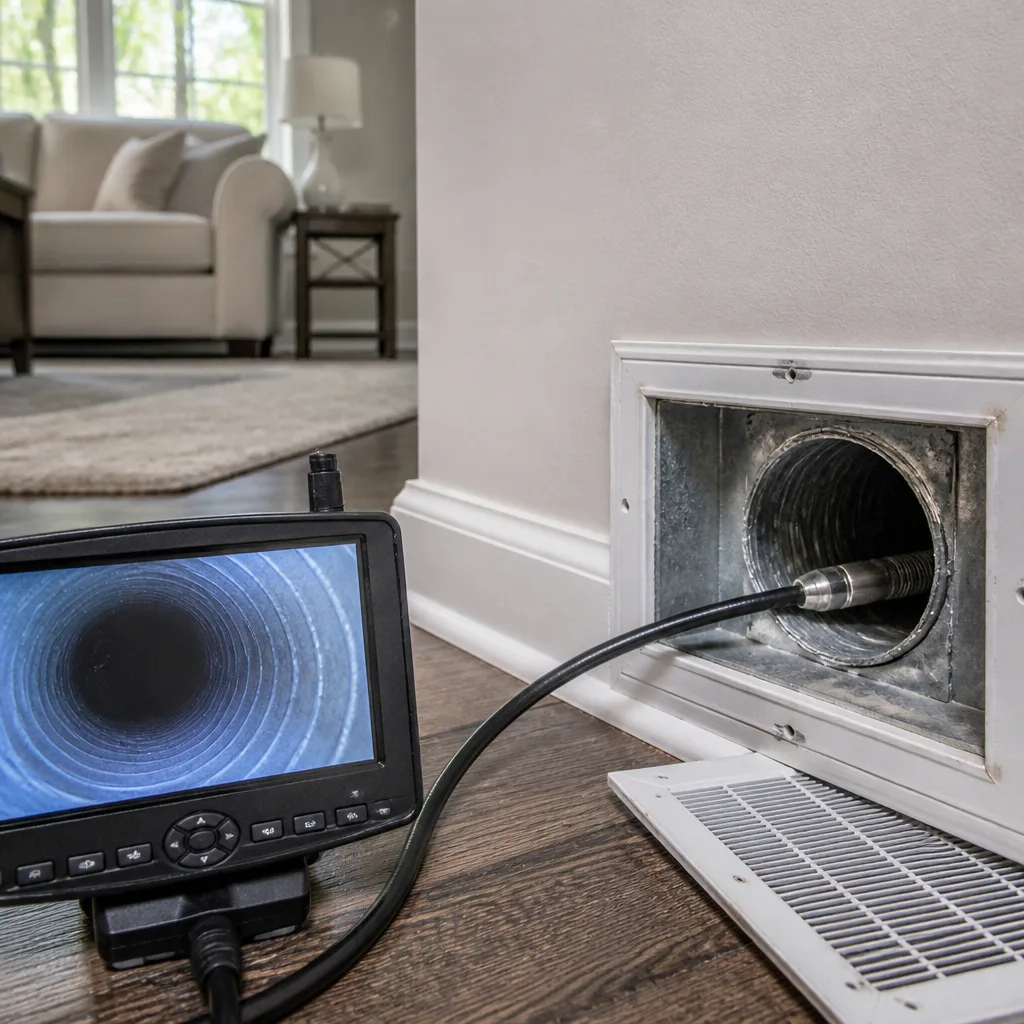 Camera inspection
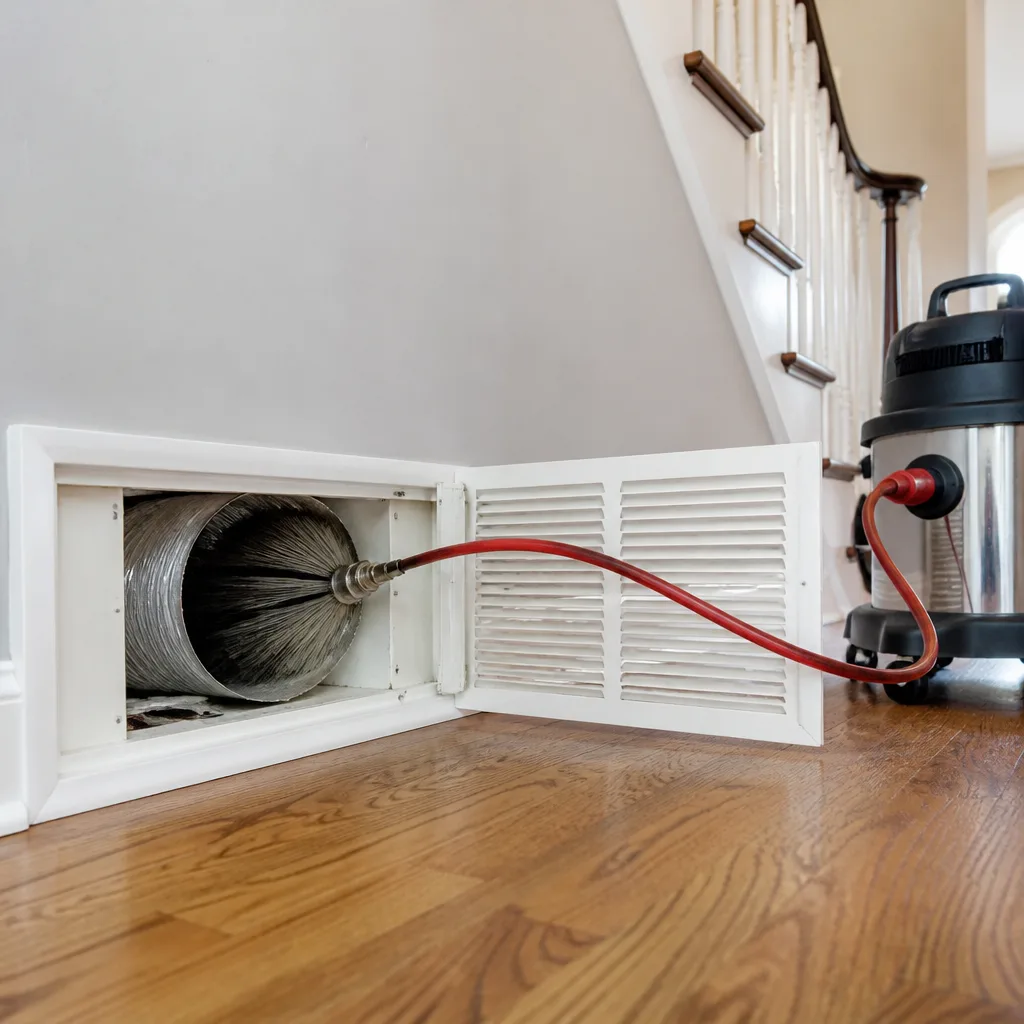 Sanitizing & deodorizing
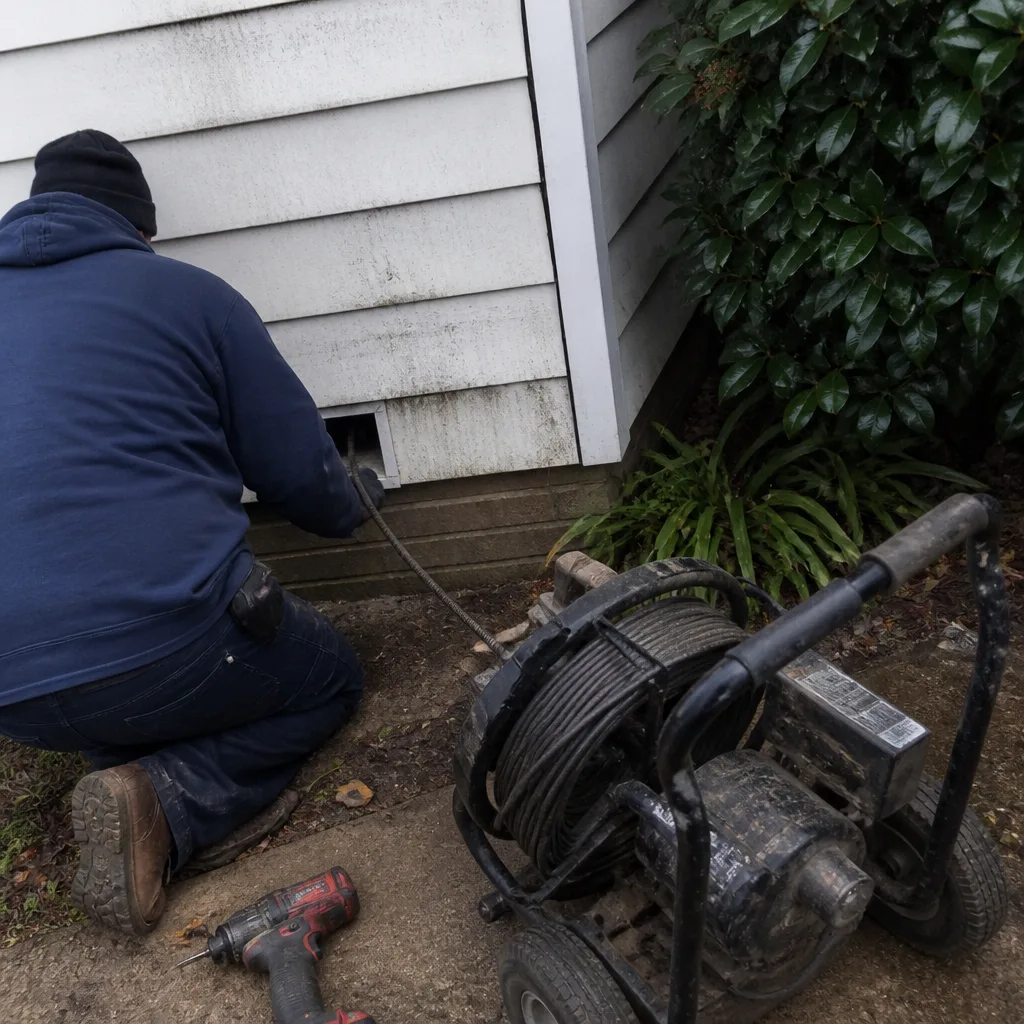
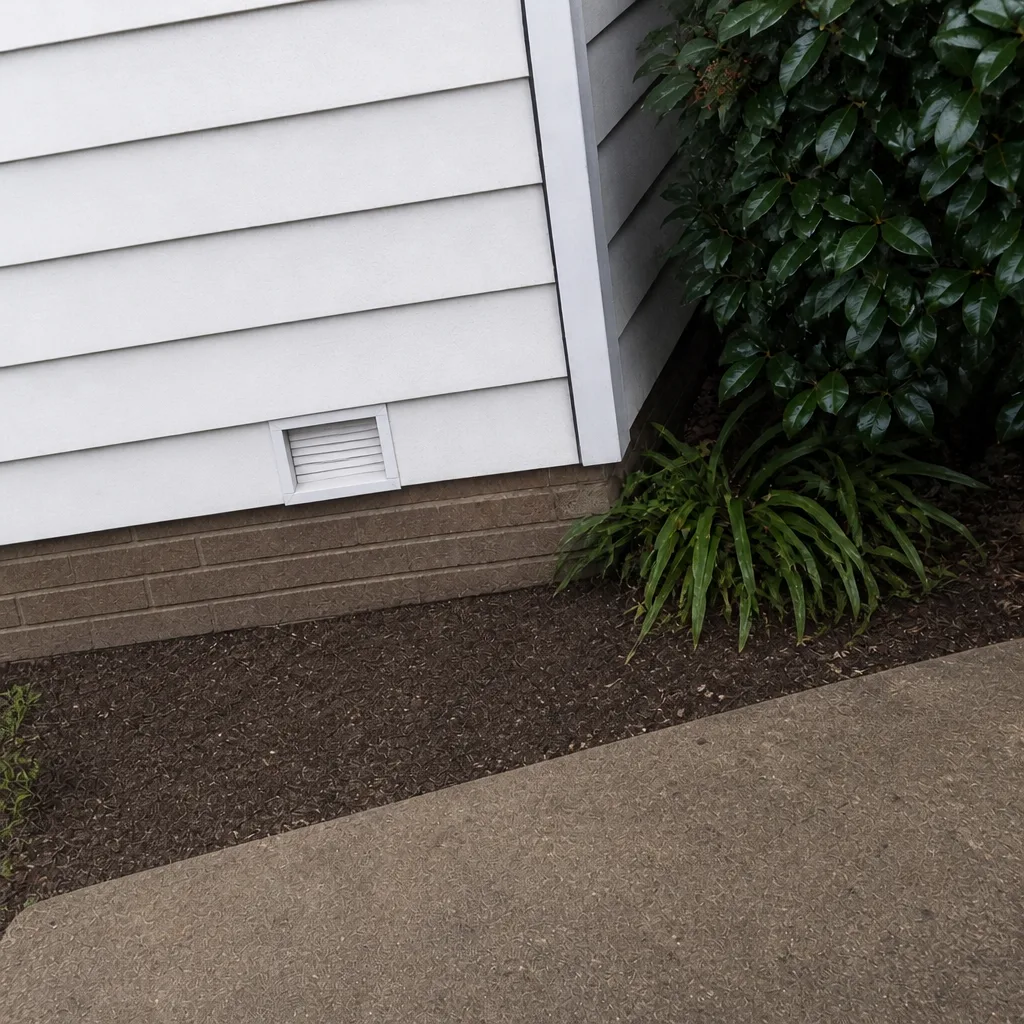
Whole-system duct and dryer vent check with before-and-after photos - you see exactly what came out of your vents
That "$99 whole-house special" is a bait ad - the real number appears once they are in your hallway, or the "clean" is a shop-vac at the register. We photograph the inside of your ducts before and after instead.
The Complete Guide to Air Duct Cleaning in Hampton
Most air duct guides are written for a hypothetical home in a hypothetical climate. Hampton homes don’t live in that guide. This city sits in a humid subtropical climate zone where warm, moisture-heavy air hangs on through long summers, and much of the housing stock went up before the 1990s with duct layouts that predate modern sealing practices. Those two facts change what “clean” actually means, which tools are needed to get there, and how you verify the work was done. This guide walks through the real process: why each step exists, what contamination looks like in a Hampton system, and how to tell a genuine source-removal job from a surface vacuum-and-go.
Quick Answer
Air duct cleaning in Hampton means removing accumulated dust, debris, and microbial growth from the inside of your ductwork using source-removal methods – mechanical agitation plus commercial-grade negative air pressure – not just vacuuming the grilles. In Hampton’s humid climate, flex duct and older metal systems are prone to moisture-driven buildup, which makes pre-inspection and the right equipment more important than a low headline price. Professional cleaning, done correctly, restores airflow and removes the reservoir of material that recirculates every time your system runs.
Styles & brands we work with
- Whole-home duct cleaning
- Dryer vent cleaning
- Camera inspection
- Sanitizing & deodorizing
Table of Contents
- Why Hampton’s Climate Makes Duct Cleaning Different
- Source Removal vs. Blow-and-Go: What’s Actually Different
- What Older Hampton Homes Hide Inside Their Ducts
- The Equipment Difference: Why Commercial-Grade Matters
- The Cleaning Process, Step by Step
- How to Verify the Cleaning Was Actually Completed
- How Often Ducts Really Need Cleaning in Hampton
- What Air Duct Cleaning Costs and How Pricing Works
Why Hampton’s Climate Makes Duct Cleaning Different
Hampton sits in a warm, humid climate zone where summer dew points climb high and stay there. That matters inside your ductwork because moisture is the ingredient that turns ordinary dust into something else entirely. Dust alone is inert. Dust plus sustained humidity becomes a food source for mold, mildew, and bacteria, which is why the inside of a neglected duct system in this climate can develop a musty, earthy smell that no amount of Febreze will touch.
Flex duct – the corrugated, foil-wrapped product common in homes built or retrofitted over the last several decades – makes this worse. Its ribbed interior catches dust on every ridge, and its insulation can trap condensation when cold supply air meets humid attic or crawlspace air. Over a few seasons, that combination produces a biofilm layer that clings to the duct wall. A shop vac dragged across the surface won’t remove it. Mechanical agitation will.
Hampton’s housing stock adds a second layer to this. Homes built in the mid-twentieth century, including a large share of the city’s older neighborhoods, often have duct systems that were installed before modern sealing standards, sometimes with board insulation that needs a careful eye before anyone starts working inside it. Understanding both the climate and the construction is why we start every job with inspection rather than a vacuum.
If you’ve noticed dust settling faster than it used to, a faint musty smell when the system kicks on, or rooms that never quite cool the way they should, those are the three signals that point most often to a duct problem in this climate. None of them are emergencies. All of them are worth investigating before they get worse.
Source Removal vs. Blow-and-Go: What’s Actually Different
There are two basic approaches to duct cleaning, and they are not close relatives. Source removal means physically dislodging the contamination from the duct surfaces and capturing it under negative pressure so it leaves the system entirely. Blow-and-go means blasting air through the ducts and hoping the debris finds its way out – usually into your living space. The U.S. EPA recognizes source removal as the standard for meaningful duct cleaning. Blow-and-go is still sold in the Hampton market by generalists who treat duct cleaning as an add-on to a tune-up.
Here’s the practical difference you can judge for yourself:
- Source removal uses rotary brushes and air whips to contact every duct surface, including the ridges inside flex duct, while a high-capacity vacuum holds the whole system under negative pressure. Contamination is captured, not stirred.
- Blow-and-go uses compressed air or a blower to push debris loose, with no real containment. Whatever doesn’t exit the system recirculates into the rooms.
- Source removal includes the supply and return sides, the plenum, the blower compartment, and often the coil – all the places contamination actually collects.
- Blow-and-go typically covers the visible grilles and maybe the first few feet of duct, which is where the camera and the eye both stop.
When you’re comparing quotes, the question to ask isn’t “how much” first – it’s “which method.” A price that looks low compared to the next one is usually a different service. Source removal takes equipment, time, and containment. It is genuinely worth more. Our air duct cleaning work starts from the source-removal standard because anything less resets the clock without solving the problem.
One way to tell what you’re buying: ask the technician to describe the containment setup. A real source-removal job will have a vacuum connected to the main trunk or plenum before any agitation begins. If the answer is vague, the price was never going to be the only low number in the conversation.
What Older Hampton Homes Hide Inside Their Ducts
A large share of Hampton’s housing went up before the 1990s, and older homes bring duct configurations that national guides rarely address. We treat pre-inspection as mandatory on any system that age for three reasons:
- Board insulation inside the duct or plenum. Some mid-century duct designs used fibrous board products that need to be identified and assessed before any agitation begins. Disturbing the wrong material is a health question, not a cleaning question, and the right move is to identify it first.
- Undersized or disconnected returns. Older systems sometimes run return air through panned floor joists or short plenum cavities that aren’t visible from any register. These need to be checked for gaps, leaks, and accumulated debris before cleaning, not after.
- Retrofit flex duct joined to original metal trunk. Many Hampton homes have had a system upgrade at some point, mixing older rigid duct with newer flex. The joints are where dust loves to collect and where airflow suffers most.
Pre-inspection means opening access points, checking the plenum and coil, and looking at a sample of the duct interior – often with a camera – before a single brush goes in. That step tells us what kind of cleaning the system actually needs, how long it will take, and whether any portion should not be cleaned at all without further assessment.
If you own an older home in Hampton and you’ve never had a pre-inspection done, ask for one explicitly. A quote given over the phone without looking at the system is a guess. A quote after inspection is an estimate you can hold someone to – in writing.
The Equipment Difference: Why Commercial-Grade Matters
You can clean the outside of a coffee mug with a paper towel. You cannot clean the inside of a two-inch flex duct run with a shop vac, no matter how strong the motor is. The difference isn’t power – it’s containment and contact.
Commercial duct cleaning uses a rotary brush system – the Rotobrush platform is the industry benchmark – suspended on a flexible shaft that runs down the duct from an access point. The brush spins against every surface of the duct wall, sweeping debris toward a collection point under negative pressure. For larger trunks and irregular systems, industrial equipment like the Nikro line provides the airflow to hold the whole system under vacuum, and Abatement Technologies filtration equipment handles the containment and filtration side, which is how professional indoor air quality work is done in restoration-grade settings.
What that equipment actually accomplishes that a shop vac can’t:
- True negative pressure across the whole system. A real vacuum connected to the main trunk pulls air through every branch, not just the segment you can reach.
- Mechanical contact on every ridge of flex duct. Rotary brushes clear the buildup that air alone leaves behind.
- Containment during the work. Filtration keeps dislodged material from escaping into the living space, which is the entire point.
- Post-job verification. The same equipment setup allows a real before-and-after look inside the ducts, not just a report card.
We also work with Honeywell and Aprilaire filtration and air quality systems when a customer wants to go further than cleaning – their equipment is what most Hampton homes with a purifier or upgraded filter are already running, and understanding those systems means recommendations that fit what’s already in the house. Cleaning is the base layer. Filtration upgrades are a separate conversation about what the home actually needs.
The Cleaning Process, Step by Step
A professional duct cleaning in Hampton isn’t a mystery once you’ve seen the sequence. Here’s what a source-removal job looks like from the inside:
- Walkthrough and inspection. We identify every supply and return, check the plenum, blower, and coil for condition, look at the duct material, and note any access points that need to be created. Older systems get the pre-inspection described above.
- Containment setup. The vacuum and filtration equipment connects to the main trunk or plenum. From this point forward, the system stays under negative pressure so nothing dislodged inside can escape into the home.
- Access creation. For systems without enough access, we cut and seal service openings at strategic points so every branch can be reached. These are reinstalled and sealed when the job is done.
- Agitation and capture. Rotary brushes and air whips contact every duct surface, branch by branch, sweeping material into the containment before it can settle.
- Component cleaning. The blower compartment, coil, plenum, and registers are cleaned as part of the job. The system as a whole is addressed, not just the runs between the registers.
- Post-job inspection. We photograph the cleaned duct interiors and can walk you through what the system looks like after – before-and-after airflow, before-and-after duct surfaces. That’s the record of the job.
- Sealing and, where needed, protective finishing. Access points are sealed, and where the system calls for it, we apply Guardsman protective products to help duct integrity hold after cleaning.
Depending on the size of the home and the condition of the system, this is typically a half-day job. Anything significantly shorter than that is probably not covering the whole system.
How to Verify the Cleaning Was Actually Completed
This is the part of the conversation most guides skip, and it’s the one that matters most. You don’t have to trust the invoice – you can verify the work.
- Ask for before-and-after photos of your own ducts. Not stock images. Your access points, your runs. A real source-removal job produces a photographic record as a side effect of the process, and providing it isn’t a favor.
- Pull a register cover and look inside. After cleaning, the visible duct interior near the register should be uniformly clean, without dust streaks or debris piled on the boot. If it isn’t, the job didn’t cover that branch.
- Check that access points were sealed. New holes should be properly sealed, not taped with masking tape, and they should be at the locations the technician described.
- Run the system and watch for dust. After cleaning, running the fan should not produce a visible dust plume at the registers. A little is normal for the first few hours. A persistent puff is not.
- Compare airflow. Rooms that felt starved before should feel noticeably better. If nothing changed, ask for a follow-up inspection before the conversation ends.
- Ask for the component record. The blower, coil, and plenum are part of the job. If they weren’t touched, that’s a scope question, not a verification question.
These checks aren’t adversarial. A good technician will hand you the record before you ask.
How Often Ducts Really Need Cleaning in Hampton
There’s no single answer, but there is a working rule. Most homes in a humid climate like Hampton benefit from an inspection every two to three years, and a full cleaning when the inspection shows real accumulation, moisture damage, or microbial growth. Homes on the faster track include those with pets, recent renovations, allergy sufferers in the household, or a system that has run years without a filter upgrade.
Specific triggers that mean it’s time to investigate:
- Visible dust or debris blowing from registers when the fan starts.
- A musty or earthy smell when the system kicks on, especially in summer.
- Dust settling faster on surfaces than it used to, with no change in habits.
- Rooms that don’t heat or cool evenly, or a system that seems to work harder than it should.
- Recent home renovation or a rodent issue in the crawlspace or attic.
- A new move-in, especially in an older Hampton home where the duct history is unknown.
If you’ve got two or more of those, an inspection is worth the call. Waiting another year usually makes the job bigger, not smaller – and in a humid climate, biofilm doesn’t retreat.
What Air Duct Cleaning Costs and How Pricing Works
Duct cleaning is priced per system, based on the size of the home, the number of branches, the accessibility of the system, and its condition. There isn’t a meaningful per-vent price you can compare across companies, because the “vent” price tells you nothing about whether the plenum, blower, and coil are covered. A whole-system price, agreed in writing before work starts, is the honest way to compare.
We don’t quote teaser prices, and we don’t do coupon-then-upsell. The written estimate is the price. That protects you from the most common complaint in this trade – a low number on the phone that becomes a much larger number on the invoice – and it means you know exactly what’s covered before anyone starts working.
What affects the estimate:
- Number of supply and return branches.
- Whether the system needs new access points cut and sealed.
- Condition of the duct material and any pre-inspection findings.
- Whether the blower, coil, and plenum are being cleaned as part of the job (they should be).
- Whether a filtration upgrade through an Aprilaire or Honeywell system is being considered at the same time.
The same logic applies to dryer vent cleaning, which is a separate and much shorter job but built on the same principle: one flat price for the full system, agreed up front. Call (855) 356-4265 for an exact estimate – estimates are free.
Common Mistakes to Avoid
- Choosing on price alone. The lowest quote is usually the shortest job. Ask what method and what coverage the price includes before you compare it to anything else.
- Letting a technician vacuum the grilles and call it done. Grilles are the last stage of the airflow. The contamination is upstream in the runs, plenum, and blower. If the work doesn’t get there, you’ve bought a surface clean.
- Skipping pre-inspection on an older Hampton home. Systems from before the 1990s can contain board products that need to be identified first. Any technician willing to start without looking is taking a risk with your home.
- Accepting a quote over the phone with no site visit. Duct cleaning prices are a guess until someone has seen the system. A written estimate after inspection is the only one you can hold someone to.
- Assuming the system is fine because the filter is clean. The filter catches some airborne dust. It does nothing about what’s already attached to the duct walls, and in a humid climate that’s where the real problem lives.
- Forgetting the dryer vent. A clogged dryer vent is a fire risk, not just an airflow issue, and it’s often the same household that’s had the ducts cleaned and never thought about the vent. Both are part of the air system’s health.
- Ignoring the smell after cleaning. If the musty smell returns in a few weeks, moisture is still getting in somewhere. That’s a repair question about duct integrity, not another cleaning.
See the difference
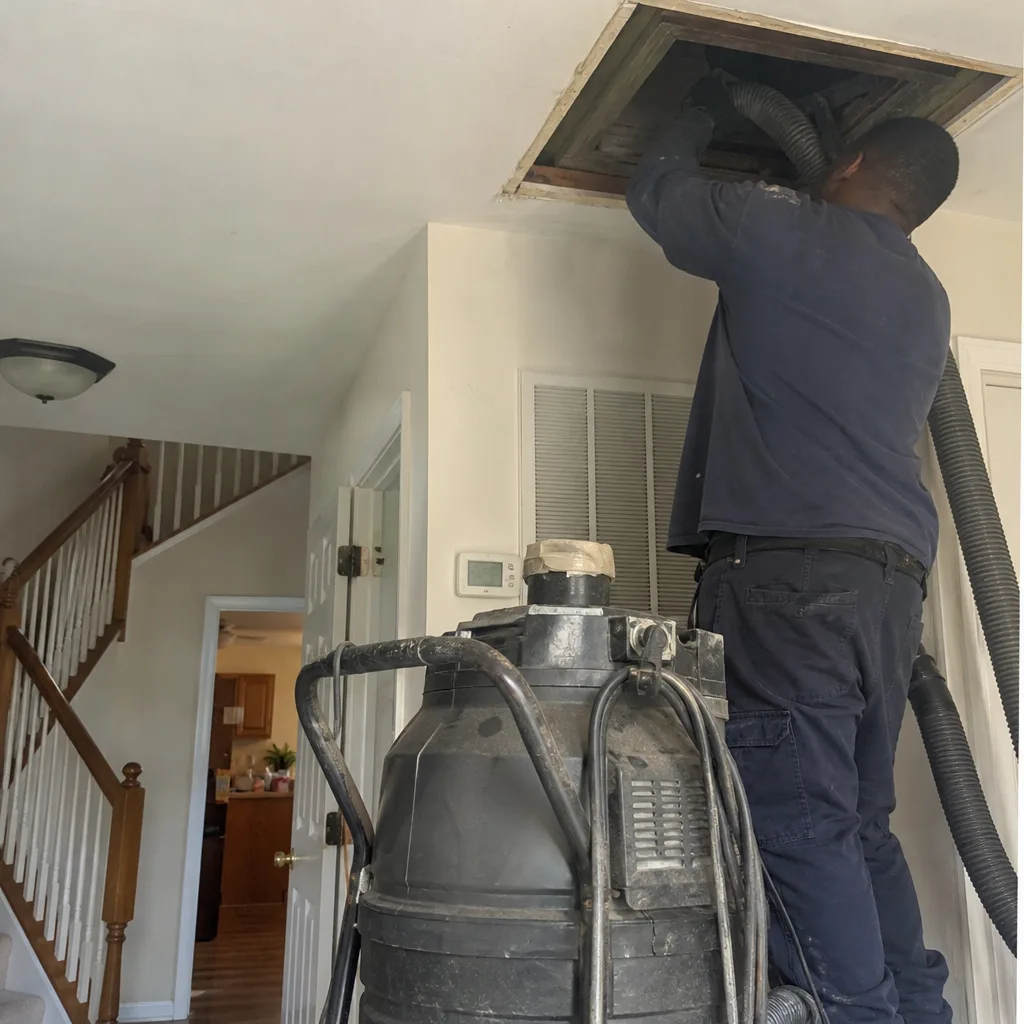 Before
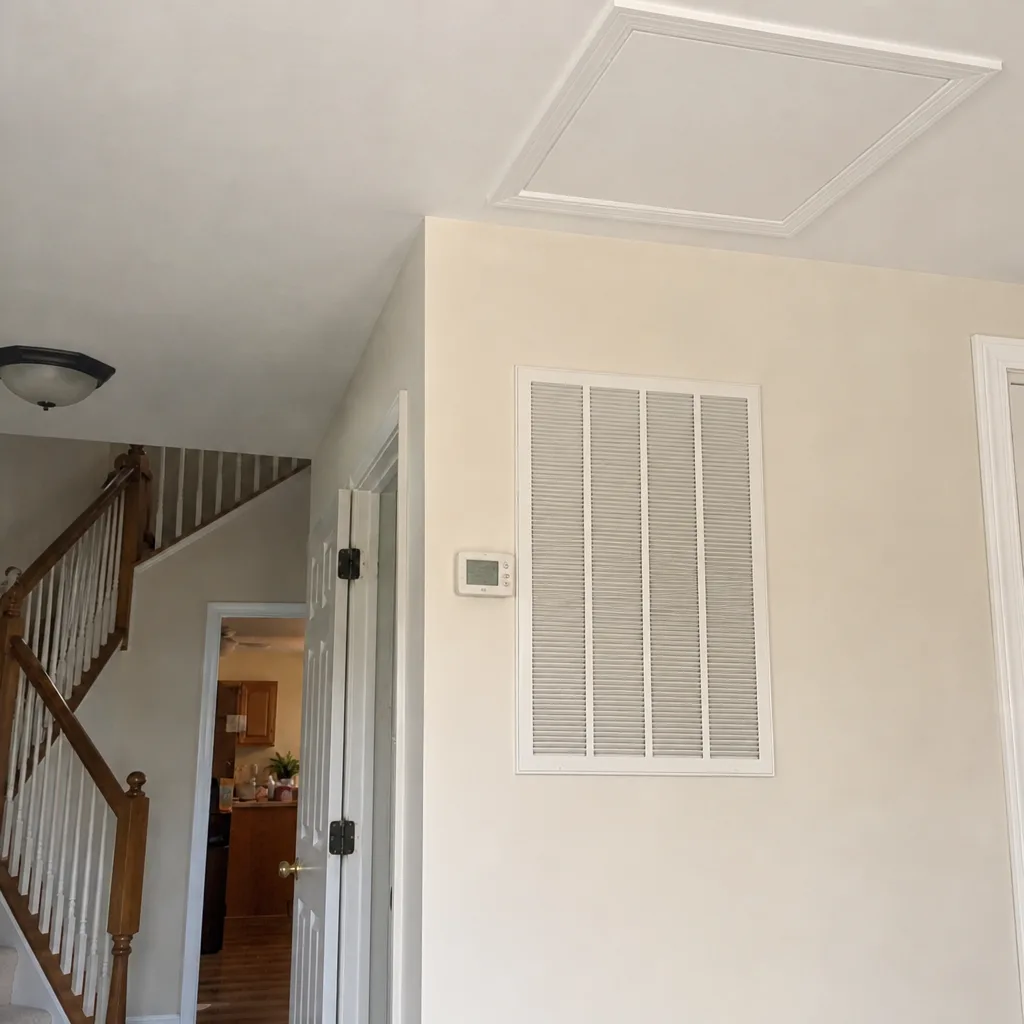 After
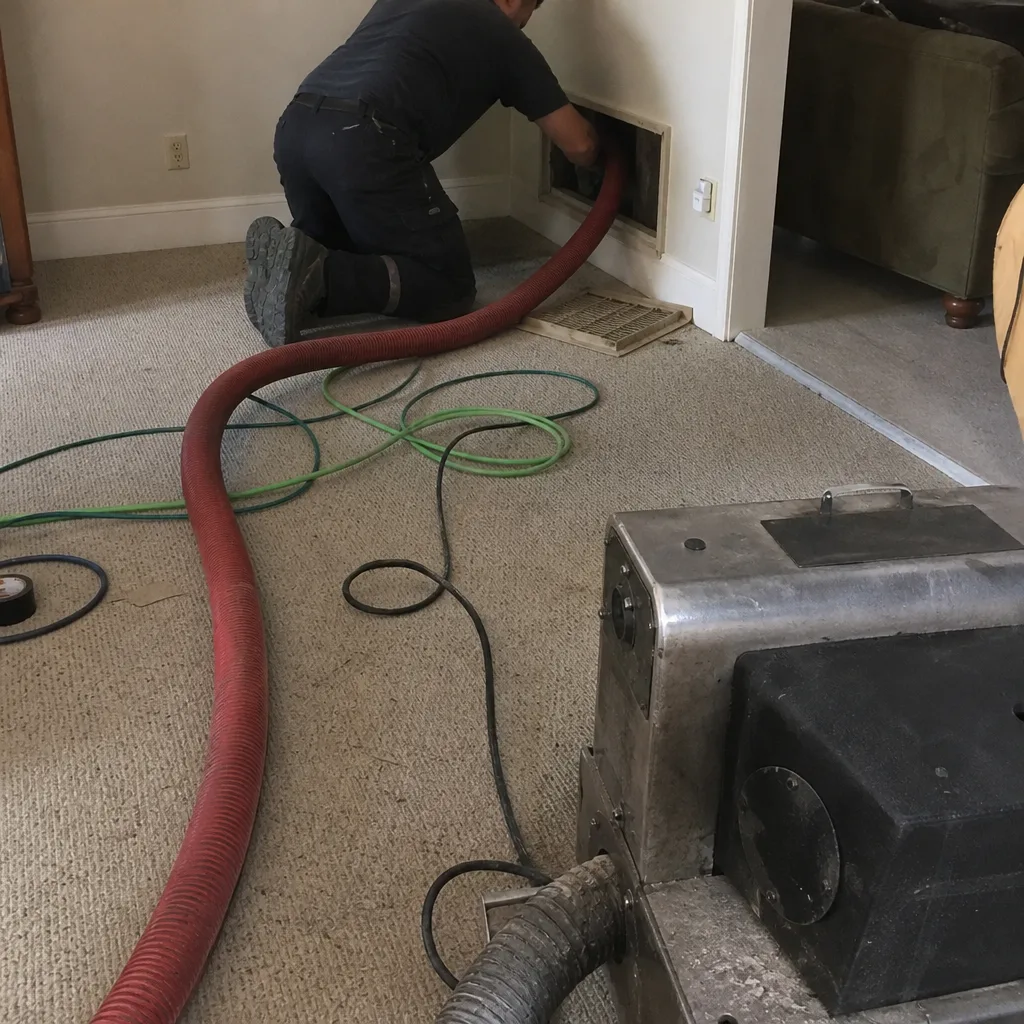 Before
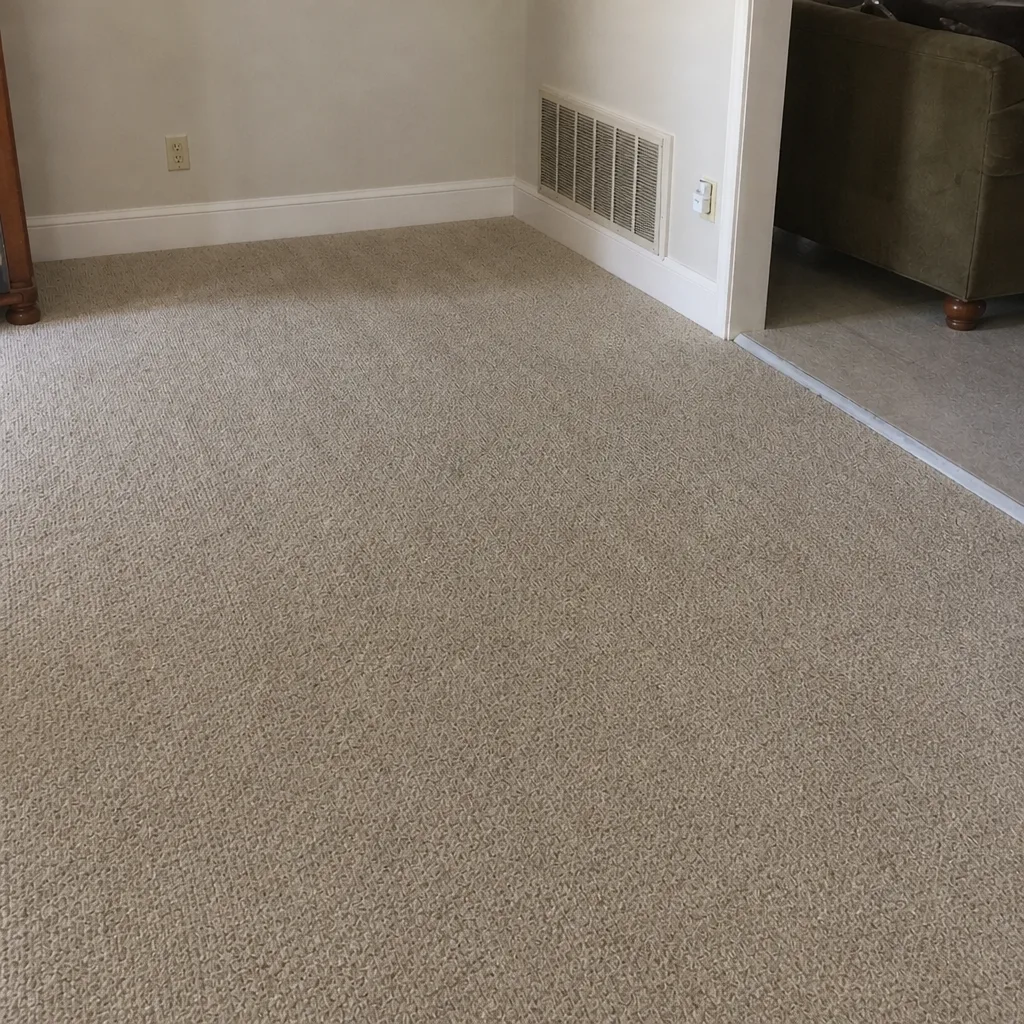 After
 Before
 After
When to Call a Professional
Some duct issues are obvious – blowing dust, musty smells, uneven airflow. Others are quieter and worth a call anyway. If your Hampton home has visible dust plumes from registers, a smell you can’t trace, a system that suddenly works harder than it used to, or a recent renovation that stirred up material through the house, that’s a professional call, not a homeowner project. If you own an older home and don’t know the duct history, a pre-inspection is the cheapest way to find out. And if your dryer vent hasn’t been cleared in years, that one should not wait – it’s the shortest job with the longest consequence if it’s neglected. Duct Cleaning Hampton offers free estimates in Hampton – call (855) 356-4265. We answer 24/7. Fast dispatch from 7am to 7pm, Sunday through Friday.
Frequently Asked Questions
Pricing is per system and based on the size of the home, number of branches, accessibility, and condition of the ducts. Because Hampton homes vary widely – from compact older systems to newer homes with multiple zones – a written estimate after an inspection is the only accurate number. Anything quoted over the phone before a look at the system is a guess. Call (855) 356-4265 for an exact quote – estimates are free.
They’re usually a different service. A low quote is often blow-and-go coverage of the grilles and first few feet of duct, not source removal across the whole system. Real cleaning uses rotary equipment, containment, and full-system coverage, and it takes hours, not minutes. When you compare quotes, compare methods and scope, not just the number. Call (855) 356-4265 for an exact quote – estimates are free.
Ask for before-and-after photos of your own ducts, pull a register cover and look inside, and check that new access points were sealed properly. After cleaning, running the system should not produce a visible dust plume, and rooms that felt starved of airflow should feel better. A real source-removal job produces a photographic record, and the technician should be willing to walk you through it. Call (855) 356-4265 for an exact quote – estimates are free.
Inspect every two to three years for most homes, and clean when the inspection shows real accumulation or moisture-related growth. Homes with pets, allergy sufferers, recent renovations, or systems that have run years without attention may need it sooner. Hampton’s humidity means buildup happens faster than it does in dry climates, so the inspection schedule matters. Call (855) 356-4265 for an exact quote – estimates are free.
Yes, in one important way: pre-inspection is not optional. Homes built before the 1990s sometimes have duct board products, panned joist returns, or retrofit flex joined to original metal trunk, and each of those needs to be identified and assessed before agitation begins. Skipping that step is how a routine cleaning becomes a problem. Call (855) 356-4265 for an exact quote – estimates are free.
They’re separate jobs on separate systems. Duct cleaning addresses the HVAC air system – supply and return runs, plenum, blower, coil. Dryer vent cleaning clears the lint and debris from the dryer exhaust line, which is a fire risk if neglected. Both fall under the same protective approach to a home’s air system, but they’re quoted and done independently. Call (855) 356-4265 for an exact quote – estimates are free.
The Bottom Line
Duct cleaning in Hampton isn’t a generic service delivered in a generic climate. The humidity here accelerates what grows inside ductwork, older housing stock demands pre-inspection before anyone starts, and the only method worth paying for is source removal with proper containment. Equipment matters – rotary brushes, industrial vacuum capacity, filtration – because the alternative is moving dust around the house. When you get quotes, compare methods and scope, ask for a written estimate after inspection, and expect before-and-after photos of your own ducts. That’s the standard your home deserves.
Duct Cleaning Hampton handles air duct cleaning, dryer vent cleaning, and air duct repair as dedicated work, not an add-on. Our technicians have up to 8 years of experience, and we use professional-grade equipment – Rotobrush rotary systems, Nikro industrial vacuum and agitation equipment, and Abatement Technologies filtration – rather than repurposed shop vacs. You get one flat price per system, agreed in writing before work starts, and before-and-after photos of your own ducts when we’re done. Call (855) 356-4265 for a free estimate. We answer 24/7. Fast dispatch from 7am to 7pm, Sunday through Friday.
Written by the team at Duct Cleaning Hampton.