
Last updated November 15, 2026
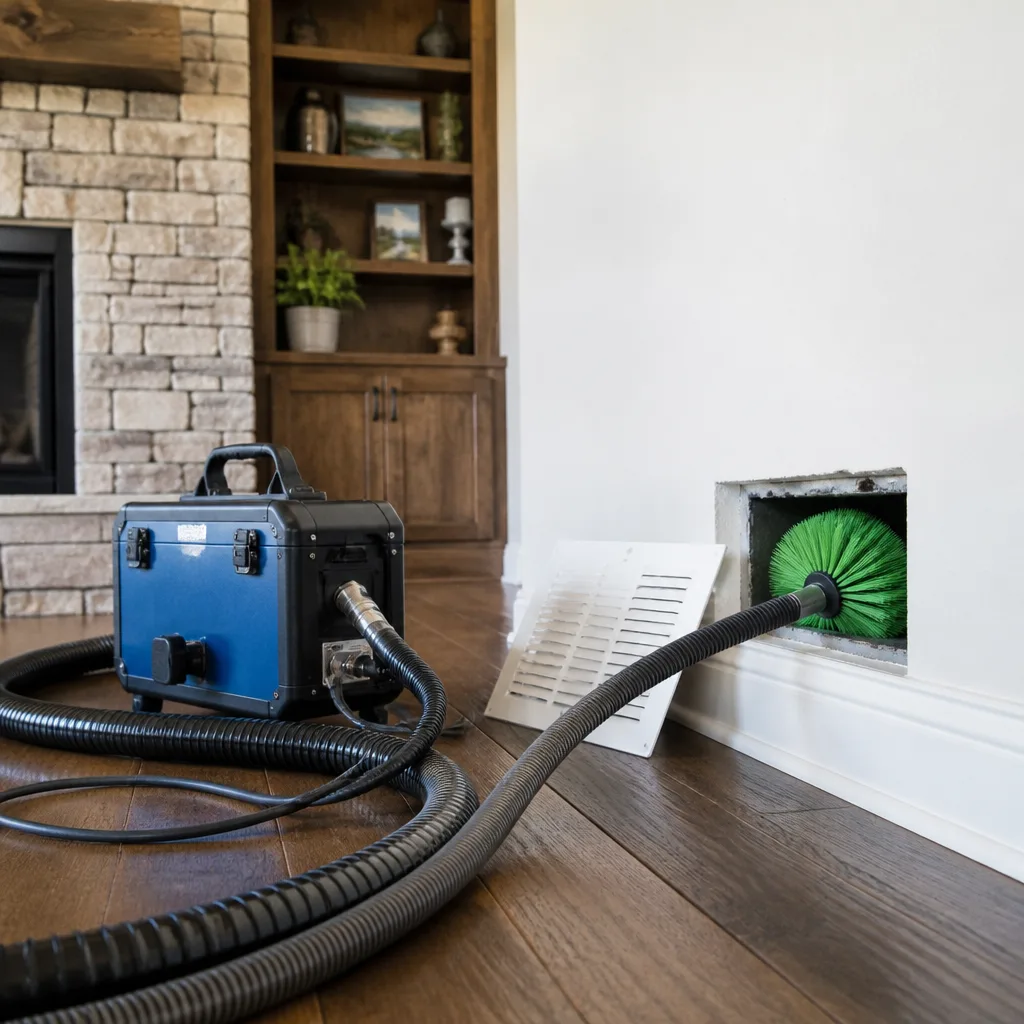 Whole-home duct cleaning
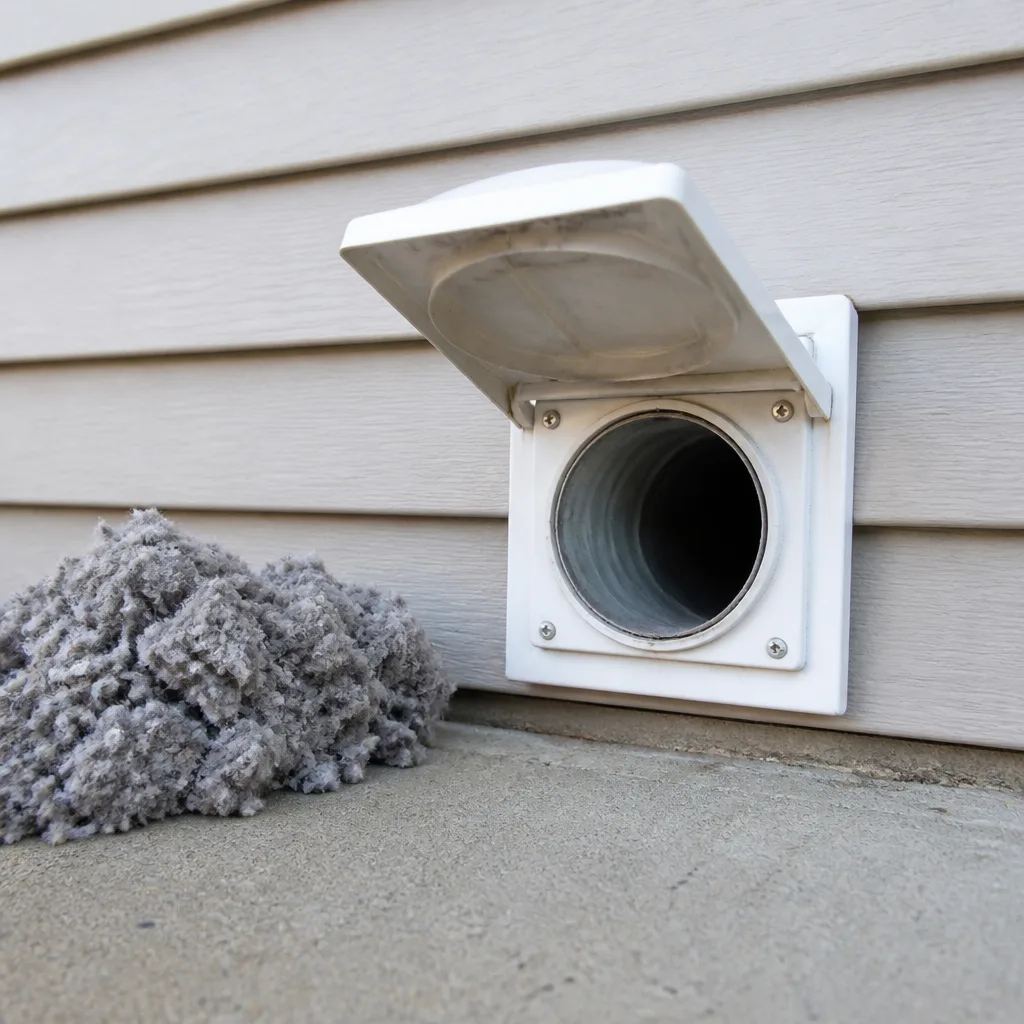 Dryer vent cleaning
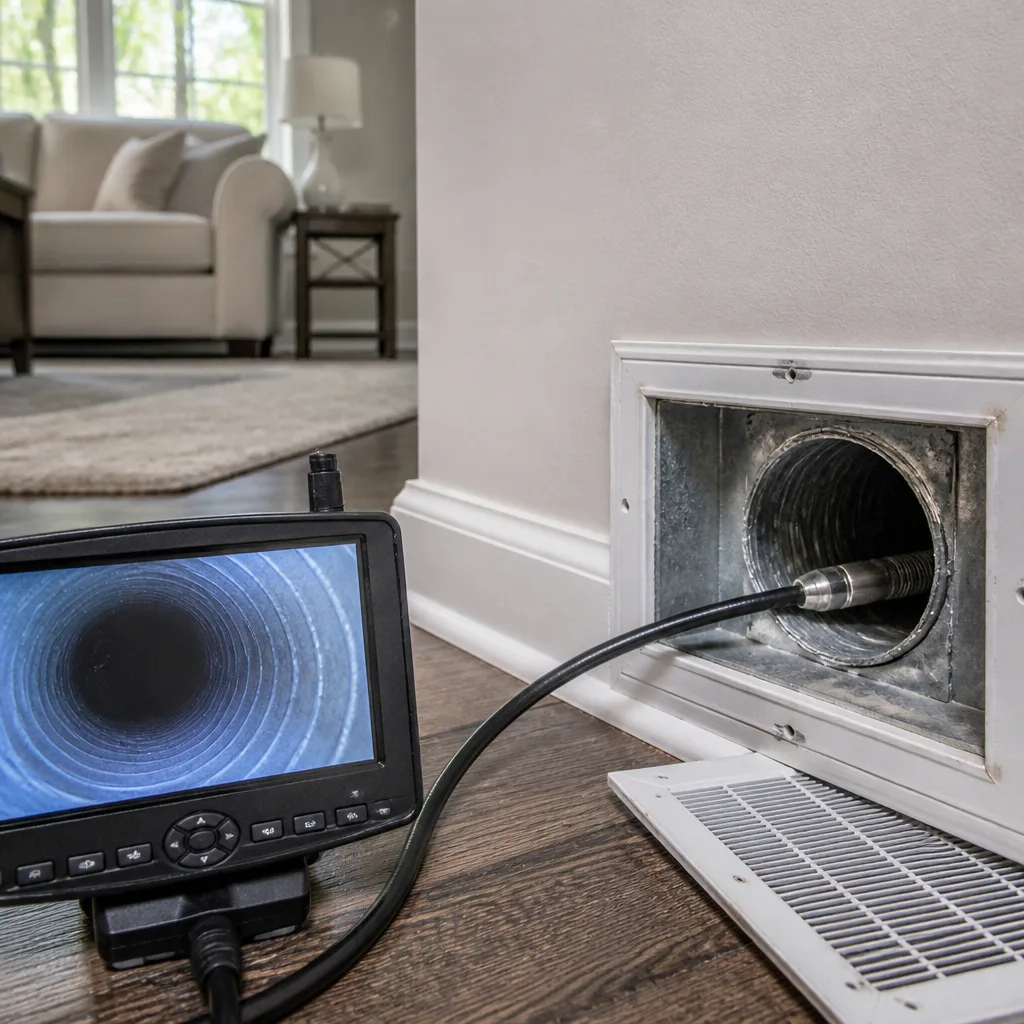 Camera inspection
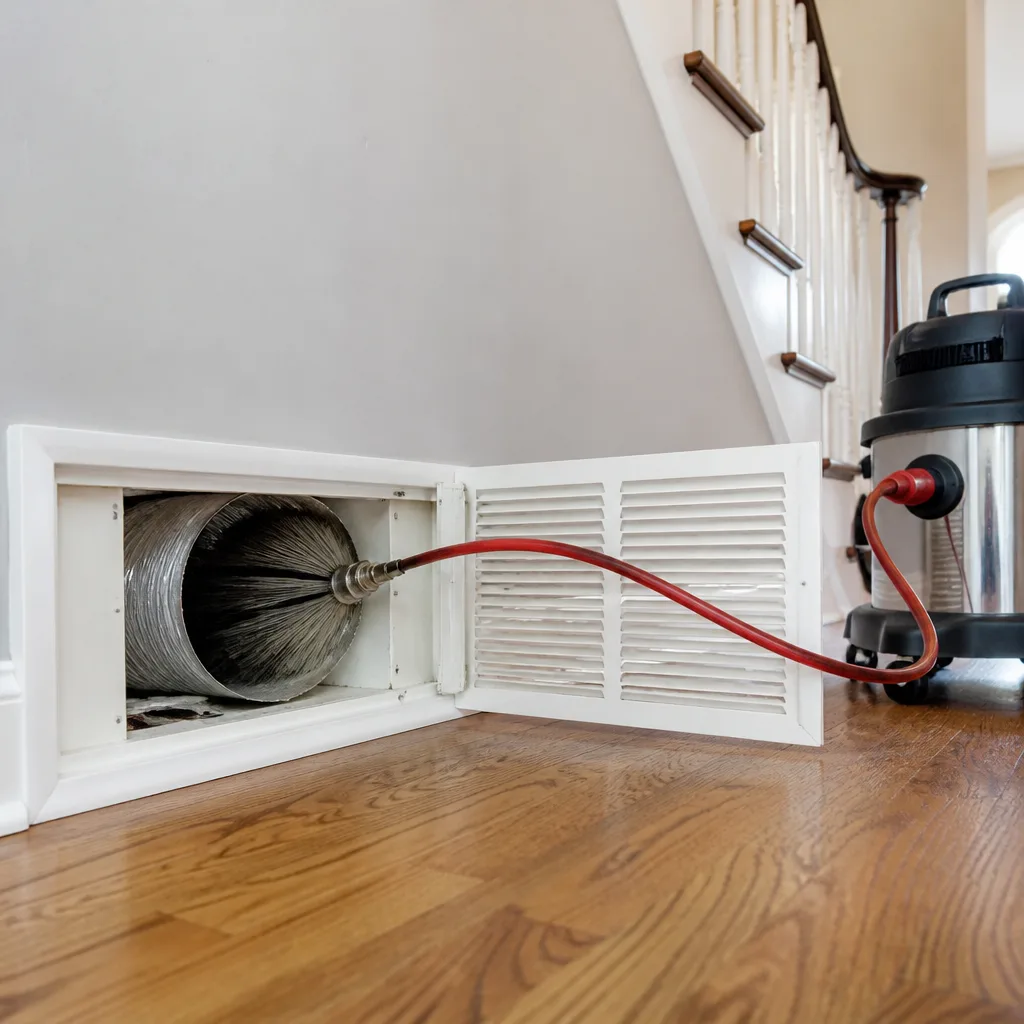 Sanitizing & deodorizing
Whole-system duct and dryer vent check with before-and-after photos - you see exactly what came out of your vents
That "$99 whole-house special" is a bait ad - the real number appears once they are in your hallway, or the "clean" is a shop-vac at the register. We photograph the inside of your ducts before and after instead.
DIY vs Professional Air Duct Cleaning: The Hampton Homeowner’s Decision Guide
Most debates about DIY air duct cleaning revolve around money. Ours doesn’t. It revolves around physics. A consumer shop vac pulls roughly 60 to 80 cubic feet per minute of air, while a commercial duct cleaning machine moves air in the thousands of CFM. That difference isn’t a marketing line, it’s the line between moving dust around inside your ductwork and pulling it out of the building entirely. In this guide, we’ll walk through what actually happens inside a duct system during cleaning, what Hampton homeowners can safely handle on their own, where DIY attempts cause real damage, and how to judge a consumer duct cleaning kit honestly. You’ll finish knowing exactly which parts of the job belong to you and which belong to a machine you can’t rent at a hardware store.
Quick Answer
DIY air duct cleaning works for surface tasks: register grilles, return covers, filter swaps, and visual checks of accessible flex runs. Professional air duct cleaning is the right call when the contamination source is inside the ductwork itself, because source removal depends on negative air pressure and mechanical agitation that consumer tools can’t produce. In a Hampton home with crawlspace duct runs or a long humid season, that gap usually decides the question on its own.
Styles & brands we work with
- Whole-home duct cleaning
- Dryer vent cleaning
- Camera inspection
- Sanitizing & deodorizing
Table of Contents
- The Physics Behind Air Duct Cleaning
- What Hampton Homeowners Can Legitimately Do Themselves
- Where DIY Attempts Actively Cause Harm
- Why Hampton Homes Present Specific Challenges
- How to Evaluate DIY Duct Cleaning Kits Honestly
- The Hybrid Approach: What to DIY and What to Delegate
- What Professional Equipment Actually Does Differently
- When to Call a Professional
The Physics Behind Air Duct Cleaning
Air duct cleaning is a two-part problem. You have to loosen debris that’s clinging to duct walls, and you have to capture it before it settles somewhere else in the system. Retail tools are built for the first part, badly, and mostly ignore the second. This is where the CFM conversation earns its keep.
Cubic feet per minute measures how much air a machine moves. A shop vac posted at 60 to 80 CFM creates mild suction at the hose end. A purpose-built duct cleaning machine, the kind of rotary brush and negative air setup we run, works in the range of 2,000 to 4,000 CFM. That’s not a small upgrade. It’s a different class of machine. When a rotary brush or air whip knocks dust off a duct wall, the debris goes airborne instantly. If the vacuum source isn’t strong enough to pull that cloud out of the system, the dust simply drifts downstream and settles in a branch run or a coil cabinet.
So the physics breaks down into three requirements:
- Mechanical agitation. Dust bonds to galvanized steel and flex liner over time. Suction alone doesn’t break that bond. Rotary brushes, air whips and contact cleaning do.
- Negative pressure containment. The system needs to be under steady vacuum at the trunk while agitation happens, often with one register sealed and the vacuum connected to the main line.
- Capture and filtration. The extracted air has to run through proper filtration so the debris lands in a collection unit, not back into the home.
Consumer equipment satisfies the first requirement weakly and the second and third almost not at all. That’s the honest answer to why professional air duct cleaning costs what it costs. The machine isn’t a fancier vacuum. It’s a negative pressure system built for source removal.
What Hampton Homeowners Can Legitimately Do Themselves
Plenty of the work is ours to do, but plenty isn’t. Here’s the honest split. These tasks actually help indoor air quality and don’t require commercial tools:
- Register and grille cleaning. Pop the supply and return covers off, wash them in warm soapy water, dry fully, and reinstall. Do this on a schedule tied to visible dust, not a random calendar.
- Filter maintenance. Check the filter monthly, replace or clean per the manufacturer’s spec. A clogged filter starves the blower and pushes dirt past the coil. If your system runs a Honeywell or Aprilaire filter cabinet, use the correct replacement size and MERV rating the system calls for.
- Accessible flex duct visual inspection. In a crawlspace or attic, you can look at flex runs for kinks, crushed sections, disconnected joints or torn outer jacket. A flashlight and a phone camera get you most of the way.
- Return air path checks. Make sure nothing is blocking return grilles. Furniture, rugs and storage bins pressed against a return choke the system.
- Filter grille gasket checks. A thin foam gasket around a filter grille frame keeps unfiltered air from bypassing the filter. That’s a five-minute fix.
These tasks are worth doing whether or not you ever hire a professional. In our experience, a homeowner who keeps registers clean and filters current gets more out of a professional cleaning than one who doesn’t. And in Hampton, where humidity runs long and crawlspace duct runs are common, filter maintenance matters more than most homeowners realize.
Tools worth owning
A few things are genuinely useful on the DIY side: a soft-bristle brush vacuum attachment, a shop vac with a HEPA filter cartridge, a flexible crevice tool for tight supply runs, and a bright LED flashlight. What you shouldn’t buy is the consumer “duct cleaning kit” that promises rotary action at $80. We’ll get to why below.
Where DIY Attempts Actively Cause Harm
There’s a real difference between DIY cleaning that doesn’t accomplish much and DIY cleaning that damages the system. The second category happens, and it’s not rare. These are the failure modes we see and hear about most:
- Agitating without sufficient negative containment. Running a brush or air nozzle into a duct with no vacuum plumbed to the trunk turns a settled dust problem into an airborne one. The debris travels downstream and settles inside branch runs, coils or a furnace cabinet. You haven’t cleaned anything. You’ve relocated it.
- Puncturing flex duct liners. The inner liner of flex duct is a thin plastic film. A stiff brush, a shop vac nozzle jammed past a joint, or a rotary tool with the wrong head will tear it. A torn liner is a leak, a leak is a loss of delivered air, and repair means replacing that run.
- Compressed air into unsealed systems. Blowing shop air into a duct to “loosen things up” is the single most common self-inflicted mess. It aerosolizes dust and, on a system with any open joint or leaky plenum, pushes material into living space.
- Chemical sprays and foggers without ventilation planning. Duct treatments that fog the system can leave residue on the blower wheel, evaporator coil or a filter cartridge if the application isn’t matched to the system.
- Removing duct sections casually. Taped and mastic joints are not designed to be opened and re-closed with duct tape. Each bad reseal becomes a new leak.
- Wet-cleaning flex duct. Moisture on a flex liner creates a biofilm growth surface. Dry removal only.
None of this is a scare tactic. It’s what happens when consumer tools meet duct geometry they weren’t designed for. If a flex run has visible dust and a homeowner wants to hand-vacuum a register boot, that’s fine. If the goal involves loosening debris from a duct wall, containment has to come first.
Why Hampton Homes Present Specific Challenges
Duct cleaning is not the same job in every climate, and it’s not the same job in every housing stock. A few realities about homes here change the decision:
- Crawlspace duct systems. A meaningful share of Hampton homes run ductwork through a vented crawlspace. That means flex or wrapped rigid runs sit in a humid, dirt-prone environment, and any leak in the duct jacket becomes an entry point for crawlspace air. Some of the worst duct interiors we encounter start with a jacket tear near a crawlspace joist.
- High-humidity seasons. The long hot stretch here keeps systems running for months on end, which drives up dust loading and pushes interior duct surfaces toward condensation. Wet dust becomes biofilm, and biofilm behaves differently than dry dust. It clings, and it doesn’t respond well to a shop vac. It often needs borescope inspection first to see how far the growth extends before any agitation starts.
- Post-construction and post-renovation contamination. Drywall dust, sawdust and insulation fibers from a renovation settle deep into branch runs. This is the case where a homeowner most often tries DIY, and the case where DIY delivers the least, because the material is fine, airborne, and requires real containment to extract.
- Older homes with mixed duct generations. Hampton’s housing spans a wide range, and some homes have a rigid trunk retrofitted with newer flex branches. Those mixed systems have more joints, more transitions and more leak points. Each one needs to be checked.
Borescope inspection matters here. Before anyone agitates a duct system in Hampton, the professional crew should know what’s inside it. If there’s standing moisture, torn liner, or heavy growth, the plan changes. We can’t speak for other companies, but we don’t start a cleaning without knowing what we’re cleaning. If you’re researching the full picture, our Hampton page lays out how service works in the city.
How to Evaluate DIY Duct Cleaning Kits Honestly
Consumer duct cleaning kits sit in an uncomfortable spot between useful tool and marketing fantasy. They’re not all junk, but the category is broadly oversold. Here’s how to separate the two:
What the product descriptions claim
Most kit listings lead with rotary brush attachments, a long flexible hose and a diagram showing a vacuum pulling dust out of a duct. The language is aspirational. It implies your shop vac plus a brush equals what a professional service does, minus the trip charge. That implication is what the physics disproves.
What the physics allows at consumer price points
A shop vac rated at 5 peak horsepower still moves roughly 60 to 80 CFM at the hose. A duct cleaning kit doesn’t change that number, it just puts a brush on the end. The brush can agitate debris. The vacuum can’t lift it out of the system in volume. So what you actually get is a rotary brush that scatters dust into the airflow and a vacuum that captures some fraction of it at the hose opening while the rest moves downstream.
How to read a kit listing
- Look for a CFM number. If the listing doesn’t state the machine’s CFM, that’s the answer. A kit that doesn’t publish airflow isn’t building a negative pressure system.
- Look for containment language. A real duct cleaning machine includes a HEPA or multi-stage filter and a collection drum. A kit with a cloth bag or no filtration can’t capture fine debris.
- Check the brush heads. Flexible nylon brush heads marked for “all duct types” tend to be too stiff for flex inner liner. If the listing doesn’t distinguish rigid metal from flex, treat it as a rigid-only brush.
- Read the “not recommended for” section. If there isn’t one, the manufacturer hasn’t thought about the cases where the tool causes damage.
- Multiply the cost. A kit plus a capable shop vac plus a HEPA cartridge often lands well north of $200. Compare that to a free estimate before you decide.
The honest summary: a consumer kit is fine for light surface work on rigid metal runs. It is not a source-removal system, and no price point in the consumer range gets you there.
The Hybrid Approach: What to DIY and What to Delegate
Most Hampton homeowners we work with don’t land strictly on “DIY” or “professional.” They land on a split. Here’s a practical version of that split as a numbered plan:
- Do the filter and register routine yourself. Monthly filter check, register wash on a visible-dust schedule. This is the highest-value, lowest-risk work you can do.
- Do the visual inspection yourself. Look at accessible flex runs for kinks, tears, disconnected joints and crushed sections. Photograph anything suspicious. This gives you useful information to share with a technician.
- Don’t vacuum deep into a duct run with a shop vac. Register boots and the first few inches past the grille are fair game. Past that, you’re agitating without containment.
- Don’t introduce compressed air, foggers or chemical sprays. These belong with someone who knows the system’s filtration and can plan exhaust.
- Book a professional cleaning when the signs point inside the system. Visible dust plumes at registers, musty odors during runtime, dust settling on surfaces within hours of cleaning, or a recent renovation all point inside the ductwork.
- Have the dryer vent checked alongside the ducts. This is one where the DIY case is weakest. A dryer vent cleaning addresses a fire risk, not just an airflow problem, and access behind the dryer and through the exterior run often needs professional tools.
That plan maximizes what you get out of DIY and minimizes the risk. It also means that when you do hire a professional, they’re walking into a system that isn’t hiding surprises behind a packed filter.
What Professional Equipment Actually Does Differently
The tool difference isn’t one machine. It’s a system. Here’s what a professional service is actually bringing to a Hampton job, and why each piece matters:
- A negative air machine rated in thousands of CFM. This is the core of the operation. It maintains steady vacuum at the trunk while the ducts are agitated, so dislodged debris travels toward the collection unit rather than into living space.
- Rotary brush systems built for duct cleaning. A Rotobrush is purpose-built for the work, with controlled rotary action, adjustable brush heads for rigid and flex, and a sealed containment path. It’s not a repurposed shop vac with a brush attachment bolted on.
- Industrial-grade extraction equipment. Nikro machines are the same class of equipment specified for commercial and restoration-grade air quality projects. That matters on post-construction jobs and on homes where contamination is heavier than typical.
- Filtration equipment rated for contamination control. Abatement Technologies air filtration gear is a professional indoor air quality standard. On jobs where fine particulates or microbial contamination are in play, that’s the difference between filtering the air and moving it around.
- System expertise beyond the ducts. Familiarity with Honeywell and Aprilaire filter cabinets, media filters and purifier systems means the cleaning job can be matched to the filtration the home already relies on. If a filter cabinet is the wrong size or a bypass is leaking, that’s a conversation worth having during the same visit.
- Protective finishing. Guardsman products let the crew finish the job with sealing and duct-integrity protection after cleaning. It’s a step many generalist HVAC companies skip because they’re not set up for it.
The reason all of this matters in a Hampton home isn’t brand loyalty. It’s that source removal at volume is the only approach that actually addresses duct interior contamination. A generalist HVAC company treating duct cleaning as an add-on to a tune-up visits a different job. We clean ducts. That’s the trade we’re set up for, and our Duct Cleaning Hampton homepage explains how the three services fit together.
One more thing worth flagging: if a duct run has visible damage after a cleaning, that’s a repair problem, not a cleaning problem. We handle structural duct repair as one of our three services, which means a torn liner or a failed joint doesn’t turn into a second contractor search. Our technicians have up to 8 years of experience with the equipment and the duct systems they work on.
Common Mistakes to Avoid
- Vacuuming the register and assuming the duct is clean. The register is the visible end of the system. Dust comes from deeper in, which is exactly where a shop vac can’t reach or contain. Cleaning the grille only tells you the grille was dirty.
- Buying a duct kit and running it through a crawlspace flex run. The inner liner of flex duct is thin and tears easily against a stiff brush. Once it’s torn, that run has to be replaced.
- Fogging the system with a retail treatment. Chemical foggers get applied without knowing what’s downstream. Residue on the blower wheel or evaporator coil can be more of a problem than the dust.
- Ignoring a musty smell and cleaning harder. A musty odor during runtime usually means moisture somewhere in the system, not just dirt. In a humid Hampton crawlspace, that’s a borescope job before any agitation.
- Skipping a filter change before a professional visit. A packed filter starves airflow and reduces how effectively a cleaning reaches branch runs. Change it first, then book.
- Assuming a $79 online coupon is the real price. Duct cleaning is priced per system by a written estimate, and a low teaser figure often has a different scope behind it. Ask what’s included before you book.
- Forgetting the dryer vent. A dryer vent has nothing to do with duct cleaning except that they’re both air-path problems. It gets skipped, and it shouldn’t be.
See the difference
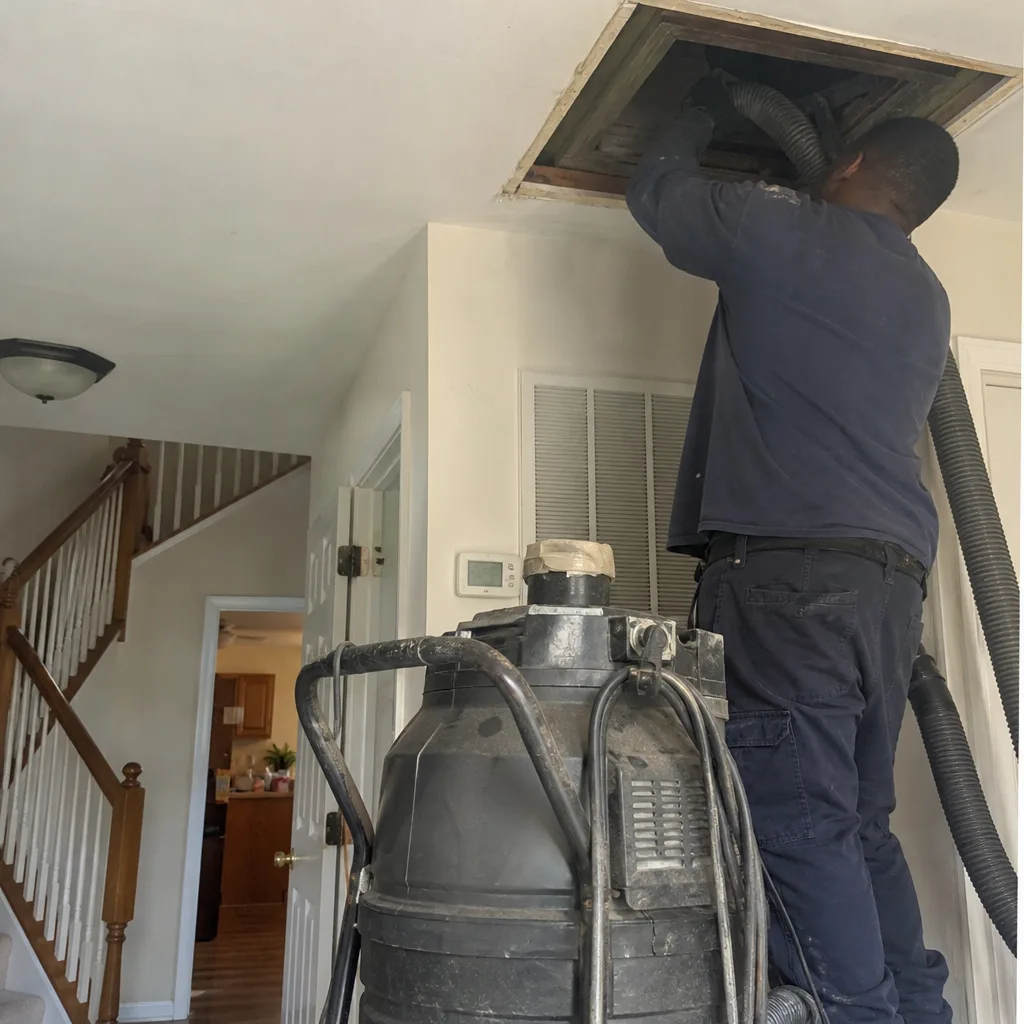 Before
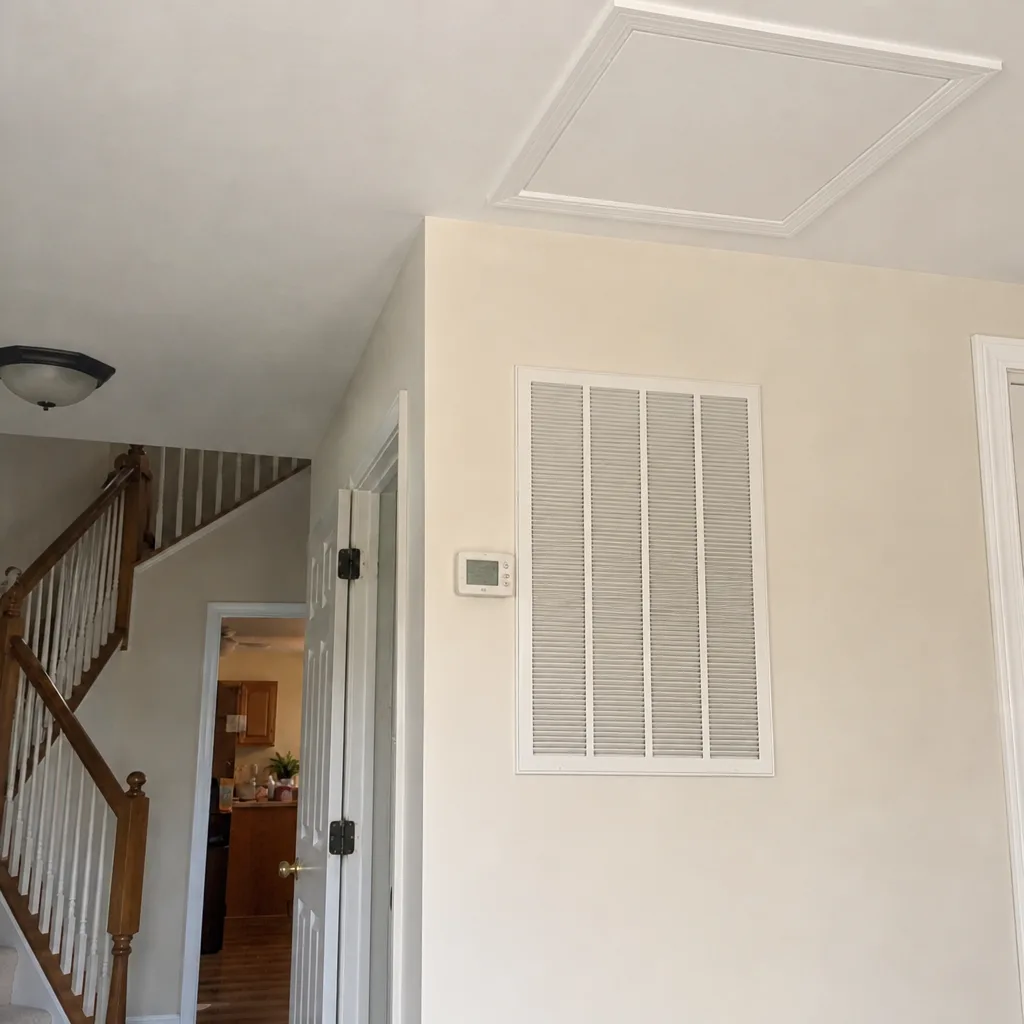 After
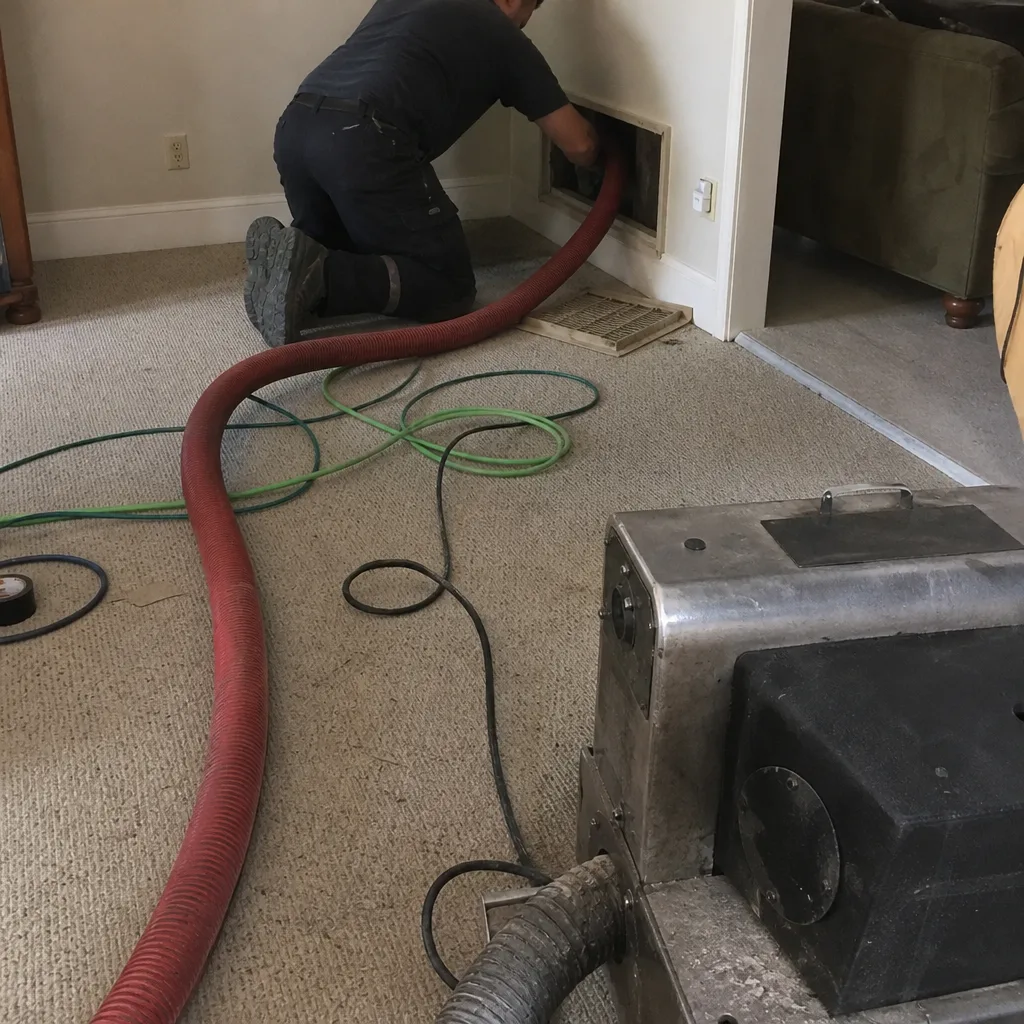 Before
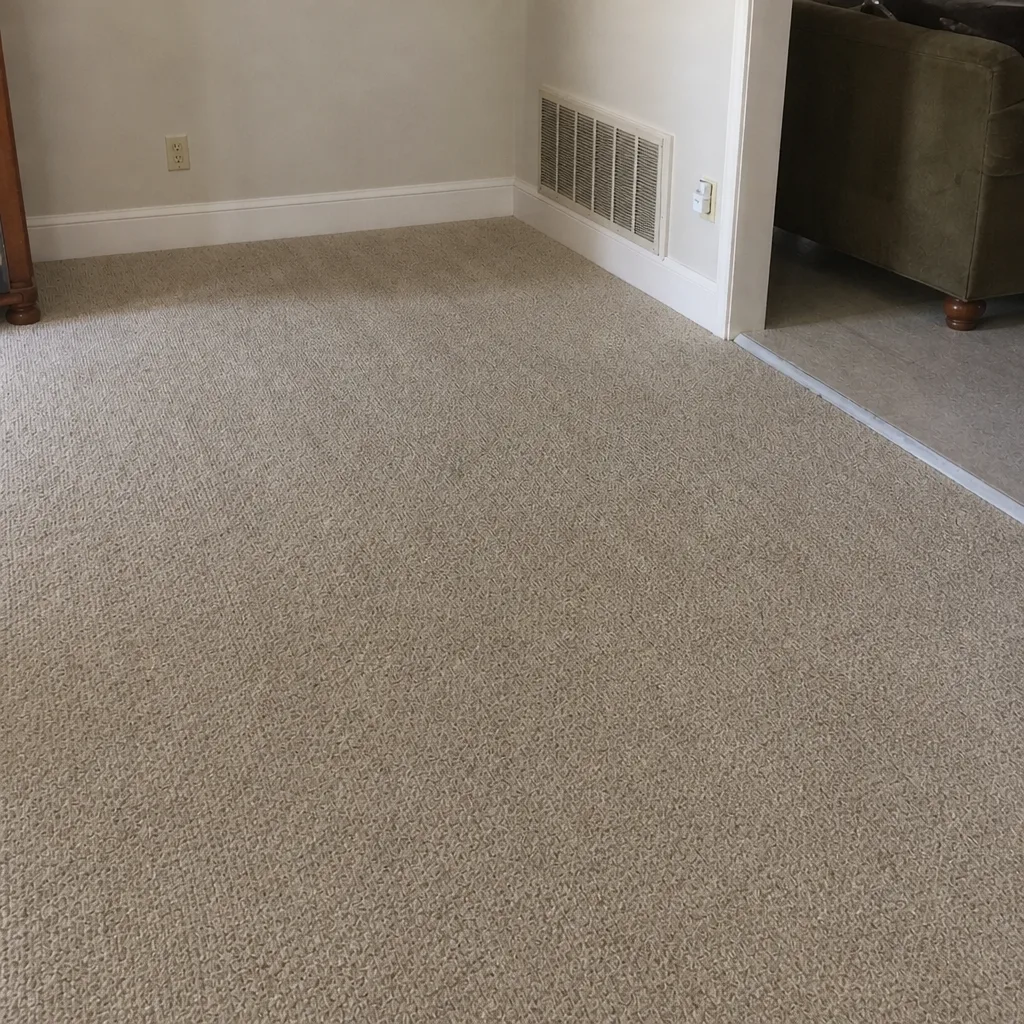 After
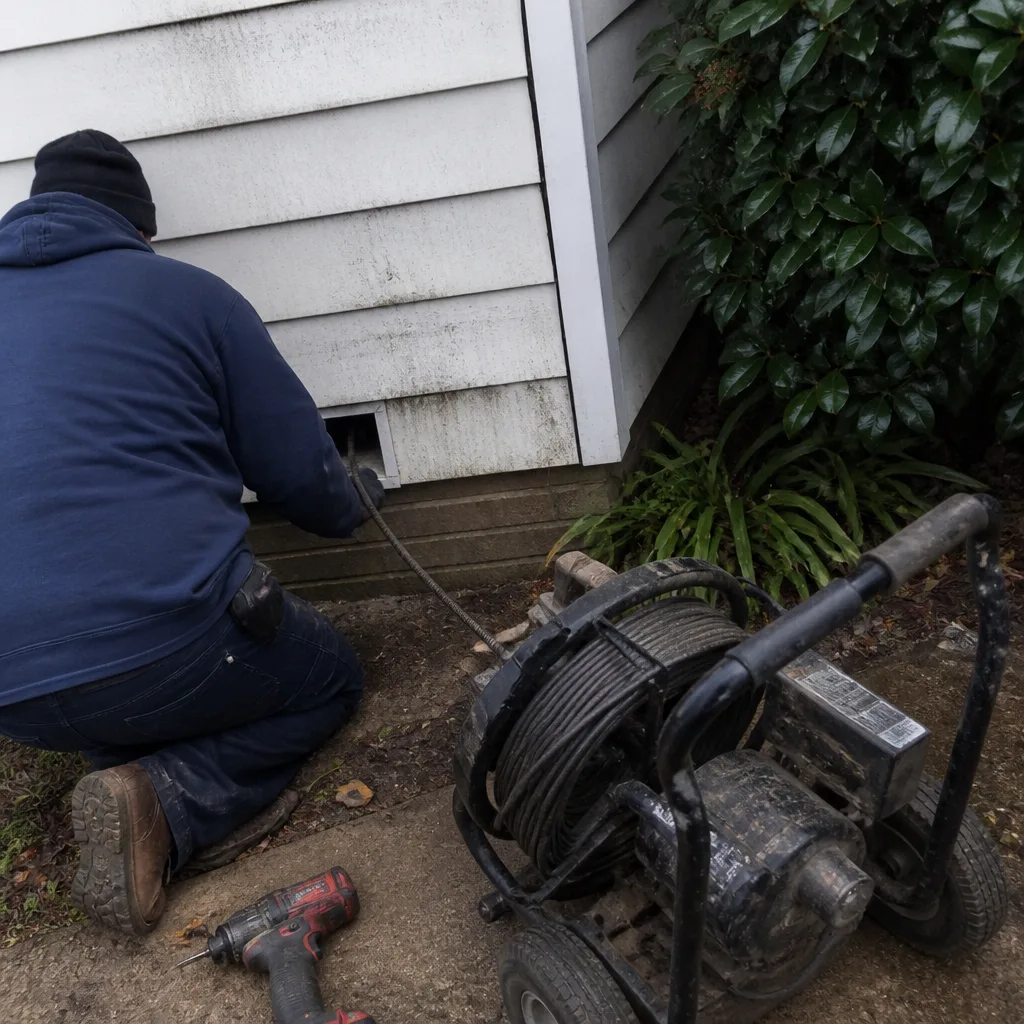 Before
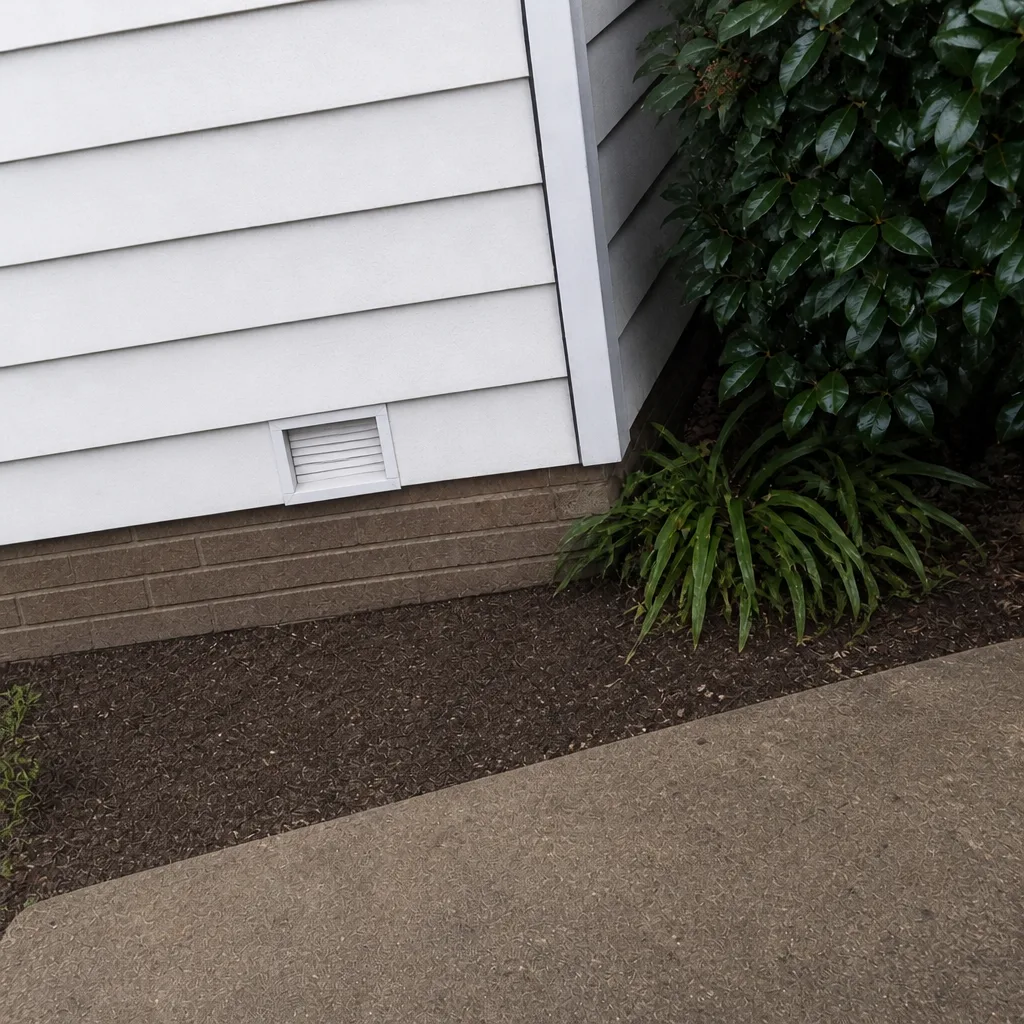 After
When to Call a Professional
Call a professional when the contamination source is inside the system, not on the surface. Specific cases: visible dust plumes from supply registers during runtime, dust settling on surfaces within hours of dusting, musty odors that appear only when the system runs, recent renovation or construction debris in the ductwork, a crawlspace duct system with torn jackets, or a dryer vent that’s been forgotten for years. Those are the situations where DIY acts as damage control rather than cleaning. Duct Cleaning Hampton offers free estimates in Hampton, done as one flat price per system agreed before work starts, with before-and-after photos of your own ducts so you can see what came out. Call (855) 356-4265. We answer 24/7. Fast dispatch from 7am to 7pm, Sunday through Friday.
Frequently Asked Questions
Whole-system air duct cleaning in the Hampton market typically runs in the several-hundred-dollar range per system, and the written estimate you receive sets the final price. We don’t quote per-vent prices, and we don’t lead with teaser figures. One flat price per system, agreed before work starts, is the only honest way to price a job this dependent on duct geometry. Call (855) 356-4265 for an exact quote, estimates are free.
A cheaper quote is almost always a different scope of work. It might cover only registers, only a portion of the system, or use consumer-grade equipment instead of a real negative air machine. That’s the whole reason this industry has the reputation it does. The way to avoid the bait-and-switch is to ask what tools are used, whether the price is per system or per vent, and whether you’ll get before-and-after photos of your own ducts. Call (855) 356-4265 and we’ll explain exactly what’s included in ours.
Before-and-after photos of your own ducts, taken during the job, are the most reliable check. Beyond that, ask the technician to walk you through what came out of the system and from where. A crew that takes source removal seriously has no reason to hide the process. Call (855) 356-4265 to talk about what a job will look like in your home.
Most homes need it every few years, not annually, unless there’s a specific trigger: a renovation, a new HVAC installation, an animal in the ductwork, a musty odor, or visible dust buildup at registers. Hampton homes with crawlspace duct systems and long humid seasons often sit closer to the shorter end of that window. Call (855) 356-4265 for a free estimate and we’ll tell you honestly if the job can wait.
Yes, in specific ways. A stiff shop vac nozzle or a rotary brush turned through a flex liner will puncture the inner film. Once punctured, the run leaks and needs replacing. A shop vac can also agitate dust into a system without capturing it, which relocates the debris rather than removing it. Call (855) 356-4265 if you’ve already tried a DIY cleaning and want an assessment.
It can help, but only to the extent that the ductwork itself is the contamination source. Source removal at the duct level reduces the particulate load the system recirculates, which is a real contributor for allergy sufferers. If the source is a packed filter, a torn duct jacket or a leaking filter cabinet, cleaning alone won’t fix it. We’re familiar with Honeywell and Aprilaire filter systems and we’ll say when the filtration side needs attention too. Call (855) 356-4265 for a free estimate.
The Bottom Line
DIY duct cleaning handles the surface layer and nothing deeper, because the machine at the center of a good shop vac can’t produce the negative air pressure and mechanical agitation that separate dust from a duct wall and pull it out of a building. Consumer kits are fine for rigid metal runs and light work. They aren’t source-removal tools. Hampton homes raise the stakes with crawlspace duct runs, long humid seasons, and mixed duct generations that need borescope inspection before anyone agitates. Do the register and filter routine yourself. Skip anything involving compressed air, foggers or flex liner. And when the signs point inside the system, get a written estimate with one flat price per system, before-and-after photos, and an explanation of the equipment. Call (855) 356-4265. We answer 24/7. Fast dispatch from 7am to 7pm, Sunday through Friday. Closed Saturday.
Written by the team at Duct Cleaning Hampton.